Stocks are under pressure because bond yields are climbing, oil and war risks are back in the frame, and investors are rethinking what they should pay for...
Why Stocks Are Falling as Bond Yields Rise: What Investors Should Do Now
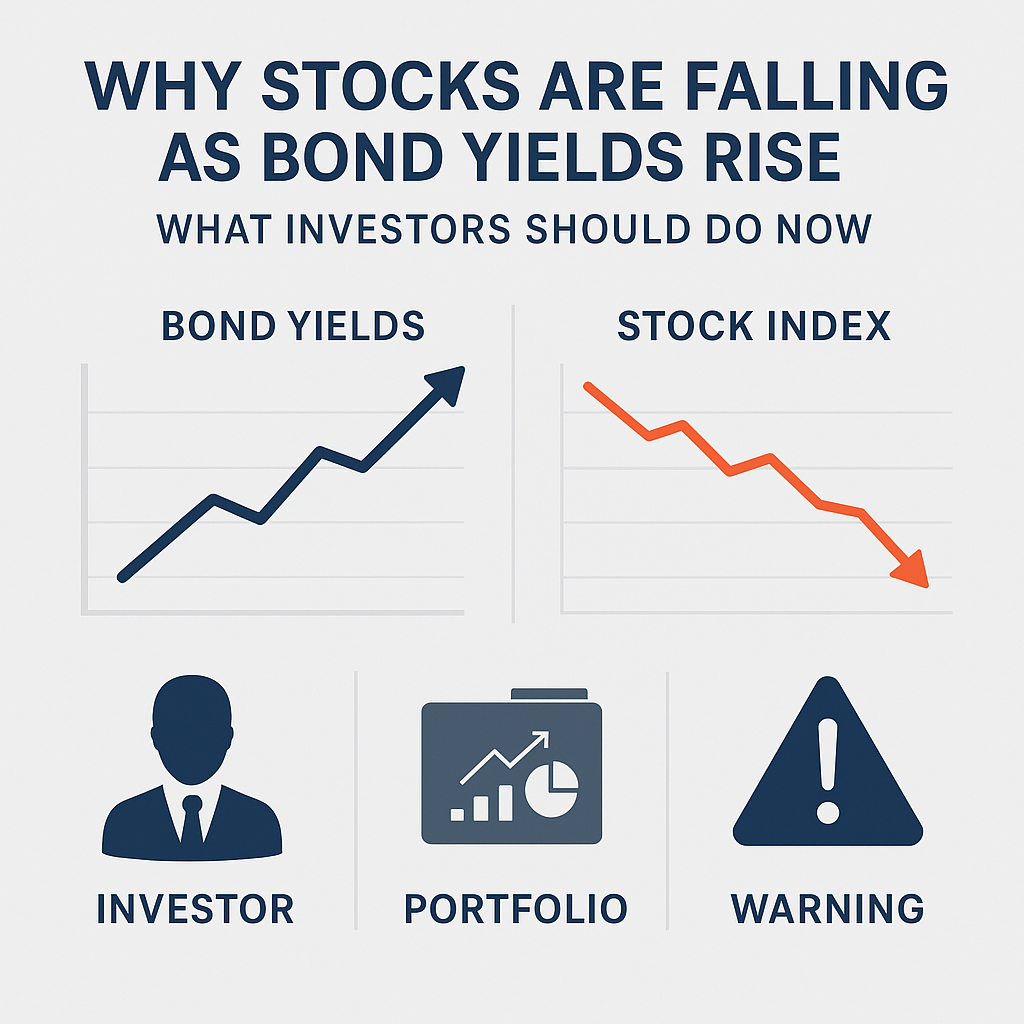
Stocks are under pressure because bond yields are climbing, oil and war risks are back in the frame, and investors are rethinking what they should pay for future earnings. That’s the plain version. Higher yields raise discount rates, chip stocks get hit first, and shaky earnings reports make the market more jumpy.
Key Takeaways
- Rising bond yields usually hurt growth stocks first.
- Oil and geopolitical shocks can push inflation fears higher.
- Portfolio quality matters more than hot takes.
- Diversification and cash planning beat panic selling.
What is happening in markets right now?
Market volatility is being driven by a mix of higher bond yields, sticky inflation fears, earnings reactions, and geopolitical pressure. That’s the simple answer. The less simple version is that investors are re-pricing risk across asset classes, and when that happens, the weakest valuations get clipped first.
Higher yields matter because of the math behind asset pricing. A stock is worth the cash it can throw off over time, discounted back to today. When the discount rate rises, the price you’re willing to pay falls. That is why long-duration equities — especially technology and chip stocks — often get hit harder than energy or value stocks. If you want the bare bones of the bond-market side, the yield curve is worth understanding, because changes at the long end often signal deeper fears about inflation or growth.
Everyone talks about “the market” as if it were one creature. It isn’t. It’s a pile of different crowds acting for different reasons. One group is worried about war and oil. Another is staring at the Federal Reserve. Another is reacting to earnings misses, like the weak move in Klarna reported by Yahoo Finance. Meanwhile, defensive names such as Home Depot can still hold up if the underlying business is steady and the balance sheet is decent.
The truth is, the bond market often moves first. Stocks just make the noise louder.
For recent market context, see Reuters on U.S. 30-year yields and Reuters on European yields.

What is happening in markets right now?
Market volatility is being driven by a mix of higher bond yields, sticky inflation fears, earnings reactions, and geopolitical pressure. That’s the simple answer. The less simple version is that investors are re-pricing risk across asset classes, and when that happens, the weakest valuations get clipped first.
Higher yields matter because of the math behind asset pricing. A stock is worth the cash it can throw off over time, discounted back to today. When the discount rate rises, the price you’re willing to pay falls. That is why long-duration equities — especially technology and chip stocks — often get hit harder than energy or value stocks. If you want the bare bones of the bond-market side, the yield curve is worth understanding, because changes at the long end often signal deeper fears about inflation or growth.
Everyone talks about “the market” as if it were one creature. It isn’t. It’s a pile of different crowds acting for different reasons. One group is worried about war and oil. Another is staring at the Federal Reserve. Another is reacting to earnings misses, like the weak move in Klarna reported by Yahoo Finance. Meanwhile, defensive names such as Home Depot can still hold up if the underlying business is steady and the balance sheet is decent.
The truth is, the bond market often moves first. Stocks just make the noise louder.
Core Benefits/Importance
- Higher yields force discipline. Investors can’t throw money at any stock with a slick story and ignore fundamentals.
- Better entry points can appear. When valuations compress, quality companies sometimes become more reasonably priced.
- Diversification gets tested, which is useful. Correlations change under stress, and weak portfolio construction gets exposed.
- Cash and short-duration bonds matter more. If your timeline is short, it helps to hold assets that do not swing wildly.
- Earnings quality becomes obvious. Firms with real cash flow usually hold up better than firms living on promises.
Most people think rising yields are simply bad. That’s too crude. Yes, they pressure valuations, but they also punish excess. Frankly, that can be healthy. I’ve analyzed hundreds of portfolios, and the ones that survive rate spikes best are usually the ones with sane asset allocation, modest leverage, and a real plan for income needs.
There’s also a moral angle here that gets ignored. Capital is not a toy. It should be managed with prudence and, where possible, with some regard for the common good — not just the fastest trade. That doesn’t mean avoiding profit. It means remembering that stewardship is part of the job.
For long-term investors, higher yields can be a reminder to own businesses that create actual value, not just attractive slides. Asset allocation matters. Risk management matters. The dignity of work matters, too, because strong companies usually have decent management, sound operations, and a reason to exist beyond speculation.
Step-by-Step Implementation/Guide
- Check your portfolio duration. If most of your money is tied to high-multiple growth stocks, you’re more exposed to yield shocks than you may think.
- Review fixed income exposure. Long-duration bonds can fall when yields rise. Shorter maturities, floating-rate instruments, or a ladder can reduce pain.
- Separate quality from hype. Look for earnings, cash flow, margins, and debt levels. Pretty charts are not a moat.
- Rebalance with intent. If stocks ran far ahead of target weights, trim back. If cash is too low for your needs, fix that before the next shock.
- Stress test your goals. Ask what happens if the market drops 15% and stays ugly for six months. If that breaks your plan, your plan was fragile.
- Use news, but don’t worship it. Reuters and earnings reports are useful. Panic headlines are not a strategy.
When I run through a portfolio, I start with the basics: time horizon, spending needs, tax situation, and tolerance for drawdowns. That’s dull, yes, but the dull stuff works. What doesn’t work is guessing the next headline and trading every twitch.
If you want a framework for safer stock investing, read simple safeguards for your investments. For the fixed-income side, bond ladders are a practical tool, not a magic trick.
Comparison Table
| Feature |
Stocks in Rate-Shock Periods |
Long-Duration Bonds |
| Price sensitivity to rising yields |
High |
High |
| Income generation |
Variable |
Fixed |
| Inflation protection |
Mixed |
Weak when yields rise fast |
| Upside potential |
High |
Limited |
| Suitability for short-term cash needs |
Low |
Moderate |
| Suitability for long-term growth |
High |
Moderate |
Stocks and long-duration bonds can both suffer when yields rise. That surprises people who think one will always save the other. It doesn’t work that cleanly. The better question is whether your portfolio mixes growth, income, and liquidity in sensible proportions.
Common Mistakes to Avoid.
- Chasing dips without a thesis. Buying because prices fell is not a plan.
- Ignoring concentration risk. A few hot holdings can wreck a portfolio when rates spike.
- Assuming bonds are safe in all environments. Duration risk is real.
- Confusing volatility with loss. A paper drawdown is not the same thing as a permanent impairment.
- Treating every war or oil headline as tradeable. Some of it matters, some of it is just noise.
Most advice says “buy the dip” like it’s a universal law. It isn’t. Sometimes the dip is deserved. Sometimes the business model is the problem, not the mood. Let’s be real: if you own something expensive and fragile, a lower price does not make it a bargain.
I’m also skeptical of all-in positioning. Cash is not laziness. It’s optionality. A prudent investor keeps enough dry powder to handle real life, not just chart patterns.
Frequently Asked Questions
Why do stocks fall when bond yields rise?
Because higher yields reduce the present value of future earnings and make safer assets more attractive.
Are all stocks hurt equally?
No. High-growth, long-duration stocks usually get hit harder than cash-generating businesses.
Should investors sell everything when yields rise?
No. Selling in a panic usually creates bad outcomes. Review your allocation instead.
What should I buy instead?
That depends on your goals, but quality businesses, shorter-duration bonds, and diversified cash reserves are often more sensible than chasing the latest theme.
Final Thought
Markets do not owe you calm. They owe you prices. Your job is to build a portfolio sturdy enough to handle bad weather without forcing bad decisions. That means real diversification, honest risk assessment, and a little humility. In markets, as in life, prudence beats swagger.