Bond yields are rising because markets are repricing inflation risk, fiscal pressure, term premium, and Federal Reserve policy expectations. That sounds tidy...
Why Bond Yields Keep Rising and What It Means for Investors
Bond yields are rising because markets are repricing inflation risk, fiscal pressure, term premium, and Federal Reserve policy expectations. That sounds tidy. It is not. Higher yields change everything from stock valuations to mortgage rates, and investors who still treat bonds like a sleepy parking spot are asking for trouble.
Key Takeaways- Rising yields usually mean falling bond prices, especially for longer-duration bonds.
- Inflation expectations, heavy Treasury issuance, and stronger growth can all push yields higher.
- Higher yields improve income for cash-like and bond-heavy portfolios, but they also pressure stocks and property values.
- The best response is not panic; it is portfolio adjustment, duration control, and sober attention to cash flow and risk.
- Investors should distinguish between short-term rate noise and a real shift in the bond market regime.
What is the relentless rise in bond yields?
Bond yields are the return investors demand to lend money to governments or corporations. When yields rise, bond prices fall. Simple enough. But the recent move higher has been driven by several forces at once, which is why the sell-off feels louder than a standard rate cycle.
First, inflation expectations remain sticky, even when headline data cools. Markets do not care about yesterday’s press release nearly as much as they care about the next twelve months of purchasing power. If investors think inflation will stay above target, they demand higher yields to protect real returns. That is not greed; it is arithmetic.
Second, the supply of government debt matters. More Treasury issuance means more paper for the market to absorb, and when the buyer base wants extra compensation for duration risk, yields rise. Rick Rieder of BlackRock called the recent move an "eye-opener," which is the polite version of saying bond investors were reminded that duration is not free money. For context, see the Federal Reserve’s policy statements at the Federal Reserve and Treasury borrowing details at U.S. Treasury interest rate data.
Third, the market keeps reassessing the Federal Reserve. If traders decide rates will stay higher for longer, yields across the curve tend to climb. Bessent’s call for an open mind on the inflation outlook matters because policy expectations, not just current inflation prints, drive bond pricing. Markets are forward-looking beasts. They rarely wait politely.
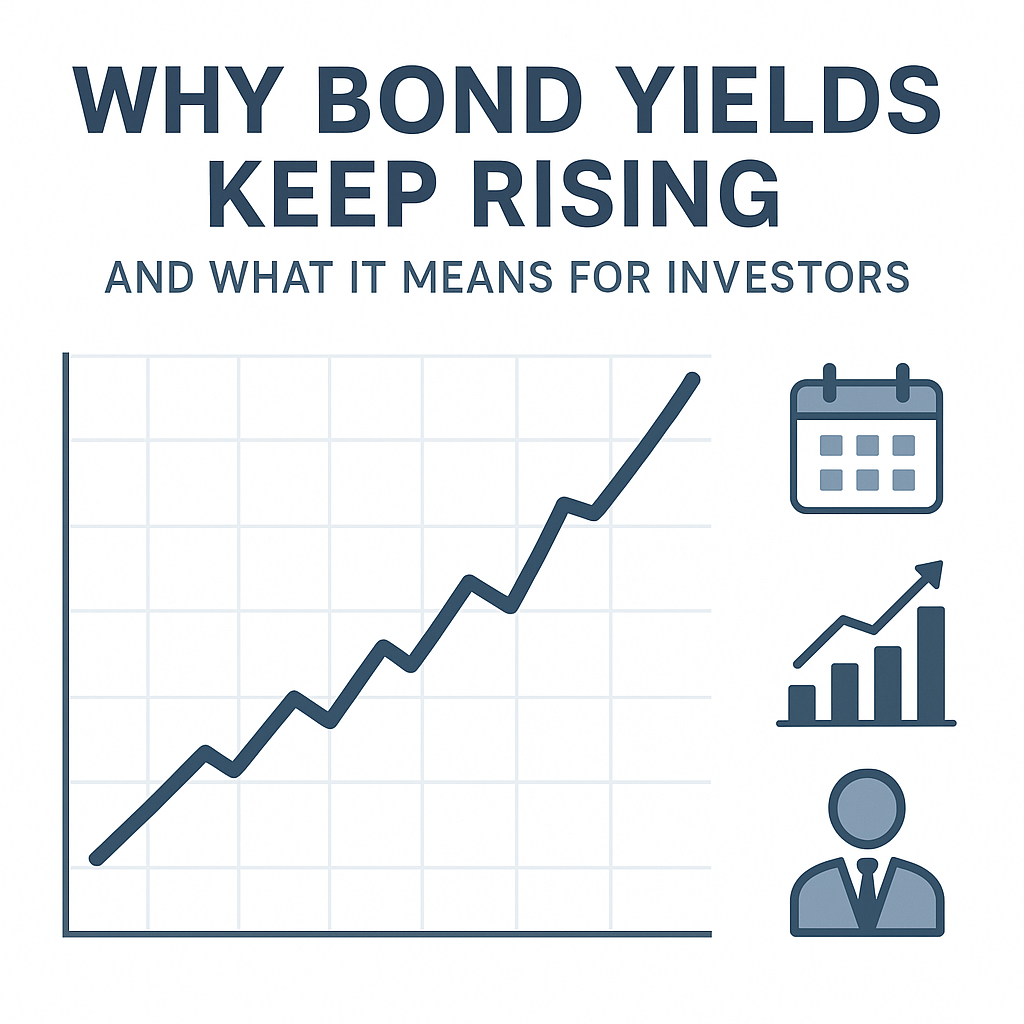
The core point is this: rising yields are not a random storm cloud. They are a price signal. Investors are paying more attention to fiscal strain, inflation persistence, and the cost of capital. That matters for portfolios, companies, housing, and government budgets alike.
Core Benefits and Importance
Higher yields are painful for existing bondholders. They are also useful. Funny how that works.
- Better income on new cash: Investors rolling maturing bonds or holding short-term Treasuries now earn more without reaching into junky assets. That is plain, boring, and valuable.
- More realistic portfolio math: For years, low yields forced investors into crowded trades, dividend traps, and private assets that promised safety while behaving like tulips. Rising yields restore a real hurdle rate.
- Stronger discipline in stock valuation: Equity prices depend on discounted future cash flows. When the discount rate rises, expensive growth stocks usually suffer first. If the market has been pricing perfection, higher yields bring it back down to earth.
- Potentially healthier saver outcomes: Retirees and near-retirees can finally get some income from high-quality fixed income again, reducing the need to chase yield. That is not a miracle; it is the bond market doing its job.
- Policy signaling: Higher yields can reflect stronger growth, tighter financial conditions, or inflation fears. Investors who read them well often spot trouble before the headlines catch up.
Most commentary says higher yields are always bad. That is lazy. The truth is more nuanced. A 5% Treasury bill is not a crisis; it is a pretty decent risk-free return, especially compared with cash that sat near zero for years. The problem is duration risk, not yield itself.
I have analyzed enough portfolios to know that the biggest mistake is treating all fixed income as one blob. A short-duration ladder, Treasury bills, investment-grade bonds, and long-duration funds are very different tools. Mixing them up is how people get surprised.

There is also a moral angle here, though finance folks rarely say it out loud. Cheap money can hide waste, reward speculation, and punish savers who work and live within their means. Higher yields are not automatically “good,” but they do impose a measure of discipline. Stewardship matters. So does justice, especially when fiscal choices pass costs to future taxpayers and younger workers.
For a broader look at rate policy and inflation, the IMF’s inflation coverage and U.S. CPI data are worth reading before you trust a hot take.
Step-by-Step Guide to Responding as an Investor
You do not need to predict the next 50 basis points. You need a plan.
- Check your duration exposure first
Duration tells you how much your bond holdings may fall if yields rise. Longer duration means bigger price drops. If your portfolio is full of long Treasury funds, agency mortgage securities, or duration-heavy bond ETFs, you are more exposed than you may think. - Separate income need from total return
Many investors own bonds for spending money, not for trading. If you need cash in the next 12 to 24 months, prioritize short-duration Treasuries, T-bills, or high-quality money market funds. If your money is long-term, you can accept more term risk, but only if the yield compensates you. - Build a ladder, not a guess
A bond ladder spreads maturities across time, which reduces the risk of reinvesting everything at the wrong moment. I prefer ladders because they keep you from playing hero with rate forecasts. Most forecasts miss. That is not cynicism; that is statistics. - Review equity valuations with rates in mind
If bond yields rise, high-multiple growth stocks often get hit first because their distant cash flows are discounted more aggressively. That does not mean dump every tech name. It means stop pretending valuation does not exist. It does. - Watch credit spreads, not just Treasury yields
Treasury yields can rise for reasons that are not disastrous. But if corporate spreads widen at the same time, risk markets are signaling stress. That is when a cautious investor should examine leverage, refinance risk, and default exposure. - Use cash as a real asset
Cash is not trash when rates are positive. It buys time, flexibility, and optionality. Frankly, a lot of bad investing comes from being fully invested in the wrong thing because one was impatient. - Stress-test housing and debt costs
Higher yields raise mortgage rates, auto loan costs, and corporate borrowing expenses. If you are considering a home purchase or refinancing, do the math under multiple rate scenarios. The monthly payment is the real number; the sales pitch is not. - Keep a watchful eye on fiscal policy
Large deficits and heavy debt issuance can keep pressure on yields if the market wants more compensation. This is where stewardship and public responsibility intersect. A nation can borrow, yes, but borrowing is not the same thing as responsibility.
When I ran the numbers on investor behavior during past rate spikes, the winners were usually the boring ones: short duration, decent cash reserves, reasonable equity valuations, and no heroics. That is not glamorous. It is effective.
For practical rate context, see TreasuryDirect and bond market commentary from BlackRock Investment Institute.
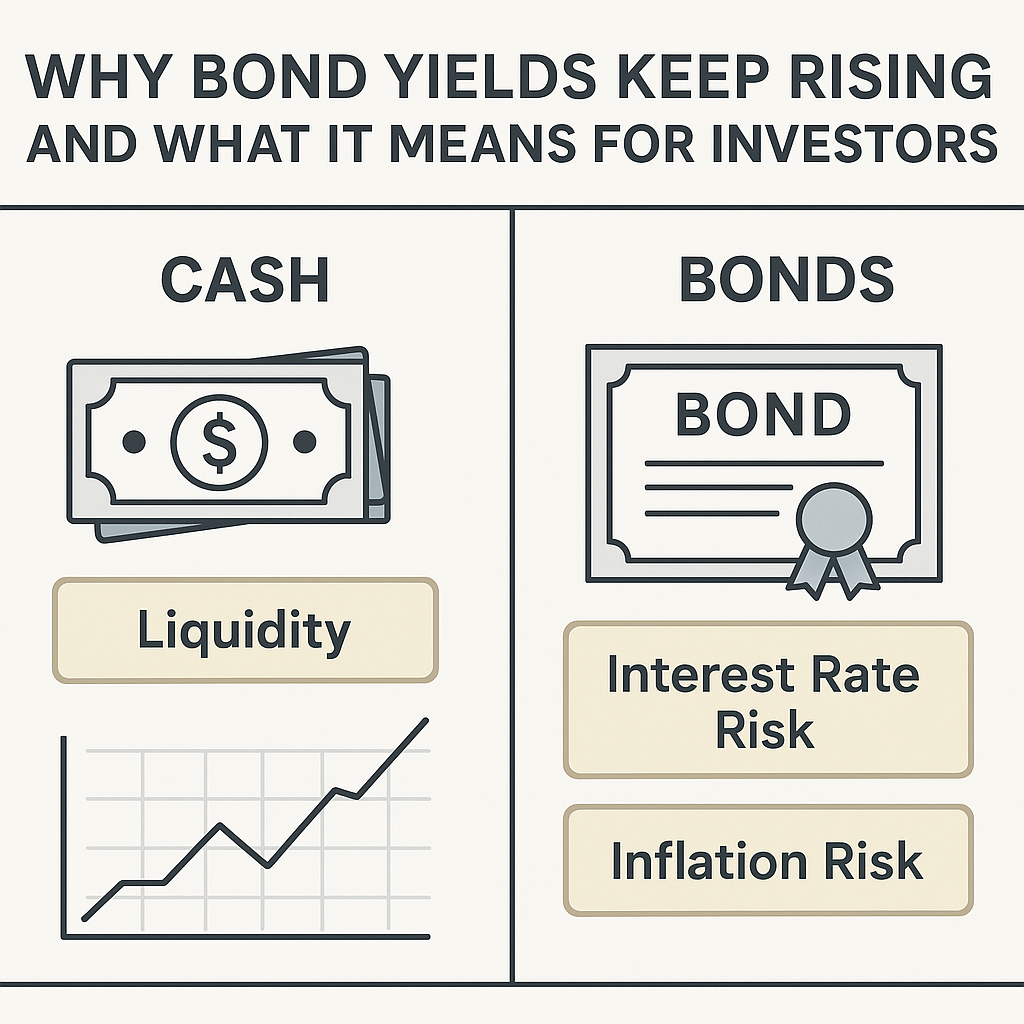
Bond Yields vs. Cash: A Simple Comparison
Higher yields change the pecking order.
| Feature | Bonds | Cash / Money Market |
|---|
| Income potential | Higher than cash if held to maturity | Usually lower, but now competitive at short maturities |
| Price risk | Yes, especially with longer duration | Minimal to none in stable-value vehicles |
| Inflation protection | Limited unless yield exceeds inflation | Weak unless rates stay above inflation |
| Liquidity | Good, but selling early can mean losses | Very high |
| Best use | Income, laddering, capital preservation with a time horizon | Near-term spending, emergency funds, dry powder |
| Main risk | Rising yields and default risk | Inflation erosion and opportunity cost |
Cash looks dull. That is the point.
A lot of investors confuse “safe” with “temporary price stability.” Those are not the same. A long bond can lose much more than a money market fund if yields rise fast enough. Meanwhile, cash can quietly lose purchasing power if inflation stays elevated. Pick your poison with clear eyes.
For investors who want a sober framing of interest rates and fixed income, the SEC’s bond basics is a clean starting point.
Common Mistakes to Avoid
The usual advice is sloppy.
- Mistake 1: Assuming higher yields mean “buy any bond”
No. Buying the wrong duration or low-quality credit just because the coupon looks better is how people get mugged by math. The yield is only part of the story. - Mistake 2: Chasing the longest maturity for the highest coupon
Long maturities can be brutal when yields keep rising. If your money may be needed in three years, do not reach for a 20-year bond because the screen looks attractive. Screens lie by omission. - Mistake 3: Ignoring inflation after buying a bond
A 5% yield is fine until inflation is 4.5% and taxes take another bite. Real return matters. Always has. - Mistake 4: Using leverage to “fix” bond losses
Leveraged bond trades magnify moves in both directions. Unless you actually understand convexity, margin, and funding risk, you are not investing. You are gambling with better vocabulary. - Mistake 5: Treating rate forecasts like gospel
Most market calls are guesses with a logo. A better habit is building a portfolio that can survive multiple outcomes, because nobody gets inflation, growth, and policy exactly right. - Mistake 6: Forgetting the social side of finance
When rates rise, debt service gets harder for households and businesses already under pressure. Investors should care about that not because it is fashionable, but because real economies are made of people, wages, rent, and bills.
The market loves certainty. Reality does not cooperate.
If you want a plain-English explanation of inflation risks and policy, the Federal Reserve’s economic data and Congressional Budget Office budget outlook help separate facts from commentary.
Frequently Asked Questions
Why do bond prices fall when yields rise?
Because existing bonds pay a fixed coupon. When new bonds offer a higher yield, older bonds become less attractive, so their market price drops until the return looks competitive. That is basic discounting, not magic.
Are rising yields always bad for investors?
No. Rising yields hurt existing long-duration bond holders, but they can improve income for new buyers, money market investors, and retirees seeking safer cash flow. Context matters more than slogans.
What happens to stocks when bond yields rise?
Usually, valuations get pressured, especially for growth stocks with profits far in the future. But if yields rise because growth is strong, some sectors can still do well. The cause of the move matters as much as the move itself.
How should a conservative investor respond?
Shorten duration, keep cash reserves, use bond ladders, and avoid chasing credit risk for a few extra basis points. That is not exciting. It is sensible.
Final Thought
Bond yields are not just a market number.
They are a verdict on inflation, policy, fiscal habits, and investor patience, and they force everyone to face the cost of capital in a way cheap money let us ignore for too long.
The best investors will not panic, and they will not pretend this is nothing, either.
They will adjust duration, keep liquidity, watch credit quality, and remember that stewardship is not a soft idea but a hard discipline, because capital should be used wisely, not merely aggressively.
That is the real lesson.