Bond yields are rising because investors are demanding more compensation for inflation risk, heavy Treasury issuance, sticky growth, and uncertain Fed policy...
Bond yields are rising because investors are demanding more compensation for inflation risk, heavy Treasury issuance, sticky growth, and uncertain Fed policy. That’s the plain answer. But the shouting match between Wall Street and Fed officials tells you something deeper: markets think the economy, deficits, and rate cuts are heading in different directions.
Key Takeaways
- Bond yields move for a mix of inflation expectations, real growth, term premium, and central bank policy.
- Wall Street often focuses on growth, earnings, and the path of rate cuts; Fed officials focus on inflation credibility and labor-market balance.
- Rising yields can reflect stronger growth or higher risk, not just fear of inflation.
- Large Treasury supply, especially at longer maturities, can push yields up even when the Fed is on hold.
- Investors should think in terms of duration, diversification, and cash-flow needs, not headlines.
What is happening with bond yields?
Bond yields are the return investors demand to hold debt, and when yields rise, bond prices fall. Simple enough. The mess comes from the fact that yields are not one thing, but a stew of expectations about inflation, growth, central bank policy, and the extra payment investors want for tying up money in longer-dated bonds.
Here’s the kicker: people hear “yields are soaring” and assume the market is panicking. Sometimes it is. Sometimes it isn’t. I’ve analyzed enough fixed-income moves to say this much: the market can push yields higher for healthy reasons, ugly reasons, or reasons that are just bookkeeping. If growth looks firm, investors may accept higher yields because they expect stronger nominal income and fewer cuts from the Fed. If inflation stays stubborn, buyers want more yield just to preserve real purchasing power. If the Treasury floods the market with new supply, yields can rise because buyers need a better price.
That’s why Wall Street and Fed officials sound like they’re living in different zip codes. Traders often price the next six to twelve months, and they do it fast, using futures, options, and bond positioning. Fed officials talk in public about inflation trends, labor-market slack, and policy credibility over a longer horizon. They are not supposed to sound like day traders. Good. We’d be in trouble if they did.
The Fed’s own statements matter, of course, but not as much as the market thinks when everyone is glued to a single press conference. The bond market reacts to real data and supply mechanics, not just speeches. For background on official policy language, the Federal Reserve’s monetary policy page is the place to start. For a broader explanation of inflation and rates, the BLS Consumer Price Index data helps explain why investors get jumpy.
Core Benefits and importance
Higher yields are not automatically bad. They can be a signal. They can also be a warning. Most commentary skips that distinction, which is sloppy.
- They improve income for savers. Money market funds, short Treasuries, and laddered bond portfolios suddenly pay more. For retirees or institutions that need steady cash flow, that matters. A 5% yield is a different animal from a 2% yield, no matter what the stock crowd says at cocktail hour.
- They can reflect stronger nominal growth. If the economy expands faster, businesses may earn more and borrowers may be able to service debt. That is not always great for bondholders, but it can support parts of the equity market. Bond yields rising for the “right” reasons are less dangerous than yields rising because inflation is out of control.
- They force discipline. When cash finally pays something, investors stop reaching for junk just to get a return. Frankly, that is healthy. Cheap money encouraged a lot of sloppy behavior. Real yields remind people that capital has a cost.
- They reset portfolio math. Asset Allocation actually matters again. Bonds do not need to be a dead weight. They can be a stabilizer, a source of income, and a dry-powder reserve when equities wobble.
- They expose weak balance sheets. Companies and governments that relied on easy refinancing get hit first. That is why rising yields are not just a market story; they are a moral one too. Debt should fund productive work, not endless rollovers. Stewardship has a cost, and markets eventually collect it.
Everyone talks about diversification, but few understand what it really means. It is not owning 12 funds that all melt in the same rate shock. It is holding assets that react differently to market volatility, inflation, and policy changes. That includes Treasury bills, intermediate bonds, inflation-linked securities, equities with pricing power, and some cash.
For more on the mechanics behind government borrowing and demand for bonds, see the U.S. Treasury yield data and the New York Fed Treasury market resources. Those numbers do not care about opinion pieces.

Step-by-Step implementation guide
If you want to respond to soaring yields, you need a process. Not a hot take. Not a ten-second chart tweet. A process.
- Separate the cause from the headline. Ask whether yields are rising because of inflation expectations, real growth, Treasury supply, or Fed hawkishness. I’ve found this matters more than almost anything else. A yield spike from stronger growth calls for a different portfolio response than a yield spike from sticky inflation.
- Check the maturity structure. Short-term yields may track Fed policy, while long-term yields reflect inflation, term premium, and duration risk. If the 2-year is rising faster than the 10-year, markets may be pricing fewer cuts. If the 10-year jumps, long-dated supply or term premium may be in play.
- Review your duration exposure. Duration is just interest-rate sensitivity, and long-duration bonds can get hit hard when yields rise. I’ve seen too many investors reach for longer bonds because they once offered safety. That only works when the starting yield and inflation regime cooperate. They often don’t.
- Match bond type to purpose. If you need liquidity, use T-bills or very short maturities. If you need income with moderate volatility, use intermediate high-quality bonds. If inflation is the main threat, consider Treasury Inflation-Protected Securities. This is not fancy. It is sensible.
- Stress-test the portfolio. Run scenarios where yields rise another 50, 100, or 150 basis points. See what breaks. If your holdings cannot tolerate an ordinary rate shock, then the problem is not the market; it is your allocation.
- Watch credit spreads separately. Rising Treasury yields and widening credit spreads are not the same thing. If both move against you, risk assets are getting repriced, not just government debt. That distinction matters for corporate bonds, leveraged loans, and dividend-heavy equities.
- Keep some dry powder. Cash earns a return again in higher-rate environments. That makes rebalancing easier and stops investors from selling quality assets at bad prices. Prudence is not cowardice. It is stewardship.
- Do not worship the Fed statement. Wall Street often treats one speech as the final word. It is not. The Fed can signal, but the market is built from thousands of trades, balance-sheet constraints, and economic data releases. Most guides say to “listen closely,” which is fine, but the better advice is to compare statements against actual data.
For a clean government explanation of inflation trends, the latest CPI release is useful. For monetary policy context, the FOMC calendar shows what the Fed is actually deciding on, instead of what the market imagines it decided.

Comparison table
| Factor | Rising Yields Now | Biggest Competing View: Temporary Spike | What It Means for Investors |
|---|
| Main driver | Inflation persistence, growth resilience, Treasury supply, term premium | Pure Fed policy fear | If policy is the only issue, yields may reverse faster |
| Fed narrative | Inflation still needs restraint; cuts should wait | The Fed is simply talking tough | Public comments may lag market pricing |
| Wall Street narrative | Growth is stronger, cuts may be delayed, supply is heavy | Markets are overreacting to headlines | Rates may stay elevated longer than expected |
| Bond market effect | Prices fall, duration risk rises | Brief selloff, then recovery | Reassess maturity exposure and reinvestment risk |
| Best response | Shorten duration, diversify, rebalance | Wait for the “all clear” | Waiting can be expensive |
| Risk to ignore | Inflation and supply together | One-off volatility only | Multiple forces can stack against bondholders |
The truth is, the competing story is usually too neat. Markets rarely move for one reason, and the people who insist on a single cause are usually trying to sell you something. Maybe not literally, but close enough.
For context on official Treasury issuance and debt management, the U.S. Treasury financing and rates page is worth reading. It shows supply is not some side detail. It is part of the price.
Common mistakes to avoid
The biggest mistake is assuming high yields automatically mean “bad time to buy bonds.” That is lazy thinking. Sometimes the better yields are exactly what fixed income needed. The second mistake is assuming the Fed controls every move. It does not. The market can ignore the Fed for months if inflation data, deficit financing, or foreign demand point elsewhere.
- Mistake 1: Confusing price with value. A bond price falling is not the same as the bond becoming useless. In fact, higher yields can improve future returns if you buy after the reset.
- Mistake 2: Ignoring the real yield. Nominal yield is only half the story. If inflation is 3% and the bond yields 4%, the real return is thinner than it looks.
- Mistake 3: Overloading on long duration. Long bonds can punish investors when rates rise, and the pain is sharper than most people expect. It feels like slow-motion nonsense until the statement arrives.
- Mistake 4: Treating Fed speakers like prophets. They are informed, not infallible. I respect the institution, but I do not confuse authority with omniscience. Markets have a nasty habit of reminding everyone that forecasts are guesses.
- Mistake 5: Chasing yield without checking credit quality. A fat coupon on weak debt is not a free lunch. It is usually a trap with a ribbon on it.
- Mistake 6: Forgetting tax and cash-flow needs. An investor with short-term liabilities should not act like a pension fund. Match assets to obligations. That is basic prudence.
Most advice says to stay “balanced,” which is vague enough to be useless. Better to ask: What am I funding, when do I need the money, and what can I survive if rates stay high? That is the real filter.
Frequently Asked Questions
Why are bond yields rising when the Fed may cut rates later?
Because markets do not trade on a single rate-cut story. They price inflation, growth, Treasury supply, and the term premium. If those forces point up, yields can rise even if cuts are still possible later.
Are higher bond yields good or bad for stocks?
It depends. If yields rise because growth is firm, stocks can hold up. If yields rise because inflation is sticky or real rates are too restrictive, valuations often get squeezed. The index does not care about your feelings.
Should investors buy bonds now or wait?
That depends on time horizon and risk tolerance. For income investors, current yields may be attractive relative to recent history. For duration-sensitive investors, laddering or shorter maturities may make more sense than trying to call the exact top in yields.
What is the difference between Treasury yield and credit spread?
A Treasury yield is the return on government debt. A credit spread is the extra return demanded to hold corporate or lower-quality debt over Treasuries. Rising Treasury yields are one issue; widening spreads are another, and they often signal more stress.
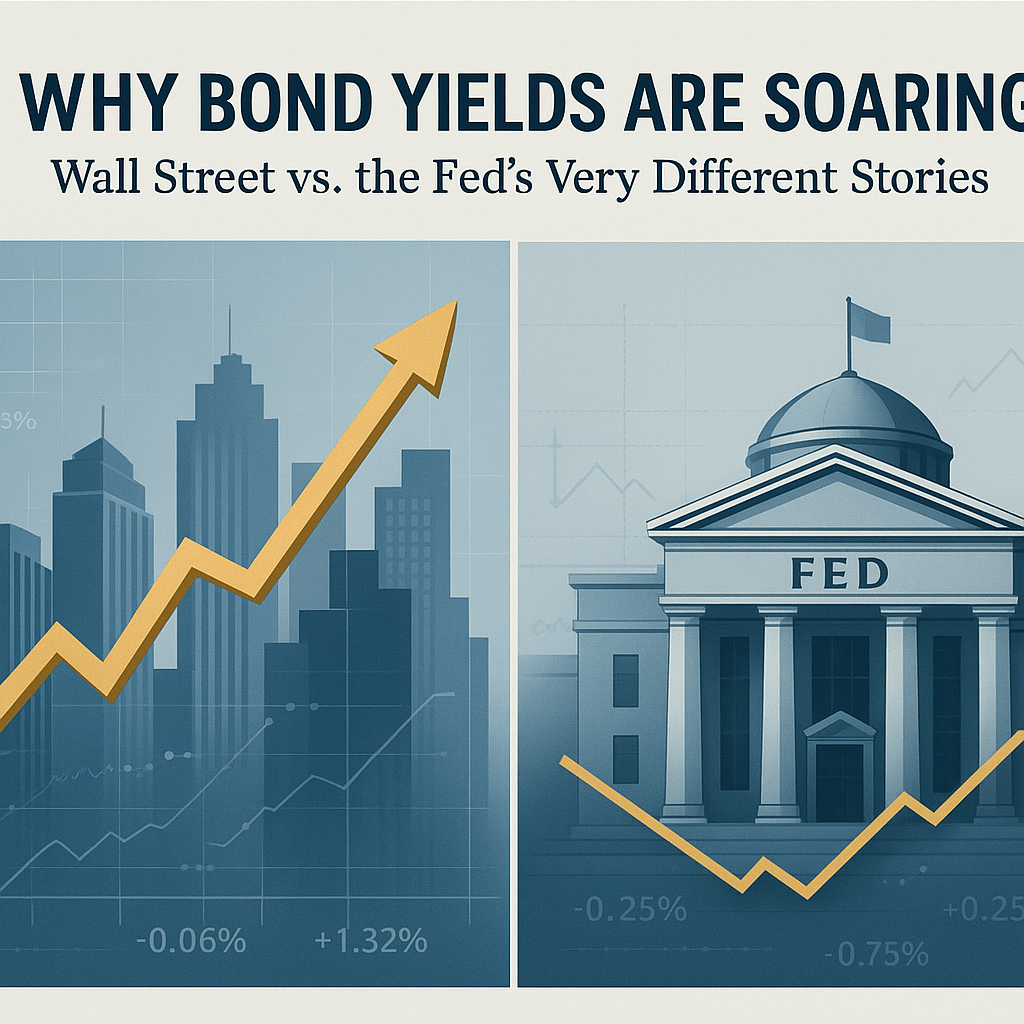
The final thought is this: markets are not trying to be comforting. They are trying to set a price for risk, and right now that price reflects a tension between optimistic growth stories and stubborn policy reality. If you treat bonds as a tool for stewardship rather than a place to park leftovers, you will make fewer foolish moves when the yield tape gets noisy.
And that matters. Capital is not just a number on a screen; it is a responsibility. Good investing respects that.