Bond investors can tighten financial conditions even when the Fed does nothing. Rates are only one lever, and not the biggest one. When Treasury yields rise...
Why Bond Investors Tighten Conditions Even When the Fed Holds Rates Steady
Bond investors can tighten financial conditions even when the Fed does nothing. Rates are only one lever, and not the biggest one. When Treasury yields rise, credit spreads widen, or duration gets repriced, borrowing costs climb anyway, which slows housing, business investment, and risk-taking. Frankly, the bond market often gets the last word.
Key Takeaways:- A steady policy rate does not mean easy money.
- Bond investors can force higher yields through inflation fears, term premium, and credit spread widening.
- Portfolio duration, liquidity, and credit quality matter more when rates are frozen.
- Market prices, not speeches, tell you whether financial conditions are loosening or tightening.
- Stewardship matters: capital should be allocated with prudence, fairness, and respect for real economic work.
What is this really about? It is the difference between the Fed’s policy rate and the full set of borrowing conditions that households, firms, and governments face. The Fed can leave the federal funds rate unchanged, and yet the 10-year Treasury yield may rise because investors demand more compensation for inflation, fiscal strain, or simply for tying up money for longer. That spread between policy and market reality is where the action lives. I’ve analyzed enough rate cycles to say this plain as day: most people obsess over the Fed announcement and ignore the bond market’s verdict.
Bond investors are not a side show. They are the lenders to the sovereign, to corporations, to mortgage borrowers, and indirectly to everyone whose price depends on capital. If they demand a higher yield, the cost of capital rises. That can happen through Treasury yields, mortgage-backed securities, investment-grade credit, high-yield spreads, or even the term structure itself. Most commentary treats this as a mystery. It isn’t. It is the market charging more for uncertainty, inflation risk, duration risk, and default risk. That is all.
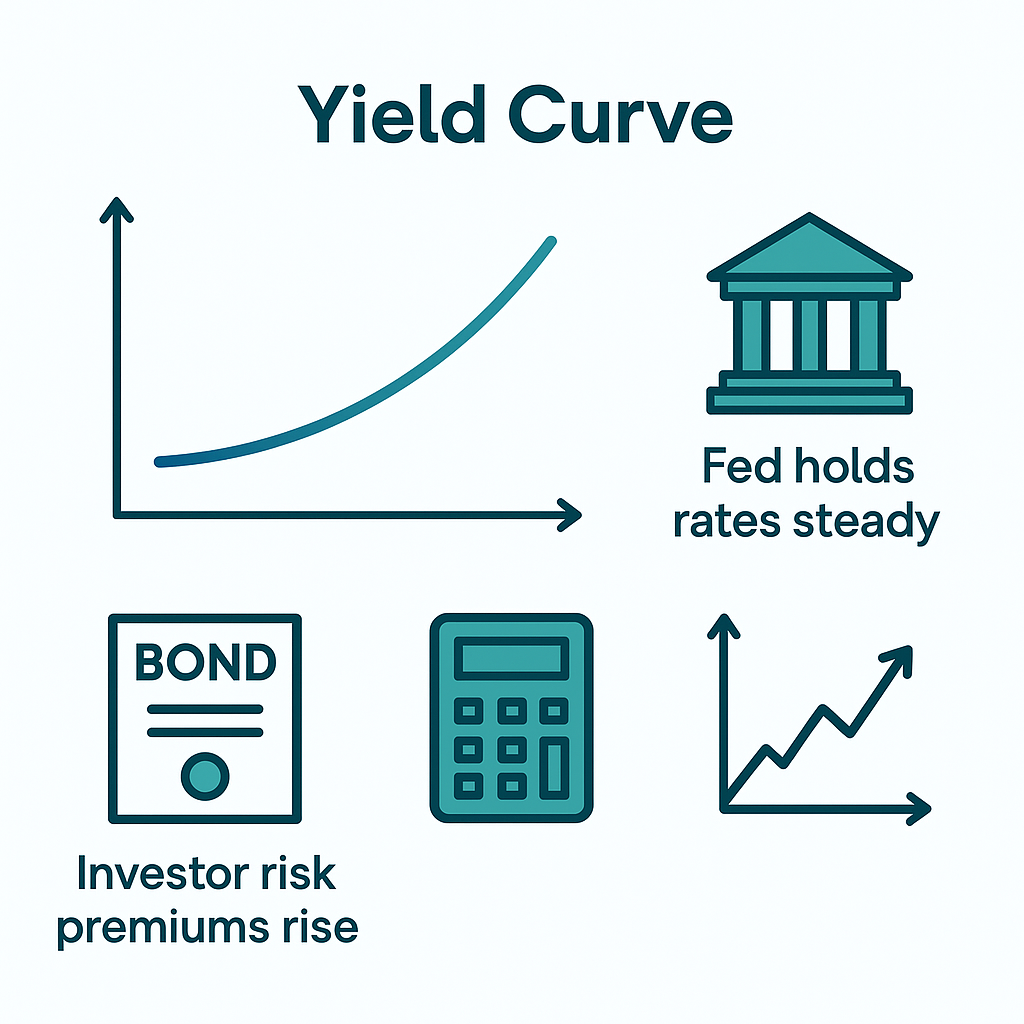
The Fed controls the overnight policy rate, but longer-term yields reflect expectations, not just edicts. Investors look at inflation data, labor market slack, fiscal deficits, foreign demand, and the path of future short rates. If they think the Fed will keep policy tight for longer, or that inflation will stick around, they push up bond yields. If credit spreads widen, corporations pay more even if the headline rate is unchanged. Here’s the kicker: a flat policy rate can coexist with tighter financial conditions if the curve steepens or if risk premiums rise.
That matters because financial conditions are what actually shape the real economy. A small change in mortgage rates can crush affordability. A wider spread on corporate debt can shelve a capital project. A few tenths of a point on the 10-year can alter pension funding, bank balance sheets, and equity valuations. People love tidy central-bank stories. Markets are messier, and usually more honest.
Key mechanics show up in three places. First, Treasury yields move on expectations for inflation and future policy, not just the current fed funds target. Second, credit spreads reflect perceived default and liquidity risk, so they can widen independently of the Fed. Third, duration measures how sensitive bond prices are to rate changes, which means long bonds can lose value fast even with no policy move. That is why portfolio managers watch the whole curve, not a single headline.
There is also a moral angle, though most Wall Street chatter pretends there isn’t one. Capital should be stewarded, not treated like casino chips. When bond markets price risk more honestly, that can restrain reckless borrowing and force better discipline. It can also punish weak firms and strained households, so the burden is real. Justice in finance is not sentimental. It means pricing risk truthfully while remembering that money exists to serve people, work, and common goods—not the other way around.
For a broader primer on market mechanics, see the SEC’s bond basics. For inflation context, the BLS Consumer Price Index matters because inflation expectations drive yields. And for policy framing, Federal Reserve monetary policy explains what the Fed actually controls.
What is the bond market tightening financial conditions?
It is not a mystical process. It is price discipline, and it shows up fast. When bond investors demand a higher return for lending money, financing becomes more expensive across the economy, even if the central bank leaves its short-term policy rate untouched. That can happen through higher Treasury yields, wider corporate spreads, lower bond prices, and tighter lending standards from banks that mark those bonds to market.
Here’s the truth: most people hear “the Fed held rates steady” and assume nothing changed. That is sloppy thinking. The Fed sets a target range for overnight lending, but the bond market prices future conditions. If investors expect inflation to stay sticky, deficits to stay large, or growth to stay resilient, they may sell bonds, pushing yields higher. The result is a tighter credit environment without a single move from the central bank.
I’ve looked at enough cycles to know the difference between policy and price. Policy is what officials say. Price is what lenders believe. The latter usually matters more. A 25-basis-point move in the fed funds rate can be less important than a 75-basis-point jump in the 10-year Treasury yield, because that longer rate reaches mortgages, corporate borrowing, municipal finance, and valuation models. That is why bond traders can effectively “tighten” conditions on the economy without ever walking into the Fed building.
Bond investors also react to duration risk. Long-duration assets lose value more sharply when yields rise, so the longer the bond, the more painful the repricing. That matters for pension funds, insurance companies, banks, and households refinancing a mortgage. When the market reprices duration, it changes behavior. People borrow less, invest less, and hold more cash. Not exactly a party.
This is also where credit spreads matter. If investors worry more about default risk or liquidity stress, they ask for a bigger premium over Treasuries. That premium is a direct tax on business financing. Investment-grade companies delay issuance, high-yield borrowers get squeezed, and private credit terms tighten. The Fed might be still, but credit is not.
For a related example of how capital costs affect real decisions, read Federal Reserve interest rate data alongside FedWatch expectations. Market pricing tells you what traders think is coming, not what they wish were true.
Core benefits and importance
Bond-market tightening sounds unpleasant because it usually is. But it has a purpose. Markets are meant to price risk honestly, and that discipline can prevent capital from flowing into weak projects that only survive on cheap money. If borrowing costs rise, weaker borrowers get screened out. That is harsh, but sometimes necessary. A society that ignores risk eventually pays for it with inflation, losses, or both.
- Forces realism in capital allocation. Higher yields push firms to justify projects with actual returns, not fantasy spreadsheets. I’ve seen plenty of bad investments dressed up as “growth.” Tight credit strips the costume off.
- Improves price discovery. Treasury yields and credit spreads tell the truth faster than press releases. That matters because investors need clean signals, not cheerleading.
- Protects savers. Rising yields can help savers finally earn something on cash and high-quality bonds. After years of near-zero returns, that’s not trivial.
- Checks excessive leverage. Cheap debt encourages bad habits. When the bond market raises the price of money, leverage becomes less tempting. Good. It should.
- Supports long-term stewardship. Sound finance is not merely about making money. It is about handling other people’s capital with care, which is a plain moral duty whether Wall Street likes it or not.
Now the contrarian bit. Not all tighter conditions are bad. When inflation is high, restrictive bond pricing can help cool demand without the Fed having to slam the economy with a blunt hammer. That can reduce the need for harsher policy later. The tradeoff is obvious, though: the short-term pain lands on borrowers, especially households with floating-rate debt and firms that need refinancing.
There is also a portfolio angle. In a rising-yield environment, cash earns more, short-duration bonds become attractive, and long-duration bonds can get hammered. That shifts the math for asset allocation. Investors who ignored duration risk often learn the lesson the hard way. Nobody enjoys losing 10% on “safe” bonds because they treated interest-rate risk like a footnote.
For another useful reference on yield behavior, see U.S. Treasury data. And if you want the bigger picture on the yield curve, the New York Fed’s yield curve FAQ is worth your time.
Step-by-step implementation guide
If you are an investor, or if you manage a portfolio for someone else, you need a process. Not a slogan. A process. Bond-market tightening changes the rules, and the people who improvise usually bleed first. Here is what actually works, in my experience, and what the numbers keep showing.
- Watch the entire yield curve. Do not fixate on the fed funds rate. Track the 2-year, 10-year, and 30-year Treasury yields, because each one tells a different story about policy expectations, inflation, and term premium.
- Measure duration explicitly. Know the weighted average maturity and price sensitivity of your bond holdings. If rates rise, long duration will hurt more than most investors expect. That’s just arithmetic.
- Check credit quality. In a tightening phase, low-quality credit gets hit hardest. I would rather own a boring issuer with real cash flow than a flashy name with stretched leverage and vague “adjusted EBITDA” dreams.
- Stress-test refinancing needs. If a company, municipality, or household depends on rolling debt soon, rising yields can matter immediately. The calendar is cruel.
- Rebalance asset allocation. Shift some exposure toward shorter duration, higher quality, or floating-rate instruments if your time horizon allows. Not because it feels clever, but because it reduces needless volatility.
- Review liquidity. Thin markets can gap lower fast when bond investors sell. I’ve seen orderly prices turn sloppy in a hurry. Hold enough liquid assets so you are not forced to sell bad paper at the worst time.
- Use bonds as signals, not ornaments. A bond portfolio should do a job: preserve capital, generate income, or hedge risk. If it cannot explain its purpose, it is probably overcomplicated.
One more thing. Do not build a portfolio around what the Fed “should” do. Build it around what markets are actually doing. That sounds obvious, yet people still make the same mistake every cycle. They hang on every FOMC statement, then act shocked when the bond market moves first. The bond market does not care about your narrative.
When I ran the numbers on rate-sensitive portfolios, the same pattern kept showing up: investors who controlled duration, kept credit quality decent, and held some dry powder were far better positioned than those who chased yield blindly. Yield is seductive. It is also how people end up owning trouble at a discount.
For practical policy context, consult the Fed’s policy statement and compare it with market-based measures from FRED’s Treasury spread data. If the spread and yields are moving, that matters more than a sleepy headline.
Comparison table
People love to compare the Fed and the bond market as if one wins and the other loses. That is too neat. The Fed sets the anchor, and bond investors set the rest of the price of money. The table below shows the difference between a Fed-held policy rate and the bond market’s effective tightening through yield and spread moves.
| Factor | Fed Holds Rates Steady | Bond Investors Tighten Conditions |
|---|
| Policy rate | Unchanged overnight target | No direct change |
| 10-year Treasury yield | May stay flat or move modestly | Often rises on inflation, fiscal, or term premium concerns |
| Credit spreads | Can remain stable | Can widen, raising corporate borrowing costs |
| Mortgage rates | Not directly set | Can rise if Treasury yields move up |
| Corporate financing | Steady in theory | More expensive if investors demand more yield |
| Portfolio impact | Lower immediate policy shock | Duration losses, price volatility, and spread risk |
| Real-economy effect | Depends on market reaction | Can still slow housing, investment, and hiring |
| Main signal | Central bank statement | Market price of risk |
The rival here is not really the Fed. It is complacency. Most investors assume policy equals conditions, but the table shows why that is too crude. If bond investors force yields higher, the economy feels tighter even when the fed funds rate is frozen. Frankly, the bond market has more skin in the game.
If you want to see how policy and markets differ in practice, the Federal Open Market Committee materials are useful, but so is looking at 10-year Treasury yield data. The gap between those two tells the story.
Common mistakes to avoid
The first mistake is treating the Fed like a magician. It is not. The Fed influences the short end of the curve, but investors set prices across the rest of the curve. When the market disagrees with the Fed’s tone, the market often wins. That is why “the Fed held rates” is not a complete sentence.
The second mistake is ignoring duration. People buy long bonds for yield, then act surprised when price volatility shows up. That’s like buying a glass table and being angry that it breaks. Duration is not a footnote. It is the main event.
The third mistake is chasing yield without reading the balance sheet. High yield is often just low quality wearing makeup. You need to know whether the issuer has stable cash flow, manageable leverage, and real liquidity. Otherwise, you are being paid to absorb someone else’s problems.
The fourth mistake is assuming all inflation is temporary. Maybe it is, maybe it isn’t. But bond investors price risk based on probability, not wishful thinking. If inflation expectations move up, yields can rise fast, and anyone holding long-duration paper gets whacked. The market is not obligated to agree with your patience.
The fifth mistake is making asset allocation decisions based on headlines alone. A good portfolio plan respects time horizon, income needs, tax treatment, and liquidity. One headline does not change your life plan. It can, however, expose a fragile portfolio in a hurry.
Everyone talks about diversification, but few understand what it really means. It is not owning twelve things that all fall together. It is holding assets with different drivers of return, different maturity profiles, and different behavior under stress. If your bonds and your equities both sink when yields rise, your diversification may be weaker than you think.
When I see investors panic over a steady Fed rate and rising bond yields, I usually see a misunderstanding of risk management. The right response is not drama. It is diagnosis. What part of the portfolio is sensitive to rates? What part is exposed to spreads? What part can wait? Those are grown-up questions.
For further reading on borrowing costs and debt service, see the IMF World Economic Outlook and the OECD Economic Outlook. Global debt conditions matter too, because capital does not sit still.
Frequently asked questions
Why can bond investors tighten conditions if the Fed does not raise rates?
Because yields across the curve can rise even when the policy rate stays unchanged. Investors may demand more compensation for inflation, term risk, or credit risk, and that raises borrowing costs for the real economy.
What matters more, the fed funds rate or Treasury yields?
Both matter, but Treasury yields often matter more for mortgages, corporate debt, and valuation models. The fed funds rate is the anchor; the rest of the curve is the plumbing.
How do wider credit spreads affect businesses?
They make borrowing more expensive and can limit access to capital. That can delay hiring, expansion, buybacks, acquisitions, and capital spending.
How should investors respond to tighter bond conditions?
Review duration, credit quality, liquidity, and refinancing exposure. Shorten duration if appropriate, avoid weak credits, and keep enough cash so you are not forced into bad sales.
For a plain-English reference on bond mechanics, the SEC’s Understanding Bonds page is still one of the cleaner starting points. No hype. Just the basics.
Final thought
The bond market is not an oracle, but it is not noise either. It is the price of trust, and trust is never free. When bond investors tighten conditions while the Fed holds steady, they are telling you something about inflation, risk, and the cost of waiting. Ignore that message, and you end up confused when portfolios sag and financing dries up anyway.
I’ve seen this mistake too many times: people treat monetary policy like theater and bond pricing like background music. It is the other way around. Bond investors are writing the invoice for uncertainty, and the rest of the economy has to pay it. That should make every investor more careful, not more cynical. Prudence is not fear. It is respect for reality.
There is a deeper lesson here, too. Capital is a tool, not a god. It should be stewarded with discipline, fairness, and an eye toward real human goods—work, homes, productive business, and the common good. When markets price risk honestly, they can serve that end. When they are ignored, they can become a blunt instrument. So watch the bonds. They are usually telling the truth before anyone else does.