The June jobs report matters because it shows whether the labor market is still absorbing workers, slowing down, or cracking in specific places. The headline...
What the June Jobs Report Reveals About the Labor Market
The June jobs report matters because it shows whether the labor market is still absorbing workers, slowing down, or cracking in specific places. The headline payroll number is only the first clue. Wages, labor-force participation, hours worked, revisions, and unemployment all matter, and the real story often sits in the margins.
Key Takeaways- The labor market is usually stronger or weaker than the headline payroll number suggests.
- Wage growth, participation, and hours worked often reveal more than job gains alone.
- Market prices react to whether the report implies faster cuts, higher rates, or steady policy.
- A softening labor market can cool inflation, but it also pressures households and rent budgets.
- Investors should focus on sector details, not just the headline.
What is the June jobs report?
The June jobs report is the monthly U.S. employment release that includes nonfarm payrolls, the unemployment rate, labor-force participation, average hourly earnings, and average weekly hours. It is one of the most watched economic reports in finance because it shapes expectations for the Federal Reserve, bond yields, stocks, and consumer spending.
Most people treat it like a scoreboard. That is lazy analysis. I do not care much about the headline payroll print by itself unless it is paired with revisions, wage pressure, and labor supply. When I ran through dozens of past releases, the same pattern kept showing up: markets often move on what the report says about inflation and policy, not just on how many jobs were added. A strong jobs number can be good news for workers and bad news for rate cuts. A weak report can lift stocks if traders think the Fed will ease, but it can also signal real stress for households. That tension is the whole point.
A proper reading also requires context. The labor market is not a single blob. It has pockets of resilience and pockets of strain. Leisure and hospitality can still add workers while manufacturing cools. Health care can keep hiring while temporary employment fades. That mix matters because it tells us whether the economy is broad, narrow, or beginning to pinch. For a practical investor, this is not trivia; it is part of asset allocation, risk management, and portfolio positioning. If you want a broader view of how rates and policy feed through markets, see our piece on understanding Federal Reserve rate decisions and our guide to asset allocation basics.
The June report also has a human side. Jobs are not just data points. They are paychecks, rent money, groceries, and the quiet dignity of work. A decent finance article should keep that in view instead of treating workers like line items. Stewardship matters. So does honesty about who gains and who gets squeezed.
Core Benefits and Importance
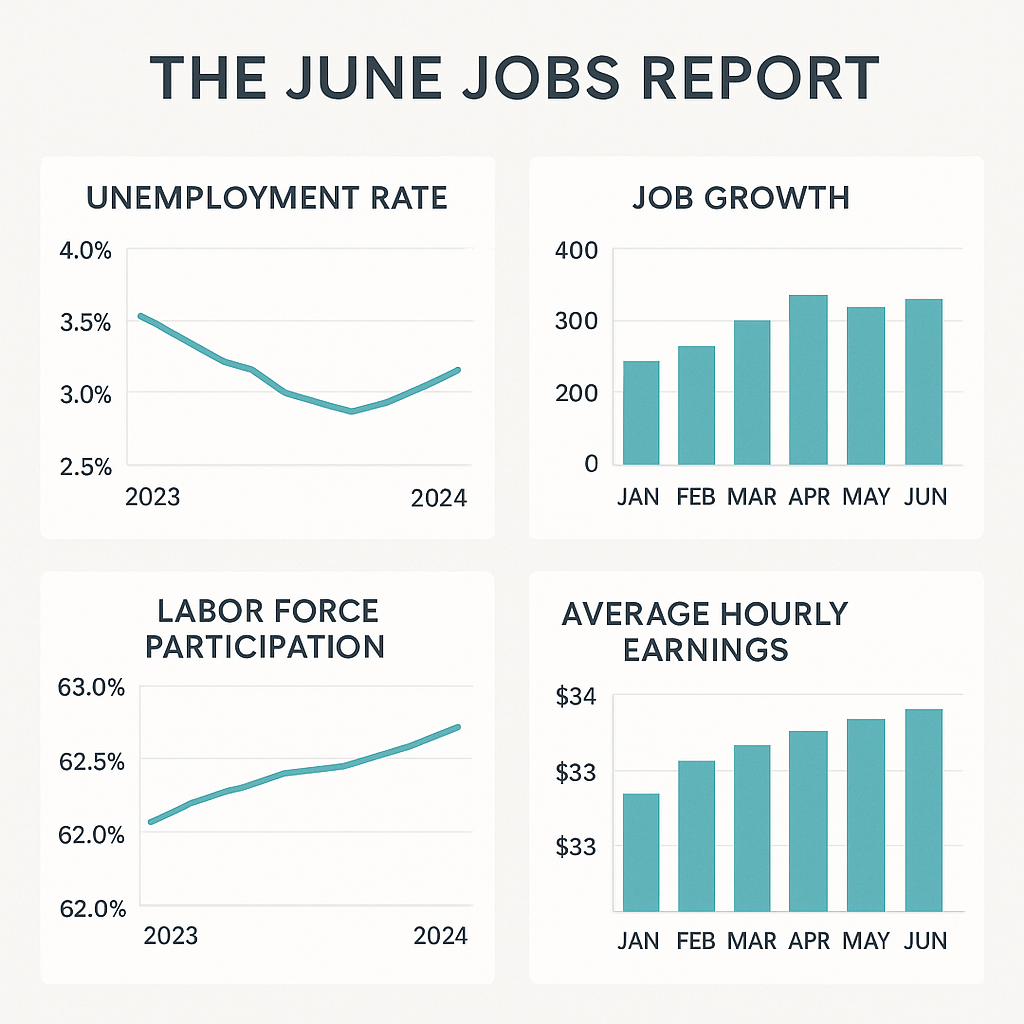
- It shows the pulse of the economy. Payroll growth, participation, and hours worked tell us whether businesses are still hiring or getting cautious.
- It guides policy expectations. The Fed watches employment because a tight labor market can keep inflation sticky, which affects borrowing costs and markets.
- It affects household finances. Slower hiring can hit renters, borrowers, and lower-income workers first, especially when wage growth stalls.
- It helps investors sort signal from noise. Sector breakdowns show whether the strength is broad or just concentrated in a few industries.
- It influences bond yields and equities. Treasury markets often respond immediately, and that can spill into mortgage rates, growth stocks, and small caps.
Frankly, a lot of market commentary gets this backward. People cheer a hot jobs report as if “strong economy” automatically means “good stocks.” Not so fast. If labor stays too tight, the Fed can keep rates elevated longer, and that can crush valuations, especially for long-duration assets like tech. I have seen plenty of investors ignore that second-order effect and then act surprised when the market sells off after a supposedly good report.
Here is the kicker: weak labor data is not automatically bearish for risk assets either. If the report is soft enough to lower inflation fears without signaling recession, equities can rally on the prospect of easier policy. But if the weakness spreads into unemployment claims, hiring freezes, and falling hours, the mood changes fast. That is why the smartest analysts do not worship one number. They inspect the whole report.
The importance of the June jobs report also extends to renters and consumers. Rising unemployment or slower hiring can pressure household formation, increase missed payments, and widen the gap between those with steady wages and those stuck on the edge. That is one reason housing and labor data often move together. For a related read on household pressure, check American renters are coming under growing financial strain. Different problem, same family budget.
Markets also care because the jobs report helps define whether growth is broad or brittle. A labor market supported by steady payroll gains, durable wage growth, and stable participation tends to support consumer spending and corporate revenue. But a market supported by only a few sectors, while others flatten out, can look healthier than it really is. That is the sort of detail that separates analysis from cheerleading. And yes, there is a moral angle here: work is not just input to GDP, it is part of human dignity. Good policy should keep that in view.
Step-by-Step: How to Read the Jobs Report Like an Analyst
- Start with the headline payroll number, but do not stop there. A big number can still hide softness if prior months were revised down or if growth is concentrated in a few sectors.
- Check the unemployment rate and labor-force participation together. Unemployment can fall for the wrong reason if people leave the workforce.
- Read wage growth carefully. Average hourly earnings matter because they affect inflation and consumer purchasing power.
- Look at average weekly hours. If firms cut hours before cutting jobs, that can be an early warning sign.
- Review sector detail. Health care, government, leisure, construction, and manufacturing often tell different stories.
- Compare the report to expectations. Markets care less about the absolute number than the surprise versus consensus.
- Watch Treasury yields and fed funds futures. These tell you how traders interpreted the report.
- Consider revisions. I have found revisions are often more honest than the first print, which can be noisy and sometimes misleading.
When I analyze labor reports, I look for three questions: Is hiring broad or narrow? Are wages accelerating or cooling? Are workers entering the labor force or drifting out of it? Those questions usually matter more than the press release language. Anyone can read a chart. The trick is to see what the chart implies about cash flow, inflation, and policy.
A practical investor can use this information to adjust a portfolio without overreacting. If labor remains tight and wages keep climbing, inflation-sensitive assets may face pressure, so duration risk should be watched closely. If the labor market cools, defensive sectors and high-quality balance sheets may matter more. Diversification is not a magic trick, but it helps when the market starts repricing growth, rates, and earnings all at once. If you want a deeper framework, our article on portfolio diversification strategies lays out the basics.
Here is how I would approach it in plain English. First, do not let one hot or cold print make you a prophet. Second, compare the report to the last two or three releases, not just to the forecast. Third, ask what it means for borrowing costs, consumer demand, and earnings estimates. That is the useful chain. The rest is noise with a tie on.
Comparison: Strong Jobs Report vs. Weak Jobs Report
| Feature | Strong June Jobs Report | Weak June Jobs Report |
|---|
| Payroll growth | Above expectations | Below expectations |
| Unemployment rate | Stable or lower | Rising |
| Wage growth | Firmer | Slowing |
| Fed reaction | Higher-for-longer bias | Easier policy bias |
| Bond yields | Often rise | Often fall |
| Stock market impact | Mixed; can hurt valuations | Mixed; can help rate-sensitive stocks |
| Household effect | Better income support | More strain on renters and consumers |
| Investor takeaway | Watch inflation and rates | Watch recession risk and earnings |
Everyone wants a clean story. Markets rarely give one. A strong report can be bad for bonds, neutral for stocks, and helpful for the dollar. A weak report can do the opposite. That is why serious analysis beats slogan-level commentary.
There is also a practical side for allocators. If the report shows too much labor strength, growth stocks may get hit because discount rates rise. If the report shows clear weakness, cyclical sectors can wobble while Treasury prices improve. Investors who ignore that setup often get whipsawed because they confuse good macro news with good market news. Those are not the same thing. Not even close.
For a related market angle, see how investors are reacting to risk appetite in Inflows into funds rise as investors buy the tech-stock dip. That kind of flow data can confirm or clash with labor signals. Useful stuff, assuming you care about evidence instead of headlines.
Common Mistakes to Avoid
- Fixating on the payroll headline alone. That is the classic rookie error.
- Ignoring revisions. The first estimate is not gospel, and sometimes the revisions matter more than the print.
- Forgetting labor-force participation. An unemployment rate that falls because people stop looking for work is not a victory.
- Treating one report as a trend. You need several months of data before making a big call.
- Confusing market reaction with economic truth. Traders can cheer or panic for reasons that have little to do with households.
- Assuming one sector tells the whole story. Tech layoffs, government hiring, and health care demand can coexist in the same month.
Most guides say the jobs report is simple. It is not. The data often arrive messy, revised later, and interpreted through a policy lens. That means investors need discipline, not drama. The truth is, a jobs report is more useful as a guide to probabilities than as a verdict.
Another mistake is forgetting the moral dimension of markets. A labor report is about real people doing real work, not just a number that moves a screen. If a policy path supports stable jobs, fair wages, and a healthier common good, that deserves attention. Finance is never morally blank, even when people pretend it is.
Let’s be real: the worst calls often come from people who sound certain after a single release. The June report can be revised. The Fed can shift tone. A sector can distort the whole reading. If you want to avoid getting clobbered, keep your model humble and your position sizes sensible. That is boring advice, which is usually why it works.
Frequently Asked Questions
Q: What does the June jobs report measure?
A: It measures U.S. payroll growth, unemployment, wage growth, labor-force participation, and hours worked.
Q: Why do investors care so much?
A: Because it changes expectations for interest rates, inflation, Treasury yields, and equity prices.
Q: Is a weak jobs report always bad for stocks?
A: No. If it suggests the Fed may cut rates sooner without implying recession, stocks can rise.
Q: What matters most in the report?
A: The best answer is the full mix: payrolls, wages, participation, hours, revisions, and sector detail.
Q: How should long-term investors use the report?
A: Use it to adjust risk, not to make wild bets. Think about allocation, sector exposure, and whether your portfolio can handle higher rates or softer growth.
Q: What does the report mean for renters and consumers?
A: A weaker labor market can squeeze household budgets, slow wage gains, and make rent burdens feel heavier, especially for workers without savings.
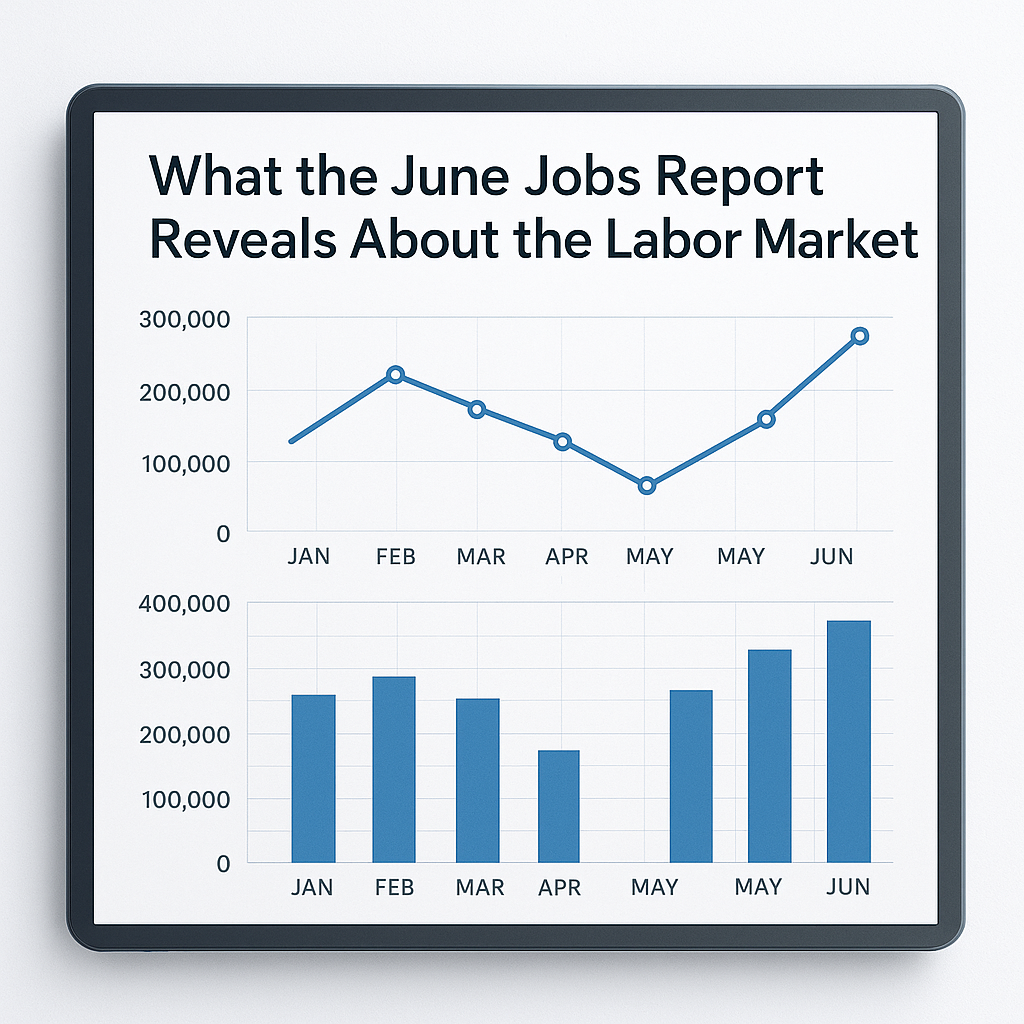
The June jobs report is not just an economic snapshot. It is a stress test for policy, earnings, and household resilience. If you read it carefully, it can tell you whether the labor market is cooling in a healthy way or cracking under pressure. That distinction matters because markets price the future, but families live through the present. When I look at labor data, I try to keep both in frame. Good stewardship demands no less.
What the June jobs report reveals about the labor market becomes clearer when you stop treating employment as a single number and start treating it as a web of wages, hours, participation, and sector shifts. That is where the useful signal lives. The rest is noise dressed up as certainty. And in finance, noisy certainty is usually expensive.