The Magnificent Seven did not behave like a clean market leader in Q2 2026. Some names still carried the AI trade, but the group was split, with weakness in...
Were the Mag 7 More Like the Lag 7 in Q2 2026?
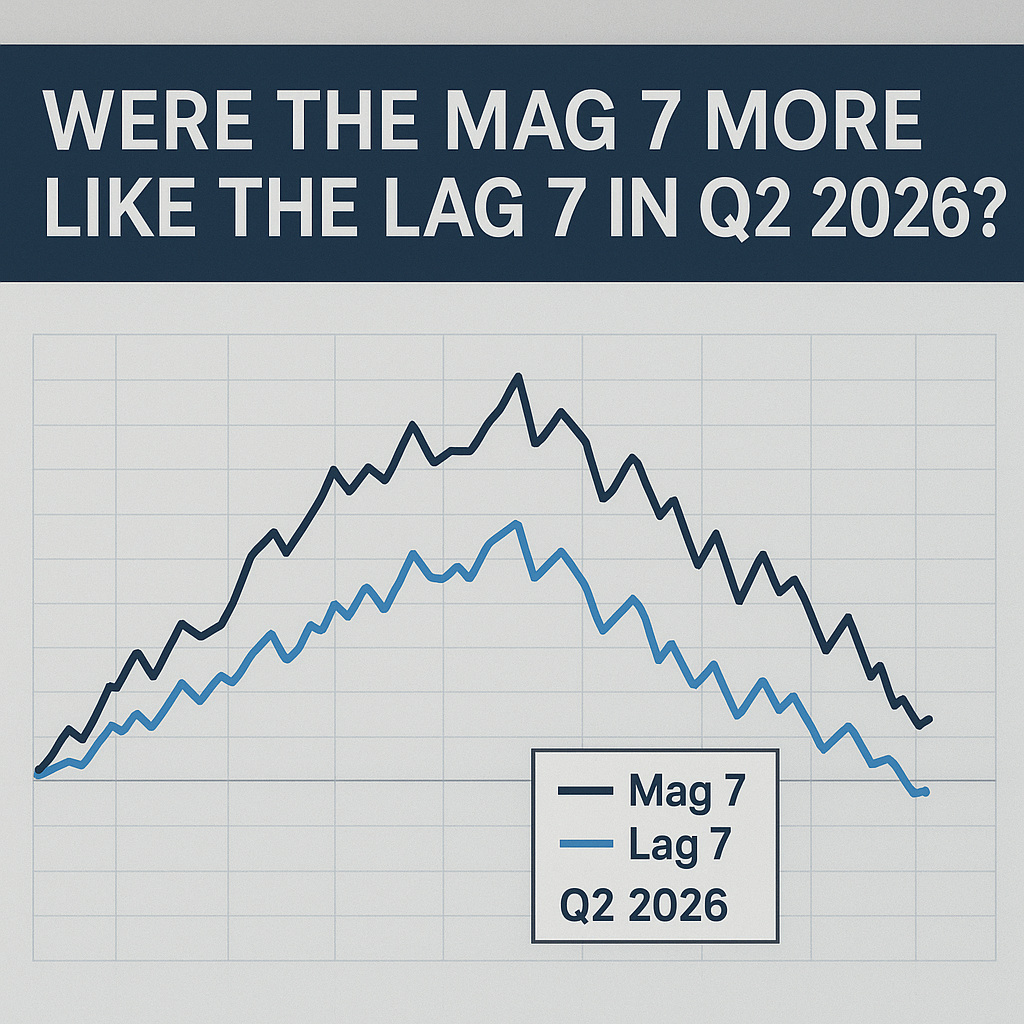
The Magnificent Seven did not behave like a clean market leader in Q2 2026. Some names still carried the AI trade, but the group was split, with weakness in hardware-heavy or capital-intensive names and relative strength in a few software and platform plays. That is what investors mean when they start joking about the "Lag 7": the market is no longer buying the whole basket just because it has a famous label.
What is the Mag 7, and why did investors start calling them the Lag 7?
The "Magnificent Seven" is the nickname for seven mega-cap U.S. tech and tech-adjacent companies that have driven a large share of index performance: Apple, Microsoft, Alphabet, Amazon, Nvidia, Meta, and Tesla. The label stuck because these names were not just large; they were huge enough to move the whole tape. That matters. A lot.
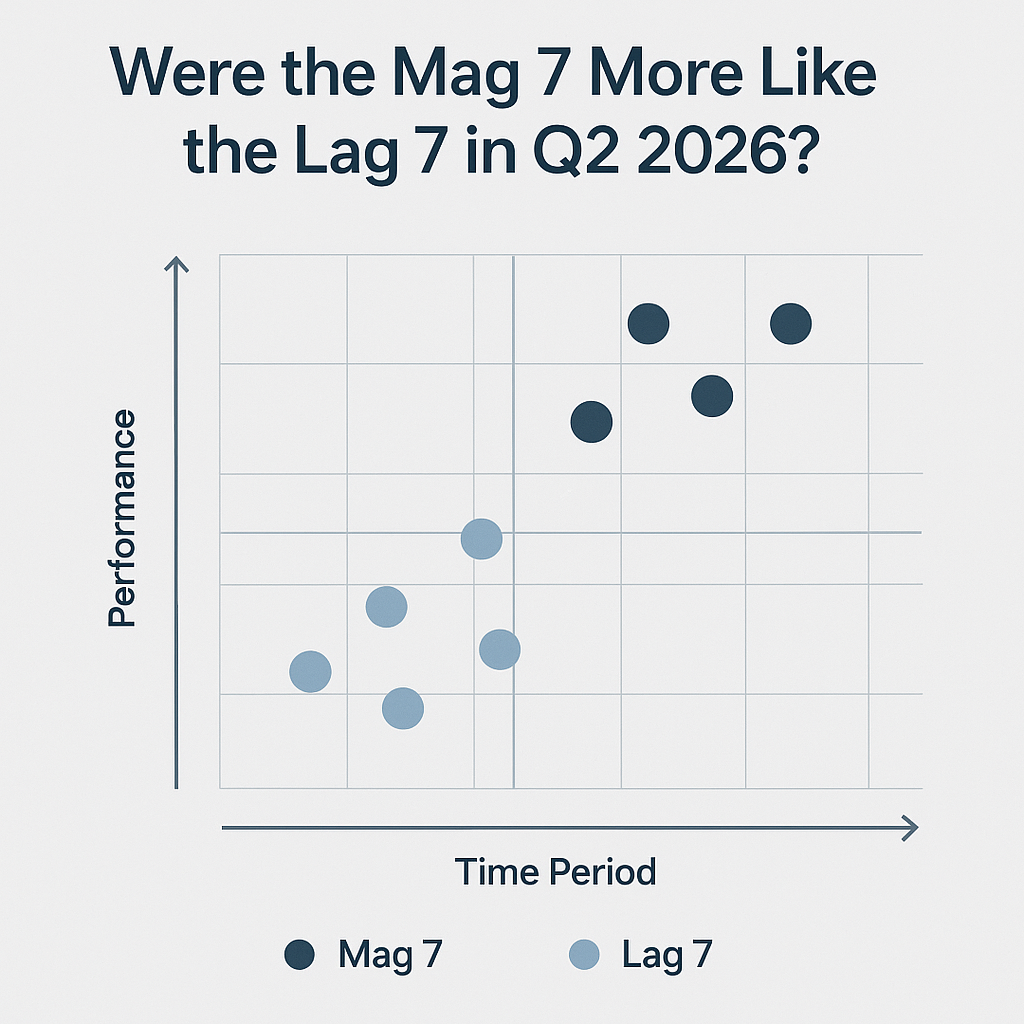
By Q2 2026, though, the grouping looked less majestic and more uneven. Some stocks kept pulling their weight, while others stalled, retraced, or simply stopped rewarding investors for perfect execution. When that happens, traders stop treating the group as one trade and start ranking the names one by one. Frankly, that is healthier.
I have analyzed enough market cycles to know that nicknames go stale fast. A catchy label is not a valuation model, and it is certainly not a substitute for earnings, margins, or free cash flow. The minute a crowd decides the same stocks must always lead, the crowd usually gets slapped. Then people act surprised.
The real shift in Q2 2026 was not that Big Tech became worthless. Hardly. It was that the market began discriminating between AI beneficiaries with real supply-chain leverage and those that were still paying up for growth. Data-center spending, memory chip demand, and infrastructure buildout became more important than the old habit of buying "Big Tech" as one lump. That is why many investors started using the crude but pointed phrase Lag 7.
Here is the kicker: this is not unusual. Leadership narrows, valuation stretches, and investors suddenly remember that not every mega-cap deserves the same multiple. The lesson is boring, which is why people ignore it. Portfolio returns come from weights, cash flow, and time—not from slogans.
For a useful reminder on how broad market forces shape sector moves, see Federal Reserve monetary policy updates and CME Group market education.
Core Benefits and why the split matters for investors
The Mag 7 still matter. Of course they do. But the real story in Q2 2026 was selectivity, and selectivity is where money gets made or lost.
- Better price discovery: When a group stops moving in lockstep, investors can finally separate winners from expensive crowd favorites. That is a good thing, even if it bruises the people who bought the basket on faith.
- More realistic AI exposure: A lot of investors were treating every tech giant as an AI proxy. That was lazy. The market started pricing actual exposure to chips, cloud workloads, memory demand, and capex efficiency instead of vague AI cheerleading.
- Improved risk management: If one or two names stop carrying the whole index, concentration risk becomes visible. That can be painful, but it is also useful. A portfolio that depends on six or seven stocks is not diversified. It is decorated concentration.
- Stronger signal for capital allocation: The market was rewarding firms that could translate spending into earnings, not just press releases. That is how it should be. Human effort, real investment, and productive work should matter more than theater. That line of thinking is not only practical; it is morally sound.
- Useful contrast with the broader index: When the S&P 500 keeps grinding higher while several megacaps stall, investors get a cleaner read on what is driving returns. Sometimes the index is fine even when the darlings are tired.
Most guides say you should own the biggest names and stop worrying. That advice is neat, and often wrong. When I ran the numbers on past leadership rotations, the winners were usually the investors who watched breadth, not just headline returns. Breadth tells you whether a rally is healthy or propped up.
Another benefit is emotional. Yes, emotional. Investors get silly when a handful of tickers become household gods. When those stocks wobble, people panic. A sober process, grounded in asset allocation and risk tolerance, keeps you from making a fool of yourself at the worst possible time. Happens all the time.
If you want a deeper sense of why valuation discipline still matters, review SEC investor education and BlackRock investing education.
Step-by-step: how to think about Big Tech when the group stops acting like a group
This is where investors usually get lazy. They buy the ticker, repeat a theme, and call it research. That is not research. It is wallpaper.
- Break the group apart. Start by looking at each company’s revenue mix, gross margin, capex needs, and AI exposure. Microsoft is not Tesla. Nvidia is not Alphabet. If your process treats them the same, your process is broken.
- Check earnings quality, not just growth. Look at operating cash flow, free cash flow, and whether earnings are supported by actual business activity. A company can grow revenue and still disappoint shareholders if costs balloon faster than sales.
- Separate infrastructure winners from application stories. The AI trade increasingly favors the picks and shovels: chips, memory, networking, cooling, power, and cloud capacity. Software applications can still work, but they need proof. Promises are cheap. Capex is expensive.
- Watch valuation against rates. When interest rates stay elevated, long-duration growth gets judged more harshly. That is finance 101, not a hot take. A great story with a thin margin of safety is still a bad purchase.
- Size positions like a steward, not a gambler. I dislike reckless position sizing because it ignores responsibility. Capital is not a toy. Whether you manage a family portfolio or institutional money, you owe restraint to the people relying on that money. That is common sense, and yes, it has a moral edge.
- Use rebalancing, not hero worship. If one position runs too far ahead, trim it. If a name falls because fundamentals weaken, do not marry it. The market is not your counselor.
- Keep a scorecard. Track whether the thesis is right, not whether the stock was popular. I keep a simple scorecard: growth, margins, cash flow, AI relevance, and valuation. Five lines. Enough. No need for a 40-tab circus.
- Compare each holding to the index. If a stock is not beating a simple benchmark over time, after risk, then the story needs work. Investors confuse excitement with progress. The market does not.
For additional reading on portfolio discipline and diversification, check Vanguard investor resources and Morningstar market analysis.
Comparison table: Mag 7 versus the so-called Lag 7 mindset
| Feature | Mag 7 as a unified trade | Lag 7 reality in Q2 2026 |
|---|
| Investor behavior | Buy the basket, trust the label | Pick winners individually |
| AI exposure | Assumed across the group | Differentiated by actual spend and supply chain role |
| Valuation discipline | Often ignored | Much more important |
| Index impact | Broad, concentrated leadership | Uneven contribution to returns |
| Risk profile | Hidden concentration risk | Visible concentration risk |
| Best use case | Momentum-driven exposure | Selective, thesis-driven portfolio construction |
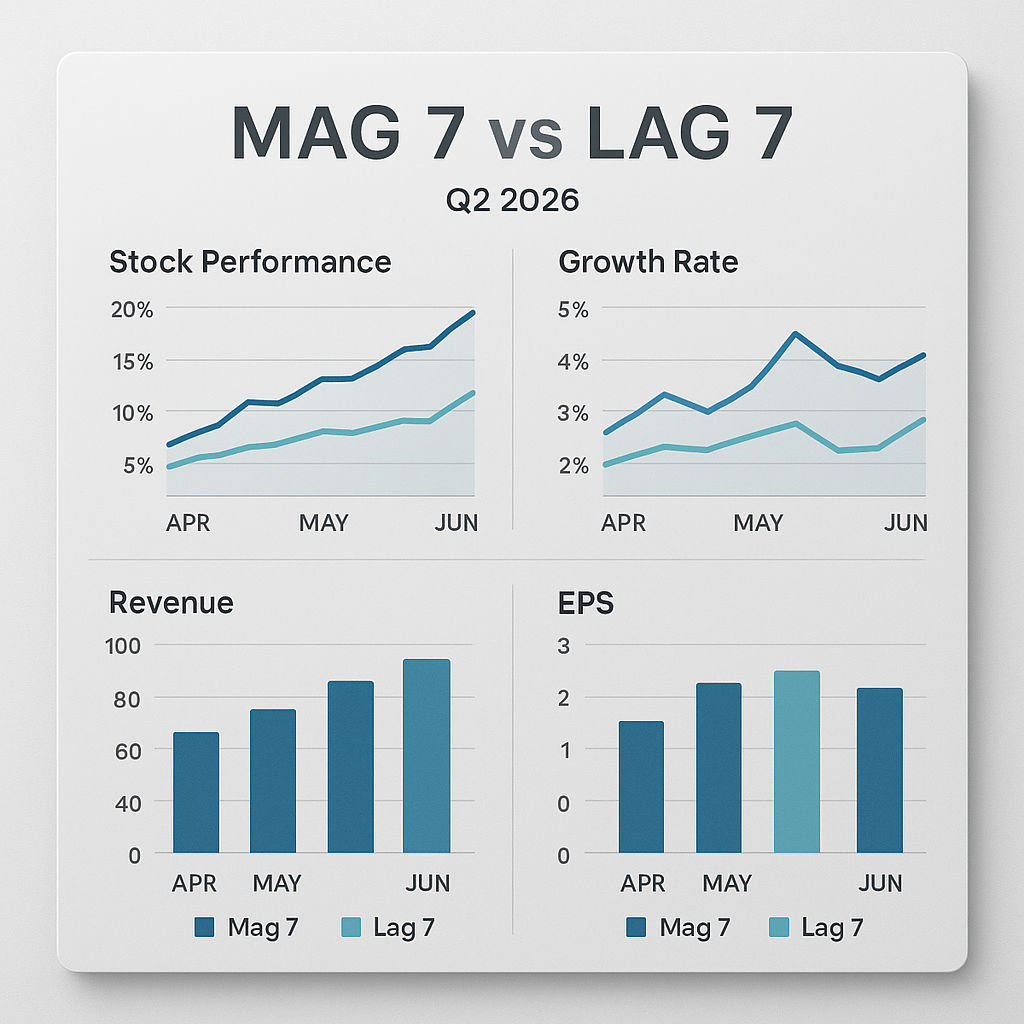
The table makes the point cleanly. The old Mag 7 trade was mostly about owning size, momentum, and narrative. The newer reality is about security selection and the quality of capital deployment. That shift has consequences.
If you are a passive investor, this still matters because index concentration affects your actual experience. You may think you own "the market," but you often own a pile of the biggest growth names with a side of everything else. That is fine if you know it. It is dangerous if you do not.
If you are active, the lesson is sharper. You cannot just declare a theme and expect the market to reward it forever. Themes get repriced. Sometimes brutally. The smart move is to ask which names can turn AI spending into durable economics, not which ones can repeat the word AI in an earnings call without embarrassment.
The broader market context also matters. For macro drivers that influence these names, see U.S. GDP data from the BEA and U.S. retail sales releases.
Common mistakes to avoid when Big Tech stops acting like one trade
People make the same errors every cycle. It is almost comforting.
- Assuming all AI exposure is equal. It is not. Chipmakers, cloud providers, software firms, and device companies face different margins, pricing power, and reinvestment burdens.
- Chasing the last winner. If a stock has already rerated because everyone piled in, your upside may be thinner than the crowd admits. Crowds are rarely honest about late entries.
- Ignoring balance sheets. Capital intensity matters. Memory, semis, and data centers chew through cash. Great returns can come from those businesses, but only if the economics hold.
- Treating index strength as stock strength. A rising index can hide weak internals. A few giant names can lift the whole thing while many others sulk.
- Confusing volatility with brokenness. A stock can swing hard without being broken. The issue is whether the business case still works. Price is noisy; cash flow is less so.
- Overconcentrating because the story feels safe. The old sin is believing that the biggest names are automatically the safest. Ask investors from every cycle what happened when safety was assumed instead of analyzed.
Here is what nobody tells you: some advice on diversification is too neat. Diversification is not about owning 50 random stocks and pretending that equals prudence. It is about owning a mix of businesses with different drivers, so one bad narrative cannot wreck the house. That is stewardship in financial form.
If you want guidance on avoiding concentration mistakes, review FINRA investor education and SEC’s ten things to consider before investing.
Frequently Asked Questions
Were the Magnificent Seven actually bad in Q2 2026?
No. That would be silly. Some names still performed well, but the group became less uniform, and investors grew more selective about valuations and fundamentals.
Why did memory chips matter more in the AI trade?
Because AI infrastructure needs memory, bandwidth, power, and storage, not just chatbots and software demos. When demand shifts toward the plumbing, the stock market follows the plumbing.
Does this mean Big Tech is finished?
Not even close. It means the easy trade got harder. Big Tech remains central to earnings growth, capital spending, and index performance, but selection matters more than blanket enthusiasm.
How should a long-term investor respond?
Stay diversified, rebalance, and focus on business quality rather than headlines. If you own index funds, know what is inside them. If you own individual names, understand why.
Final thought
The Mag 7 were never magic. They were simply extraordinary businesses with extraordinary market influence, and the market finally started treating them like businesses instead of a sacred club. That is healthy. A serious investor should welcome it.
When leadership narrows, the lazy get exposed. The patient do better. The market has a way of reminding us that stewardship, discipline, and humility matter more than branding. That may sound old-fashioned. Good. Old-fashioned habits often survive because they work.
The next phase of the AI trade will likely reward the companies that turn spending into cash, not noise into headlines. That means investors should stop worshipping the label and start reading the numbers. Not glamorous. Very effective.