Trump accounts are being talked up as a child-focused savings and investing vehicle, but the useful question is boring and important: what are the rules, what...
Trump Accounts Explained: What They Are, How They Work, and What Parents Need to Know
Trump accounts are being talked up as a child-focused savings and investing vehicle, but the useful question is boring and important: what are the rules, what do they cost, and do they actually help a family build wealth? If the account is tax-smart, flexible enough, and cheap to hold, it may deserve attention. If not, it is just marketing with a halo.
Key Takeaways- Trump accounts appear to be designed as long-term child investing accounts, not simple savings jars.
- The real value depends on tax treatment, contribution rules, and withdrawal limits.
- They may help with compounding, but they can also complicate financial aid and estate planning.
- For many families, a 529 plan, custodial account, or Roth IRA may still be the cleaner choice.
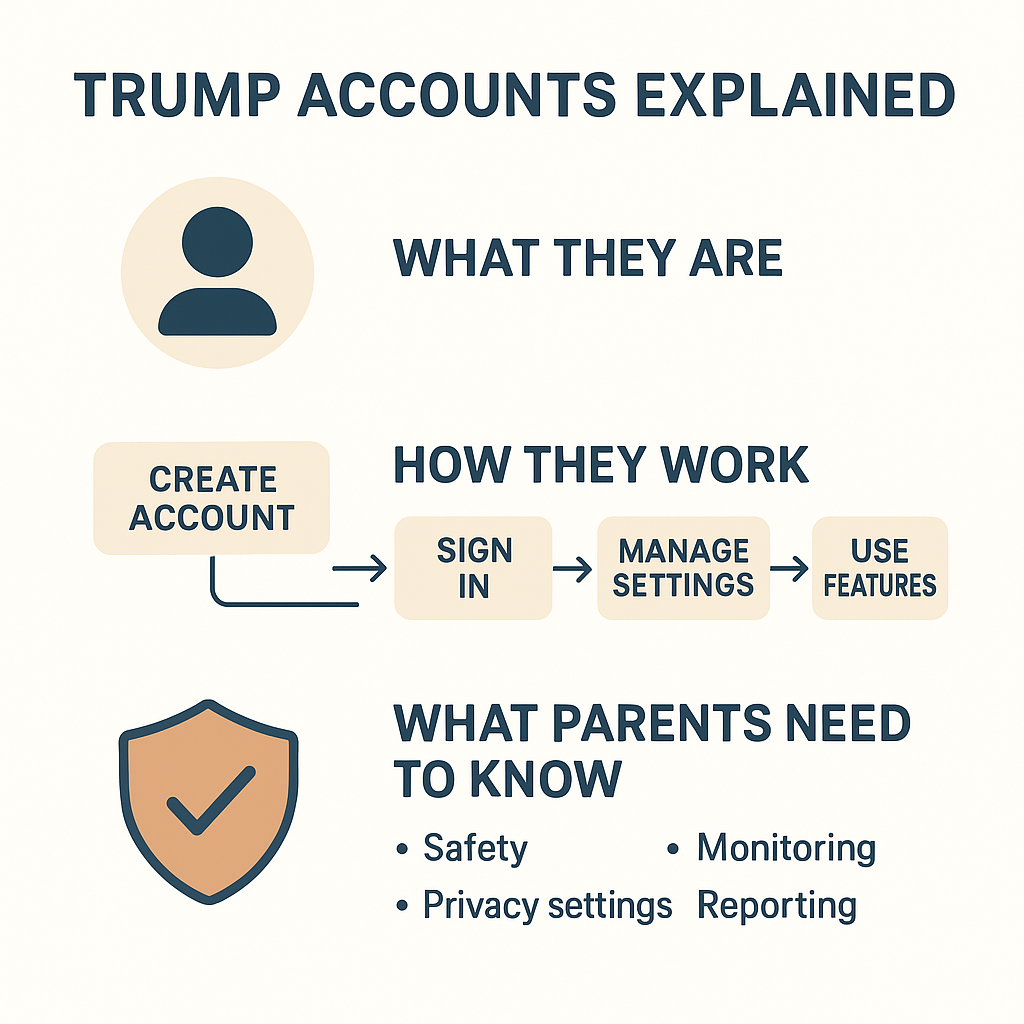
What is Trump accounts?
Trump accounts are being discussed as a proposed or newly promoted savings and investing account for children, with automatic enrollment and a long-term structure. That matters because the label is the least useful part. The tax rules, contribution limits, access rules, and permitted investments decide whether this account helps families or just adds paperwork.
Frankly, I am wary when a financial product gets sold by slogan before it gets sold by details. We have all seen this trick. Somebody says “tax-free,” “for kids,” or “automatic,” and people stop asking the questions that actually matter. Bad habit.
The appeal is obvious. Put money in early, invest it in a diversified portfolio, and let time do the work. Compounding is not a myth. It is the plain result of returns building on prior returns, which is why even modest monthly contributions can grow into real money over a decade or two. That is especially true if the account holds low-cost index funds and stays put through market volatility.
But there is always a catch. There always is. If the account is meant for college, then a 529 plan overview from Investor.gov still matters, because education savings has its own tax and distribution rules. If the child has earned income later, a Roth IRA may be a better long-term tool, and the IRS Roth IRA guidance shows why. For families weighing education use, Fidelity’s 529 guide is a useful comparison point.
The core issue is stewardship. Not in a sermon sense. In the plain, adult sense that money should serve real human goods: education, stability, responsibility, and the common good. A child account that looks clever but weakens retirement security or creates tax trouble is not wise stewardship. It is a headache in nicer packaging.
Core benefits and why people care
The attraction of a child investing account is not complicated. People want an early start, tax help if available, and a way to turn gifts into something that outlasts the next birthday party. That is reasonable. But the value only shows up if the structure is sound and the fees are low.
- Early compounding: Money invested early has more years to grow, and time is the one asset you cannot buy later.
- Habit formation: A child account can teach saving, patience, and delayed gratification, which are still useful skills despite what the culture suggests.
- Possible tax advantages: Depending on the final design, growth may be sheltered or taxed more favorably than a normal account.
- Family gifting: Grandparents and parents may use it to transfer assets for a child’s future needs.
- Goal-based investing: The account can be tied to college, a first home, or a general wealth-building goal.
Here is the kicker. The biggest benefit is usually not the account name. It is disciplined asset allocation over a long time frame. If a child’s money is invested in a diversified portfolio of low-cost index funds, and if the family stays calm when markets wobble, the math can work very well. That is the boring truth, and boring usually wins.
The contrarian view matters too. Sometimes a plain taxable brokerage account is better. Sometimes a 529 plan beats everything if the money is truly for education. Sometimes the cheapest option is the strongest option because it avoids restrictions, admin fees, and tax mistakes. I have reviewed enough portfolios to know this: expensive complexity often underperforms boring discipline. Not glamorous. Still true.
There is also the moral angle, and it should not be ignored. Families are stewards, not owners in the absolute sense. Money should support the development of a child’s gifts without turning that child into a tax strategy. That is a useful boundary, and it keeps investing tied to human purpose instead of vanity.
Step-by-step guide to using a child investing account wisely
If you are considering a Trump account, or any child investing account, do not start with the account. Start with the goal. Otherwise you are just buying a container and hoping it solves your problem. That is how people end up with the wrong tool and a lighter wallet.
- Define the purpose first. Is the money for college, retirement, a first home, or long-term wealth? The purpose should decide the account, not the other way around.
- Check the tax rules. Contribution limits, tax treatment, and withdrawal rules matter more than the headline. If education is the goal, compare the account with a 529 plan. If earned income is involved, see whether a Roth IRA is available.
- Pick low-cost investments. Use broad index funds or ETFs unless you have a real reason not to. I mean a real one, not a story from a loud cousin at Thanksgiving.
- Match risk to time horizon. A 10-year horizon can usually tolerate more stock exposure than a 2-year horizon. Market volatility is not the villain, but it is a bad roommate when tuition bills are due soon.
- Automate contributions. Set recurring transfers. The plan that runs without daily motivation usually survives.
- Check ownership and control. Who controls withdrawals? When does the child gain access? These details are not fine print. They are the whole structure.
- Coordinate with the rest of your finances. Do not fund a child account while neglecting emergency savings, insurance, debt reduction, or retirement contributions. Parents should not raid their own future to build a child account. That is sentiment without arithmetic.
- Review aid implications. Some accounts count heavily in financial aid formulas. If college is likely, know the trade-off before you contribute aggressively.
- Rebalance periodically. If the account drifts too far toward stocks or cash, restore the target mix. Small maintenance prevents large errors.
- Avoid speculation. This is not the place for meme stocks or hot tips. A child needs durable wealth, not a thrill ride.
I have analyzed plenty of accounts that looked smart on paper and weak in practice. The ones that work are simple, cheap, and coordinated with the household balance sheet. The others are usually expensive lessons.

Comparison table
People want a clean answer, so here is the cleanest comparison that still tells the truth. Trump accounts, if they become a formal product, should be weighed against the existing tools families already use.
| Feature | Trump Accounts | 529 Plans |
|---|
| Main purpose | Broad child savings or investing | Education savings |
| Tax treatment | Depends on final rules | Tax-deferred growth, tax-free qualified withdrawals |
| Contribution flexibility | Likely varies by design | Usually flexible, subject to state rules |
| Spending use | Potentially broader if designed that way | Best for qualified education expenses |
| Financial aid impact | Depends on ownership and rules | Can affect aid, often less than student-owned assets |
| Investment options | Likely portfolio-based | Usually mutual fund or ETF menus |
| Best for | Families wanting long-term child investing | Families saving for college |
The table helps, but it does not settle the matter. Real life is messier than a comparison chart. If the money is truly for college, the 529 still has a strong case because the tax treatment is known and the purpose is clear. If the family wants broader flexibility, another account may fit better. That is why any honest advice starts with the goal and ends with the rules, not the reverse.
For readers who want more background on the related products, the Consumer Financial Protection Bureau’s overview of 529 plans is worth a look. It is plain, which is refreshing in finance.
Common mistakes to avoid
Most financial mistakes in this area are not dramatic. They are small, repetitive, and annoying. That is how wealth gets nickeled to death. People think they are making a smart move because the product sounds friendly, then they ignore the costs and rules.
- Assuming the label matters more than the math: A shiny account name does not fix weak tax treatment.
- Ignoring fees: Expense ratios and admin charges reduce compounding quietly and constantly.
- Funding the child account before securing your own retirement: That is backwards. Parents should not create future dependence through present sentiment.
- Using the account as a spending bucket: Long-term investing money and short-term cash are different animals.
- Forgetting financial aid formulas: The wrong account ownership can reduce aid eligibility.
- Choosing ideology over function: Ethical investing can fit well, but it still needs diversification, risk management, and decent returns.
- Skipping a tax review: Tax rules are where good intentions go to die.
Everyone loves to say “just invest for the child,” but that advice is too thin. Invest where the tax rules are favorable, where the costs are low, and where the money will actually be used for a good purpose. That is common sense, and it is also close to the old moral idea of stewardship: resources are meant to be used well, not admired in a drawer.
One more thing. Do not confuse control with generosity. A parent who keeps moving the goalposts, or who treats the child account as a vanity project, is not helping. The account should serve the child’s future, not the parent’s ego.
Frequently asked questions
What are Trump accounts supposed to be used for?
They appear to be intended for long-term savings or investing for children. The final answer depends on the rules, but the basic idea is to let money grow over time instead of sitting idle in cash.
Are Trump accounts better than 529 plans?
Not automatically. If the money is for education, a 529 plan often has clearer tax advantages and a direct purpose. If the family wants broader flexibility, another account may be better. The winning choice depends on the final design, not the slogan.
Can grandparents contribute to a child account?
Probably yes if the final rules allow outside contributions. That is common in family savings plans. But contribution caps and tax consequences still matter, so the details need checking.
Should I replace retirement savings with a child account?
No. That is a poor trade. Parents should secure their own retirement first, then fund a child account. A child should not have to support parents later because the adults got sentimental and sloppy with money.
Final thought
The trouble with child investing accounts is not that they exist. It is that people hear a promise and forget the plumbing. Good financial planning is usually dull, disciplined, and a little unsentimental, which is exactly why it works. It respects the family balance sheet, it keeps risk in its place, and it treats money as a tool rather than a personality.
That matters because wealth is never just about returns. It is about what those returns are for. A decent plan should protect a child’s future without wrecking the parent’s present, should seek growth without gambling, and should keep the common good in view, even if only quietly. If a Trump account can do that, fine. If not, keep walking.