Trade shocks matter to investors because tariffs, retaliation, and negotiation failures can hit profits, margins, currencies, and stock prices fast. When...
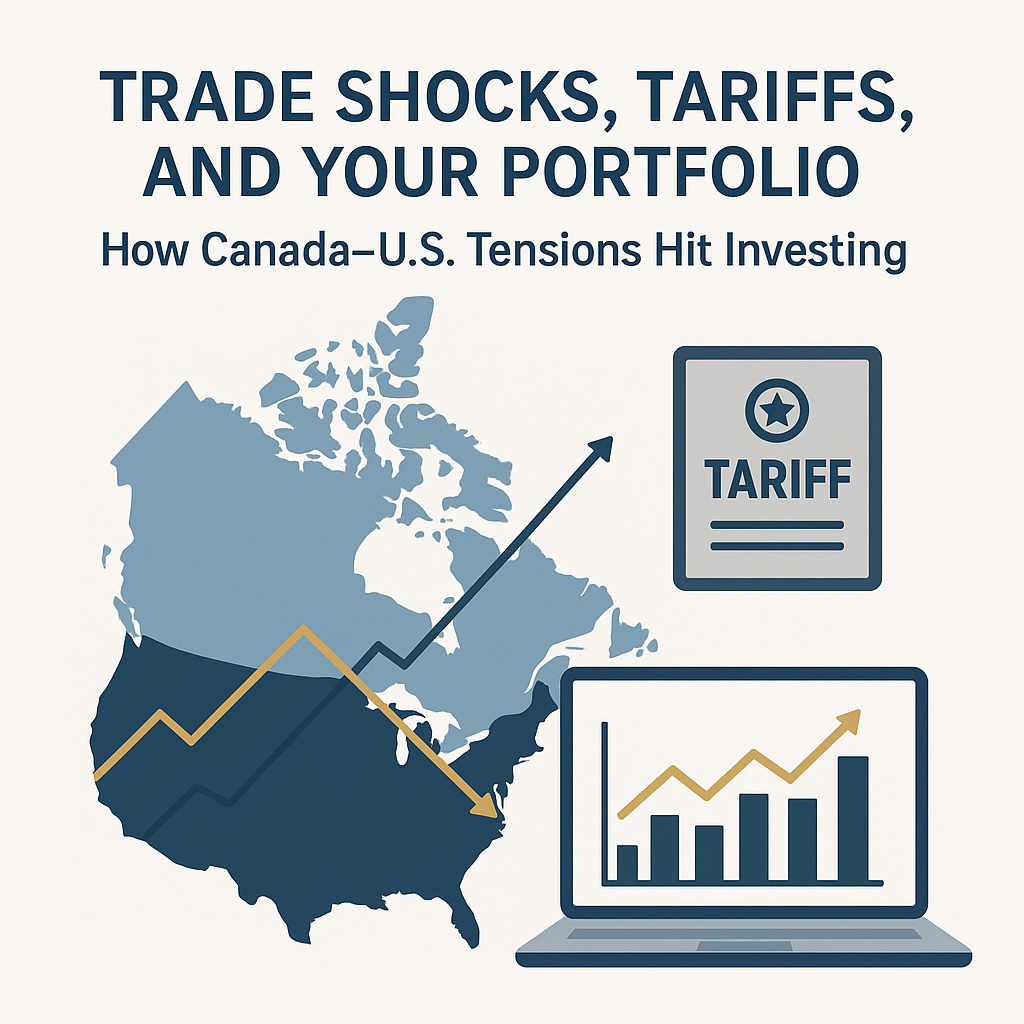
Trade Shocks, Tariffs, and Your Portfolio: How Canada-U.S. Tensions Hit Investing
Trade shocks matter to investors because tariffs, retaliation, and negotiation failures can hit profits, margins, currencies, and stock prices fast. When Canada and Washington fall out over restrictions, the damage rarely stays in one sector. It spreads through supply chains, earnings forecasts, commodity prices, and portfolio risk.
What is trade shock risk in investing?
Trade shock risk is the chance that a sudden policy change, tariff, quota, export limit, or retaliation measure changes company earnings, margins, and market prices. It sounds simple. It is not. Markets do not just react to the tariff itself; they react to uncertainty, because uncertainty forces firms to delay hiring, order fewer inputs, and cut guidance.
I have analyzed enough market selloffs to say this bluntly: investors often fixate on the headline and miss the plumbing. A tariff on Canadian steel, dairy, autos, or lumber does not only hit the obvious importer. It can hit suppliers, logistics firms, manufacturers, retailers, and anyone carrying inventory into a weaker demand cycle. That is why trade fights can feel small in Ottawa or Washington and still bruise portfolios in New York, Toronto, Chicago, and beyond.
Most guides say trade policy is just macro noise. That is lazy. Trade policy changes the cost of doing business. It changes where companies source parts. It changes shipping routes. It changes pricing power. And pricing power, frankly, is what separates a decent business from a weak one.
For investors, the core question is not “who won the argument?” It is “whose earnings are most exposed?” If you own a portfolio with heavy concentration in industrials, transportation, autos, commodity producers, or companies dependent on cross-border flows, you have trade risk whether you like it or not. If you own broad market funds, you still have it, but the blow is spread out.
This is where stewardship matters. Money is not a toy. It is capital tied to labor, families, and real goods. When policy fights distort trade, the ethical investor does not cheer pain just because it benefits a favorite ticker. He or she asks what is just, what is resilient, and what serves the common good without pretending markets are charity.
If you want the policy backdrop, see the U.S. Trade Representative’s overview of trade actions and agreements at the USTR, and Canada’s trade policy material at Global Affairs Canada. Those are not bedtime reading, but they are the source documents, not pundit fog.
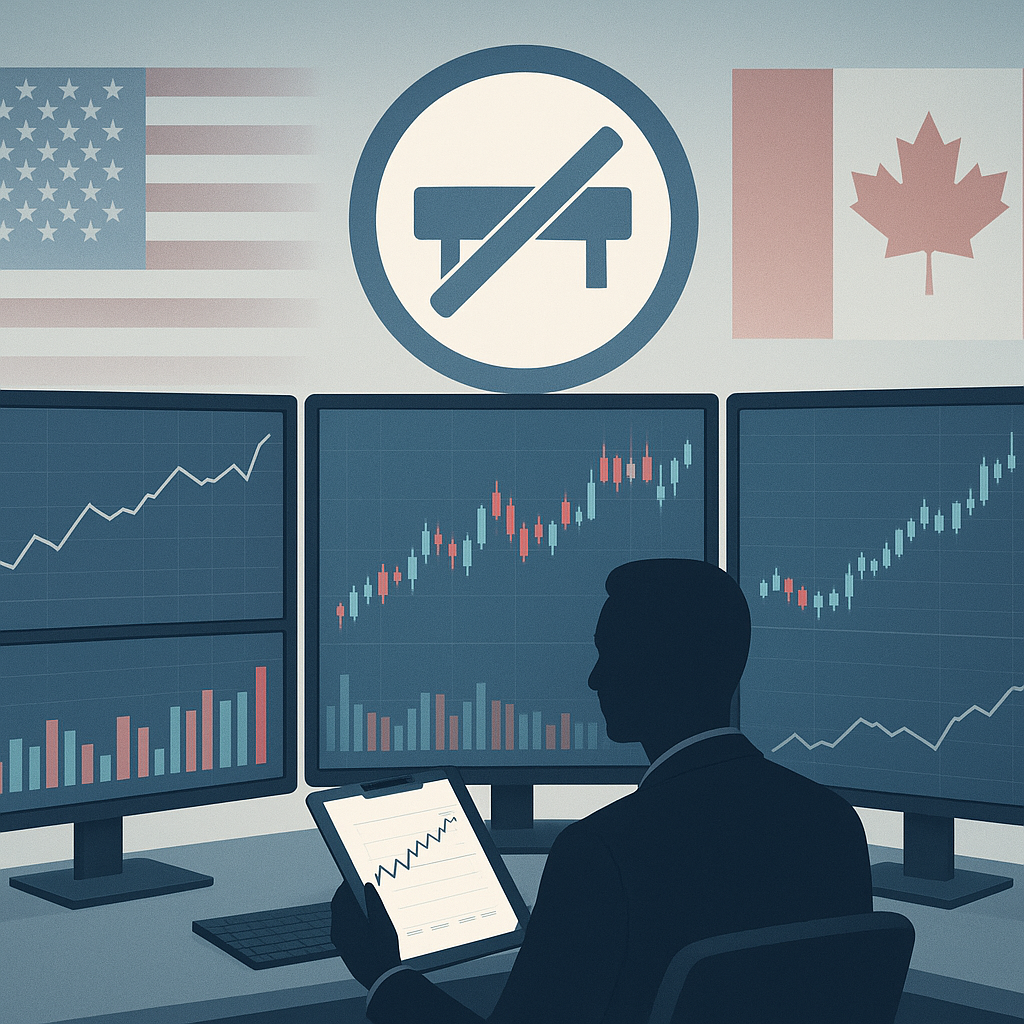
Core Benefits of understanding trade shocks
- Better risk control. You can spot which holdings are most exposed before the market does the work for you.
- Cleaner portfolio construction. You can separate true diversification from a bunch of stocks that all sink in the same storm.
- Smarter entry points. Tariff scares often create oversold prices in quality businesses with temporary exposure.
- Better discipline. You stop reacting to every political tantrum as if it were an investing thesis.
- More realistic expectations. If a company lives on thin margins and imported inputs, trade friction matters a lot.
Here’s the kicker: not every company hurt by trade conflict is a bad investment. Sometimes the market overreacts and prices in a full collapse when the actual damage is modest. That is where patient capital can do its work. But patience is not passive stupidity. You need balance-sheet strength, cash flow, and management that can explain sourcing risk without hiding behind slogans.
For macro context, the IMF has long emphasized that trade tensions reduce investment and output through uncertainty and lower confidence. The OECD has made similar points about slower growth from protectionist policy. See the IMF’s research portal at IMF research and the OECD trade page at OECD Trade. That is the sort of boring evidence that usually turns out to be useful.
Step-by-step guide to investing through trade disputes
- Map revenue exposure. Start with where a company sells, where it sources inputs, and which countries sit on either side of the tariff wall. I look for explicit disclosures in annual reports and earnings calls, because management teams love vague language when the facts are ugly.
- Check margin sensitivity. A firm with 30% gross margins has more room to absorb tariff costs than one with 8% margins. If a company cannot pass costs to customers, the earnings hit can be brutal. That is basic arithmetic, not market poetry.
- Review currency exposure. A weaker Canadian dollar can cushion exporters and punish import-heavy firms. A stronger dollar can do the reverse. Exchange rates often offset part of the damage, but nobody should bet the farm on FX doing the right thing at the right time.
- Test the balance sheet. Debt and trade shocks are a poor mix. If revenues wobble while interest costs stay high, leverage makes the problem worse. I prefer companies with liquidity, flexible covenants, and enough cash to survive a bad quarter without panic financing.
- Compare peers, not headlines. One auto supplier may be crushed while another, with different sourcing and pricing power, barely flinches. Sector labels are crude tools. Company specifics matter.
- Use diversification with intent. Diversification only works when the holdings are not all tied to the same inputs, customers, or macro bet. Owning five “different” industrial stocks is not much of a shield. That is just repetition in a nicer suit.
- Rebalance after the noise settles. If a quality holding gets marked down because of temporary trade panic, consider whether the valuation now makes sense. If a weak business gets cheaper, it may still be weak. Cheap is not the same thing as valuable.
For a broader framework on allocation and risk, use a disciplined asset mix and read our related pieces on portfolio diversification strategy, asset allocation, and risk management for investors. Those ideas matter more when politics gets noisy.
Comparison Table
| Factor | Trade-Exposed Stocks | More Insulated Holdings |
|---|
| Revenue sensitivity | High | Moderate to low |
| Margin pressure | Often severe | Usually manageable |
| Currency impact | Large | Mixed |
| Supply-chain risk | Direct | Lower |
| Valuation swings | Bigger | Smaller |
| Best use in portfolio | Tactical or selective | Core holding candidates |
Common mistakes to avoid
- Confusing headlines with valuation. A stock can fall because of fear, not because the business is broken.
- Assuming all tariffs hurt equally. They do not. Some firms pass costs through; others eat them.
- Ignoring second-order effects. Suppliers, shippers, insurers, and retailers often feel the pain after the obvious names.
- Overtrading on political news. That way lies fees, taxes, and regret.
- Treating diversification as magic. It is a tool, not a prayer.
- Forgetting the bond side. Trade shocks can affect inflation expectations, which can affect rates, which can affect equity valuations.
I have seen investors buy the dip in the wrong companies because the chart looked pretty. That is how people end up owning a “cheap” stock that keeps getting cheaper. The truth is, price alone tells you very little. You need earnings durability, balance-sheet strength, and a sober sense of how much policy risk is already in the quote.
Another mistake is moral numbness. Investors sometimes treat every supply chain as if it were just numbers on a spreadsheet. It is not. Real workers absorb the consequences when firms cut shifts, delay expansion, or move production to avoid politics. A decent investing approach recognizes that capital should be stewarded, not idolized.
If you want hard data on trade and financial conditions, the Bank for International Settlements and central banks often publish useful work on how policy uncertainty affects markets. For Canada-specific policy and inflation context, the Bank of Canada’s research and monetary policy pages are worth checking at Bank of Canada. Dry? Yes. Useful? Also yes.
Frequently Asked Questions
What stocks are most affected by Canada-U.S. trade disputes?
Companies in autos, industrials, materials, transportation, agriculture, consumer goods, and firms with tightly integrated supply chains are usually most exposed. Exporters and importers with thin margins tend to feel the hit first.
Do tariffs always hurt investors?
No. Tariffs can hurt consumers and some firms while helping domestic substitutes, protected producers, or businesses with strong pricing power. The market often prices the net effect before the data fully shows it.
How should I protect my portfolio from trade shocks?
Focus on diversification, balance-sheet quality, pricing power, and revenue geography. Avoid overconcentration in one sector or one policy outcome. Cash helps too, though people hate hearing that because it sounds too plain.
Are trade disputes temporary market noise or a real risk?
Both. The headline reaction can be temporary, but the earnings effects can last longer if supply chains, sourcing, or consumer prices change materially.
Final Thought
Trade disputes are not just political theater. They are real costs, real margins, and real risk for investors who pretend markets run on slogans. If you own businesses, you are exposed to policy. That is the price of participation. But with discipline, sober analysis, and a bit of old-fashioned prudence, you can distinguish a temporary shock from a permanent wound.
I would rather own a solid business through a messy headline than chase every shiny “safe” idea that turns out to be brittle. That is not cynicism. It is stewardship. Capital should be placed where it can serve human work, reward honest risk, and survive the nonsense that governments and markets periodically create. Invest accordingly.