Tesla’s spending problem matters because capital discipline drives valuation, and when a company pushes free cash flow, margins, and balance-sheet strength...
Tesla’s Runaway Spending Warning: What Investors Need to Know
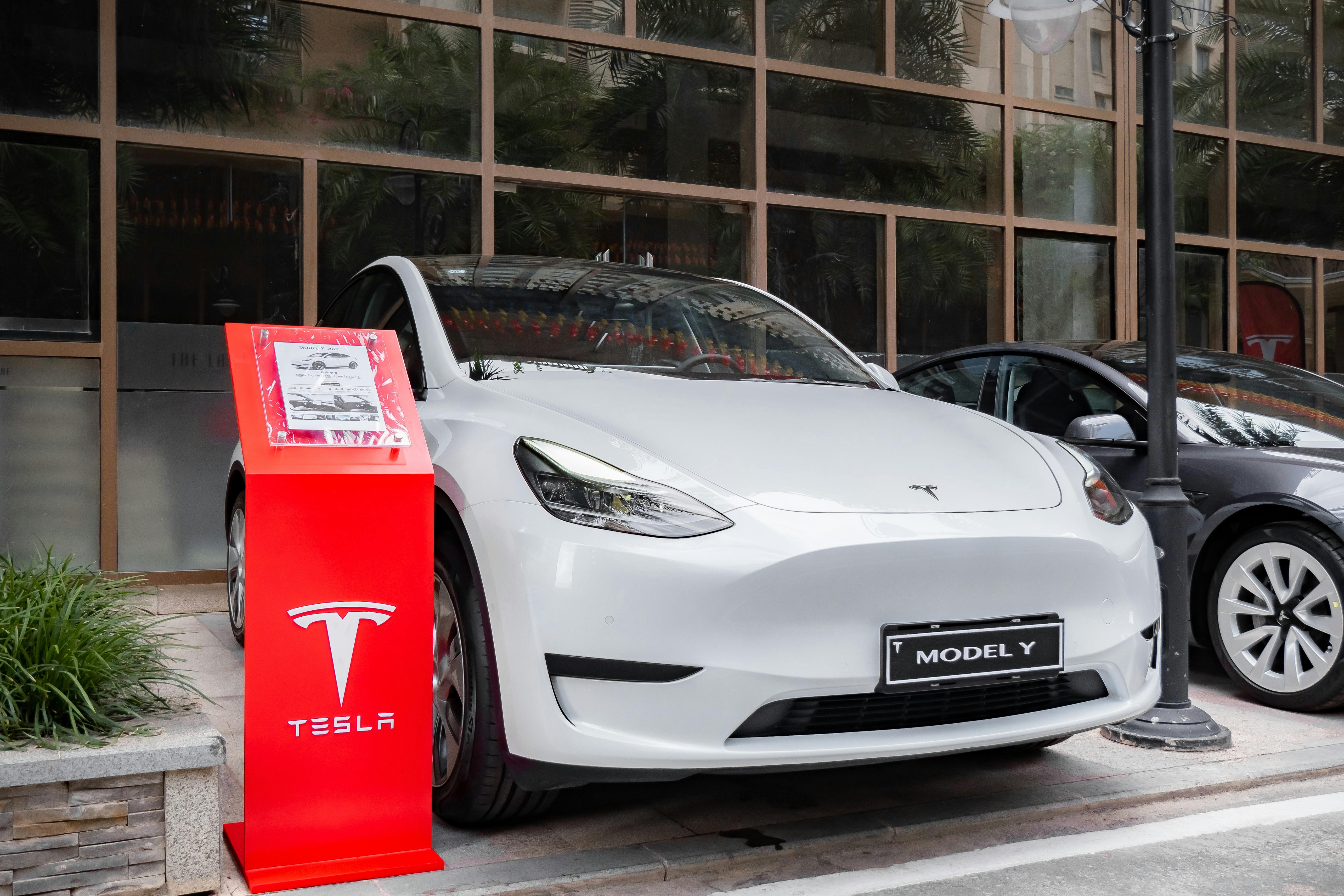
Tesla’s spending problem matters because capital discipline drives valuation, and when a company pushes free cash flow, margins, and balance-sheet strength too hard, investors eventually notice. Analysts warning about “runaway, unsustainable” spending are really pointing to a basic issue: can Tesla keep funding growth without damaging shareholder returns?
Key Takeaways- Tesla’s spending matters because it affects free cash flow, valuation, and capital efficiency.
- Big spending is not automatically bad, but the return on that spending has to show up in profits or durable market share.
- Investors should watch capex, operating expenses, margins, and management guidance together, not in isolation.
- Comparing Tesla with a more disciplined rival like Toyota helps show whether spending is buying durable advantage or just bigger bills.
- The real question is stewardship: is capital being used for productive growth, or consumed for spectacle?
What is Tesla’s runaway spending concern?
Tesla’s spending concern is the idea that the company may be pouring too much capital into factories, products, software, AI, charging, logistics, and expansion before those dollars produce proportionate returns. That sounds dry, but it is the heart of equity analysis. If spending rises faster than revenue quality, margin structure, or free cash flow, the market eventually stops cheering and starts counting.
I’ve analyzed enough companies to know this pattern. The story is usually not “spending is evil.” That would be childish. The real issue is whether management is turning capital into durable earnings, or just feeding a larger machine with no clear payoff. Frankly, investors love growth until the bill arrives. Then they get religion.
Tesla has always been priced like a company that can do more than sell cars. Investors have expected software economics, autonomy, robotics, and a network effect in charging and data. That is why analysts get nervous when the spending line climbs. A company can spend heavily and still be rational, but only if the economics are sound. Otherwise, you are just watching a very expensive experiment.
This is where free cash flow analysis matters. Revenue gets headlines. Cash gets votes. If Tesla’s spending consumes cash faster than it creates lasting value, the valuation math weakens. Market participants do not need to hate the company to worry about that. They only need to do arithmetic.
Here’s the kicker: spending itself is not the villain. Waste is. Productive spending on batteries, manufacturing efficiency, energy storage, and AI infrastructure can be justified if the returns show up in operating leverage and competitive moat. But if the company keeps extending promises while the balance sheet and cash generation do the heavy lifting, then analysts are right to ask whether the pace is sustainable.
There’s also a moral angle that sober investors should not ignore. Stewardship matters. Capital is not a toy. Whether you think in biblical terms or plain old prudence, resources should serve real value, real work, and real customers—not vanity projects or hype cycles. That principle is old, but it still beats fancy slides.

Core benefits and why investors should care
Tesla’s spending profile matters for reasons that go beyond drama and stock chatter. It affects return expectations, risk, and the kind of ownership experience investors should brace for. The data rarely tells a simple story, so let’s keep it honest.
- Growth capacity can be real. Heavy spending on factories, battery technology, charging infrastructure, and software may support long-term market share if execution holds up. That is the best-case read, and it is not crazy.
- Scale can lower unit costs. If capital spending improves manufacturing efficiency, throughput, and automation, Tesla can spread fixed costs across more vehicles and energy products. That can widen margins later, not just now.
- Innovation is expensive. Competitors that wait for certainty often lose the race. Tesla’s spend may be the cost of staying ahead in EVs, energy storage, and autonomy. Most people say they want innovation; fewer want to pay for it.
- Optionality has value. Investors sometimes pay for the chance that a company could crack self-driving, robotics, or grid-scale energy economics. That option value is real, but only if it is anchored in execution rather than wishful thinking.
- Risk rises when spending outruns cash generation. If operating expenses and capital expenditures expand faster than margins, dilution risk, debt risk, or valuation compression can follow. Markets are patient until they are not.
- Capital discipline still matters. A company can be visionary and still waste money. I’ve seen this in more portfolios than I care to admit. Grand plans without measurable returns usually end in disappointment.
Most guides talk like spending automatically proves confidence. That’s sloppy thinking. A management team can spend because it has a high-conviction plan, or because it is chasing too many fronts at once. The numbers have to tell the truth.
For investors, the key issue is whether spending creates a widening moat or a thinner margin for error. If Tesla’s investments improve the economics of its vehicle platform, battery supply chain, or energy business, the market may forgive the expense. If not, the stock may behave less like a growth story and more like an expensive promise.
That is why comparison with a more mature manufacturer helps. Tesla’s pitch is upside. A firm like Toyota offers steadier execution, steadier cash flows, and less theatrical capital allocation. Different reward, different risk. Neither is free.
If you want a broader framework for thinking about these tradeoffs, see capital allocation analysis and profit margin basics. They explain why investors fixate on spending efficiency, not just spending size.
Step-by-step guide to evaluating Tesla’s spending
Start with the cash flow statement.
Then look at the story behind it, because a pile of numbers without context is just decorative accounting, and Tesla demands more than decoration.
Here’s the process I’d use if I were reviewing the stock for real money.
- Check capital expenditures first. Look at how much Tesla is spending on factories, tooling, equipment, charging buildout, and technology infrastructure. Rising capex is not bad by itself, but it should tie to visible production capacity or strategic advantage.
- Separate operating expense from investment. Not every dollar that leaves the door is capex. R&D, sales, and administrative growth matter too. If operating expenses rise faster than gross profit, management may be buying complexity instead of capability.
- Measure free cash flow. This is where the rubber meets the road. After capex, does Tesla still generate meaningful cash? If the answer keeps drifting lower, analysts are not being alarmists. They are reading the report card.
- Watch gross margin trends. Spending is easier to tolerate when margins remain healthy. If vehicle pricing pressure, raw-material costs, or production inefficiencies squeeze gross margin, high spending becomes harder to justify.
- Study guidance and management credibility. I’ve learned to care less about sparkling future claims and more about the history of missed or met targets. Credibility compounds, just like returns do.
- Compare investment spend to outcome. Ask whether each big dollar is buying lower costs, faster deliveries, higher volume, stronger technology, or a real edge in energy storage and software.
- Test the bull case against the bear case. If the bull case depends on autonomy, robotics, or perfect execution, ask how much current spending is already being subsidized by those hopes.
- Keep valuation in the frame. A richly valued stock has less room for error. If spending keeps rising while revenue growth slows, even a good business can become a poor investment.
Most investors get this wrong because they confuse activity with progress. A company can be busy and still be stuck. That’s the truth.
When I run the numbers on capital-intensive firms, I look for a simple pattern: spending should either raise durable output, improve margins, or build a moat that competitors cannot easily copy. If none of those appear, caution is warranted. That approach is plain, not clever, but it works.
Tesla’s case also invites a stewardship mindset. Not every expansion deserves applause. Resources should serve productive ends, workers should be treated as more than inputs, and customers should get value, not just spectacle. That older view of business is unfashionable, maybe, but it is healthier.
For more on disciplined investing, it helps to review investor basics from the SEC and Tesla earnings coverage to see how market expectations shift around margins, capex, and guidance.
Comparison table: Tesla vs. Toyota on spending discipline
Tesla is not the same kind of company as Toyota. But that is exactly why the comparison is useful. One is priced as a high-growth, high-optionality platform with huge expectations. The other is a mature global automaker with a reputation for disciplined manufacturing and steadier execution. Apples and oranges still teach you something.
| Metric | Tesla | Toyota |
|---|
| Business model | EVs, software, energy storage, autonomy optionality | Global auto manufacturing with hybrid and EV exposure |
| Spending style | Heavy investment in growth, tech, and scale | More measured capital allocation, conservative manufacturing discipline |
| Profit profile | More volatile margins and valuation sensitivity | Typically steadier operating profits and cash generation |
| Investor expectation | High future optionality, high execution bar | Lower hype, more dependable execution |
| Risk profile | Higher uncertainty if spending outruns payoff | Lower drama, less upside shock, fewer blowups |
| Market valuation | Usually priced for future breakthroughs | Usually priced for current earnings and cash flow |
| Key question | Is spending creating durable advantage? | Is capital preserving efficiency and resilience? |
The table is not there to crown a winner. It is there to show how different philosophies of capital allocation produce different outcomes. Tesla’s supporters argue that large spending is the price of future domination. Toyota’s appeal is that discipline itself can be a competitive strength. Both views can be right in different ways.
Here’s the part people skip: the best company is not always the best stock. A business can be excellent and still be overpriced. A more staid firm can be boring and still make more money for shareholders over a full cycle. That is why I distrust one-note narratives.
Tesla’s advantage is that it may be building a broader platform than a standard automaker. Toyota’s advantage is that it knows how to make money without acting like every quarter is a moonshot. Investors should decide which discipline they want to buy.
If you want a useful lens on autos and cash generation, Reuters autos coverage and free cash flow explainers are worth reading. They are less glamorous than headline takes, which is exactly why they help.
Common mistakes investors make
People make this too mystical.
They hear “runaway spending” and assume the answer is either blind faith or total panic, when the real answer is usually somewhere in the details, buried under unit economics and execution risk.
- Mistaking spending for progress. More spending does not mean more value. It may mean more ambition, but ambition is not a line item on a balance sheet.
- Ignoring cash flow. Revenue can grow while free cash flow shrinks. If that happens for long enough, the stock may reprice in a hurry.
- Treating management promises as evidence. Future plans are not results. I’ve seen too many investors buy stories instead of audited numbers.
- Overlooking margin compression. If price cuts, promotions, or rising input costs squeeze margins, large spending can become a burden rather than a bridge.
- Forgetting valuation risk. A high-multiple stock can fall hard even if the business remains decent. The market punishes disappointment in expensive names.
- Confusing optionality with certainty. Autonomy, robotics, and energy expansion may create huge value, or they may take longer and cost more than hoped. Optionality is not a guarantee.
- Hailing scale without asking about stewardship. Bigger is not always better. Responsible capital allocation should serve workers, customers, and owners with some measure of honesty and restraint.
The common advice is “buy the dip” or “trust the vision.” That is lazy. Sometimes the right move is to wait for proof. Sometimes the right move is to trim position size because the story is outrunning the numbers. That may sound boring, but boring keeps portfolios alive.
I’ve reviewed enough investment cases to know that the market eventually separates competence from confidence. Tesla may still prove the skeptics wrong. But investors should not confuse being early with being correct.
If you want a practical check on market sentiment, review MarketWatch Tesla coverage alongside Wall Street Journal market data and compare headline tone with actual margin and cash flow trends. That little discipline saves a lot of grief.
Frequently asked questions
Is Tesla’s spending necessarily a bad sign?
No. Heavy spending can be rational if it expands capacity, improves manufacturing, or funds technology with real payback, but it becomes a warning sign when returns fail to keep up. That distinction matters a lot.
What financial metric should investors watch most closely?
Free cash flow deserves top billing, because it shows whether Tesla can fund growth after core expenses and capital expenditures. Gross margin and operating cash flow matter too, but cash is the cleaner judge.
How does Tesla compare with traditional automakers?
Tesla carries more growth potential and more execution risk, while firms like Toyota generally offer steadier cash generation and more disciplined capital allocation. Different risk, different reward. Simple enough.
Should investors avoid Tesla if spending keeps rising?
Not automatically. The smarter question is whether the rising spending is producing durable competitive advantage, better margins, or a stronger business platform. If not, caution is justified. Frankly, that is true for any stock.
Final thought
Tesla’s spending debate is not really about one company. It is about what investors want capital to do, and what kind of business they believe deserves trust. A serious investor should care less about slogans and more about whether money is being turned into productive assets, durable returns, and genuine value.
That old-fashioned view may sound stiff in an age of hype, but it holds up. Capital should serve a purpose. It should support real work, honest innovation, and goods that people actually use. When I look at a company like Tesla, I ask a plain question: does this spending build something lasting, or does it merely keep the machine noisy? Markets eventually answer. They usually do so without much mercy.