Tesla’s Semi is finally moving from promises to production, and the market likes that story. The stock rose because investors are pricing in a bigger freight...
Tesla’s Semi is finally moving from promises to production, and the market likes that story. The stock rose because investors are pricing in a bigger freight business, better factory utilization, and another proof point that Tesla can turn a long-delayed product into real shipments. But a price jump is not the same thing as a durable thesis.
Key Takeaways
- Tesla Semi mass production matters because it can expand Tesla beyond passenger EVs into commercial freight.
- A stock rally on the news reflects expectations, not guaranteed profits.
- Investors should watch unit economics, production ramp speed, customer adoption, and charging infrastructure.
- The Semi can add optionality, but it also brings execution risk and capital demands.
- The right question is not whether the truck is interesting; it is whether it earns its keep.
What is Tesla Semi mass production, exactly? It means Tesla is moving the Semi from pilot runs and symbolic deliveries into a more regular manufacturing phase, with the goal of building trucks at scale and shipping them to fleet buyers. That sounds simple. It isn’t. Commercial trucking is brutally practical, and the numbers have to work on fuel savings, maintenance, uptime, charging access, and residual value.
Most investors hear “mass production” and think the hard part is over. Frankly, that’s backward. The hard part begins when a company has to repeat quality, keep costs in line, and meet delivery schedules without turning the factory into a bonfire of delays. I’ve looked at enough auto ramps to know that a shiny unveiling means almost nothing until you see sustained throughput, stable margins, and customer satisfaction. The Semi sits at the intersection of technology, logistics, and capital allocation. That makes it interesting. It also makes it easy to overhype.
A better way to frame it is this: Tesla is trying to prove that it can sell a high-value commercial vehicle whose economics improve for customers through lower energy and maintenance costs, while improving Tesla’s own mix and reinforcing its industrial moat. If that works, the stock can deserve a premium. If it doesn’t, the market will eventually stop applauding the press release. As Tesla’s own Semi page makes clear, the truck is meant for real freight use, not just a show floor. And that matters more than the headline.

The real issue is stewardship of capital. Companies, like investors, are judged by what they do with resources entrusted to them. Waste is waste, even when it wears a sleek badge. A business that claims to improve transport should also prove it uses labor, materials, and energy responsibly. That old idea is not quaint; it is how durable enterprises are built.
What is Tesla Semi mass production?
Tesla Semi mass production means the company is no longer treating the truck as a boutique or experimental vehicle. It is attempting to produce the Semi at a scale large enough to matter financially, operationally, and strategically. That includes supplier coordination, battery pack sourcing, line balancing, quality control, logistics planning, and customer delivery schedules. In plain English: the machine has to spit out trucks reliably, not just headlines.
The truck itself targets long-haul freight, one of the hardest sectors to decarbonize. Diesel still dominates because trucking runs on tight margins, long distances, and nonstop uptime. A truck that sits too long is dead weight. That is why Tesla’s pitch focuses on lower total cost of ownership, not virtue signaling. The company has said the Semi should deliver meaningful energy savings and less maintenance versus diesel equivalents. You can read the broader positioning in Tesla’s investor materials and product pages, but the proof will come from fleet operators, not a keynote stage.
Here’s the kicker: “mass production” does not automatically mean “profitable production.” A company can ramp volume and still lose money if it discounts too hard, burns through labor, or carries a complicated supply chain. I’ve analyzed enough manufacturers to know that volume without margin is just busywork with nicer lighting. Investors need to watch whether Tesla can maintain quality while scaling. That means looking at gross margin trends, capital intensity, and any signs that the Semi line is creating drag elsewhere in the business.
This story also matters because it broadens Tesla’s addressable market. Passenger EVs are one thing. Commercial trucking is another. If Tesla wins even a modest share of freight fleets, it could create recurring demand for service, software, charging, and future upgrades. That optionality is why the stock moved. But optionality is not cash flow. Not yet.
To understand the scale of the opportunity, compare the Semi with the incumbent diesel truck. Freight buyers do not care about slogans; they care about fuel cost, downtime, route fit, and driver comfort. The Semi’s design, range claims, and operational model must hold up in real fleets. For a broader read on the economics of transport investing, see industrial production data from the Federal Reserve and the U.S. Department of Energy’s electric trucks overview. Both help frame the sector, even if neither tells you whether Tesla will execute well.
Core benefits and why investors care
The stock rose for a reason.
But not one reason. Several.
- More revenue streams — Tesla is no longer just an auto maker in investor imagination, and the Semi reinforces that. Commercial vehicles can lift average selling prices and add a new customer base: fleet operators, logistics firms, and large shippers.
- Higher strategic value — A successful Semi line gives Tesla more than sales. It gives the company proof that its battery, software, and manufacturing stack can serve more than one product category.
- Stronger brand credibility — Tesla has taken flak for missed timelines. A visible production ramp helps repair that.
- Potential fleet economics — If the Semi really lowers energy and maintenance costs, fleet buyers can save money over the vehicle’s life.
- Supply chain and battery learning — Mass production can improve Tesla’s manufacturing discipline, battery sourcing, thermal management, and software integration.
- Optionality for the stock — The market loves optionality, sometimes too much. Still, a credible Semi program adds one more reason to value Tesla as a multi-business industrial tech company.
Now the contrarian part. The stock can rise on good news even if the underlying economics remain murky. That happens all the time. Traders chase the headline; investors should study the margins. The difference is the difference between a pulse and a plan.
A decent way to think about it is this: a truck business is attractive only if it creates durable value for customers and shareholders. That lines up with basic moral order, actually. Honest work, fair exchange, and useful goods are not abstract ideas. They are what healthy enterprise is supposed to produce.
For context on how investors evaluate industrial ramps and capital spending, this piece pairs well with how to read a cash flow statement and Tesla’s SEC filings. One explains the mechanics. The other shows the real numbers.

Step-by-step guide: how investors should evaluate the Semi story
Do not buy the headline.
Buy the evidence.
- Check production volume, not promises — The first thing I look at is simple: how many units are leaving the line, and how quickly is output growing?
- Read the margin clues — Next, watch gross margin, operating margin, and any commentary about startup costs.
- Examine customer adoption — Are major fleet buyers placing orders? Are they renewing? Are they reporting fuel savings, lower maintenance, and reliable uptime?
- Study charging and route infrastructure — Long-haul electrification depends on more than a truck.
- Watch capex and working capital — A new manufacturing ramp can chew through cash.
- Compare the Semi to the rest of Tesla’s business — The Semi should be judged relative to Tesla’s core auto, software, and energy businesses.
- Track the policy and regulatory backdrop — Commercial EV adoption can benefit from incentives, emissions rules, and infrastructure grants.
Here’s what actually works: build a checklist and force yourself to update it every quarter. I’ve done this for years, and it beats emotional guessing by a mile. Watch output, margins, order flow, uptime, and cash burn. Everything else is noise dressed up as insight.
For a broader framework on portfolio discipline, see asset allocation basics and diversification explained by Morningstar. They are not about Tesla specifically, but they keep investors from making one-stock religion out of a story stock.
Comparison table: Tesla Semi vs. diesel heavy-duty trucks
| Feature | Tesla Semi | Diesel Heavy-Duty Truck |
|---|
| Fuel/Energy Cost | Lower electricity cost potential, especially on predictable routes | Higher fuel cost, sensitive to diesel prices |
| Maintenance | Fewer moving parts may reduce maintenance | Mature service network, but more mechanical wear |
| Range/Refueling | Depends on charging and route planning | Fast refueling, broad fueling access |
| Upfront Cost | Typically higher initial cost | Often lower purchase cost |
| Operating Fit | Best for depot-based or planned freight lanes | Better for flexible, long-distance routing |
| Emissions | Zero tailpipe emissions | Tailpipe emissions remain significant |
| Infrastructure Need | Requires charging infrastructure and grid capacity | Existing fueling infrastructure widely available |
| Investor Appeal | High optionality, higher execution risk | Lower upside, lower surprise risk |
The table tells a blunt story.
Tesla has the cleaner tech and possibly the lower operating cost, but diesel still wins on convenience and infrastructure maturity. That is why this market is not a slam dunk. The Semi has to overcome a real-world mess of route constraints, charging time, and fleet preferences. Investors who ignore that are not analyzing; they are daydreaming.
The stock move reflects belief that Tesla can win that fight.
Maybe it can.
But the winning formula is not magic. It is logistics, capital discipline, and customer proof. Those are boring words, which is exactly why they matter.
Common mistakes to avoid
People get foolish around hot stocks.
Especially when the product looks cool.
- Mistake 1: Confusing production with profitability — A production announcement is not proof of economic success.
- Mistake 2: Treating one fleet order as a forever signal — A splashy customer announcement is useful, but it is not the same as repeat adoption.
- Mistake 3: Ignoring infrastructure bottlenecks — Electric trucking does not work in a vacuum.
- Mistake 4: Assuming Tesla’s brand solves everything — Brand helps, but fleets buy on economics and reliability.
- Mistake 5: Overpaying for optionality — A stock gets a fresh narrative, the multiple expands, and suddenly every future dream is priced in.
- Mistake 6: Forgetting opportunity cost — A dollar tied up in a story stock cannot be used elsewhere.
The truth is, most investment mistakes here come from impatience and ego. People want to be early. They want to be right loudly. Neither is useful. Better to be roughly right and patient than spectacularly wrong with confidence.
For deeper reading on business risk and financial statements, consult risk basics from The Motley Fool and CFA Institute on company risk. Both reinforce a point too many retail investors skip: stories are not substitutes for cash flow.
Frequently asked questions
Is Tesla Semi mass production already profitable?
Not enough public data says so. Production can be real while profitability is still weak, especially during ramp-up. Investors need evidence on margins, volumes, and customer economics before assuming the program is a winner.
Why did Tesla stock rise on the Semi news?
Because markets price expectations. A mass-production milestone suggests Tesla may finally convert a delayed product into recurring revenue and strategic value. That can lift sentiment quickly, even before the economics are fully visible.
What should investors watch next?
Watch delivery volumes, fleet adoption, charging infrastructure progress, and commentary on margins. Also watch how the Semi affects Tesla’s broader capital spending and operating performance. If those metrics improve together, the thesis gets stronger.
Does the Semi change Tesla’s long-term investment case?
It can, but only if it scales profitably. The Semi adds optionality and may strengthen Tesla’s industrial story. Yet the core investment case still depends on execution, cash generation, and management discipline.
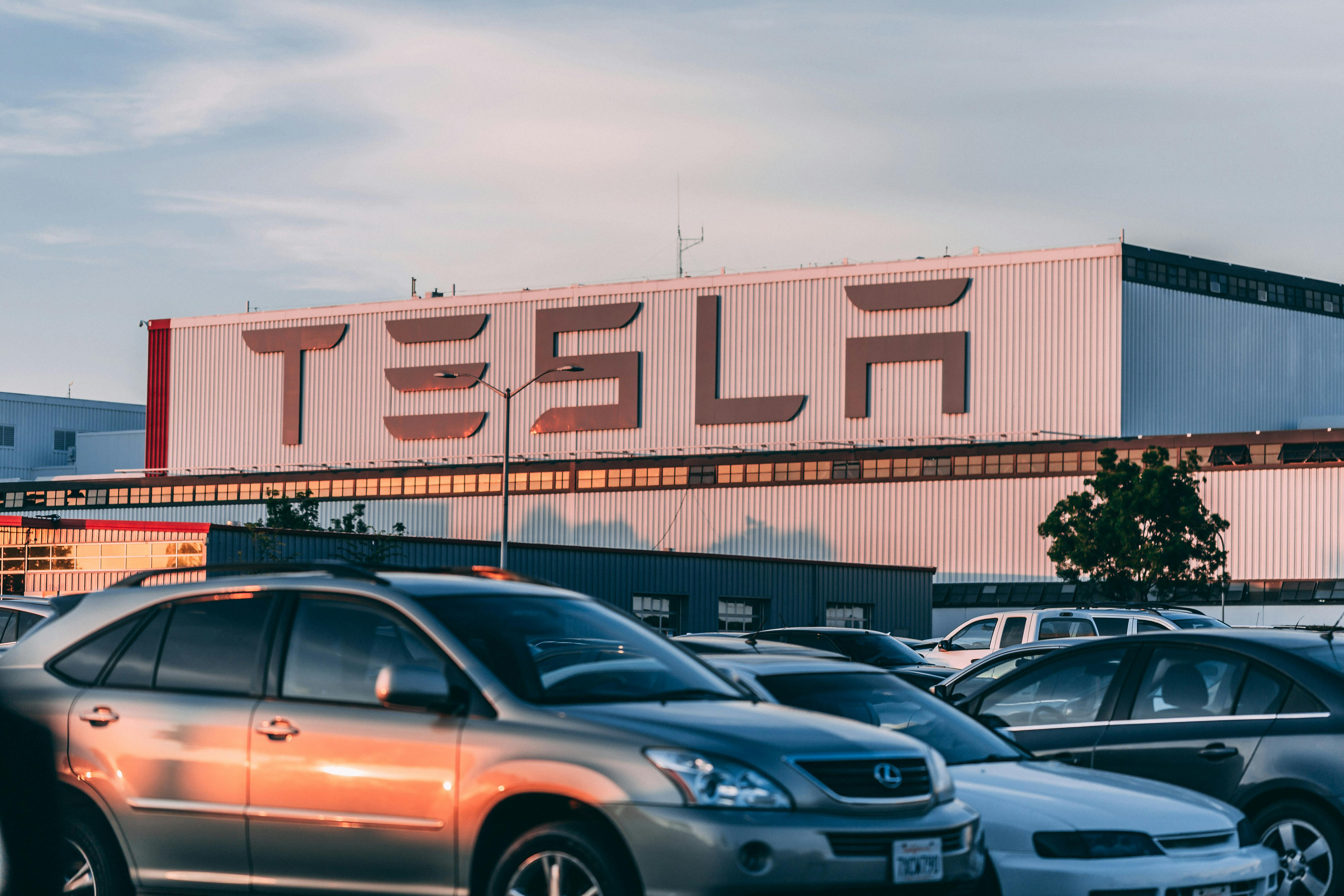
The Semi is not just a truck.
It is a test of whether Tesla can turn ambition into repeatable industrial output, and whether investors can tell the difference between a useful business and a flashy story. That distinction matters because markets eventually stop paying for possibility alone. They want proof, margins, and discipline.
I’m cautiously interested, but not sentimental about it. The stock can rise on the announcement and still be vulnerable if ramp quality slips or customer economics disappoint. That is the thing about capital: it should serve real work, not fantasy. A company that moves freight efficiently can create genuine value for drivers, customers, shareholders, and the wider economy. That kind of value has a moral shape to it—useful, ordered, and honest.
If Tesla can make the Semi ordinary in the best possible way—reliable, profitable, and widely used—that will matter far more than today’s headline. Ordinary excellence beats grand promises. Every time.