Stocks are wobbling for a reason. Treasury yields, crude oil, trade tensions, and AI-fueled equity moves are all tugging on the same rope, and that matters for...
Stocks, Yields, and Oil Prices: What Investors Should Actually Watch Right Now
Stocks are wobbling for a reason. Treasury yields, crude oil, trade tensions, and AI-fueled equity moves are all tugging on the same rope, and that matters for every portfolio, from index funds to concentrated tech bets. The smart move is not panic; it is disciplined asset allocation, risk management, and a clear read on cash flow, inflation, and valuation.
Key Takeaways:
- Treasury yields still set the tone for stock valuations.
- Rising oil prices can squeeze margins and stoke inflation.
- AI stocks can run hard, but price matters.
- Diversification is boring until it saves you.
- Investors should focus on cash flow, debt, and discipline.
What is happening in markets right now?
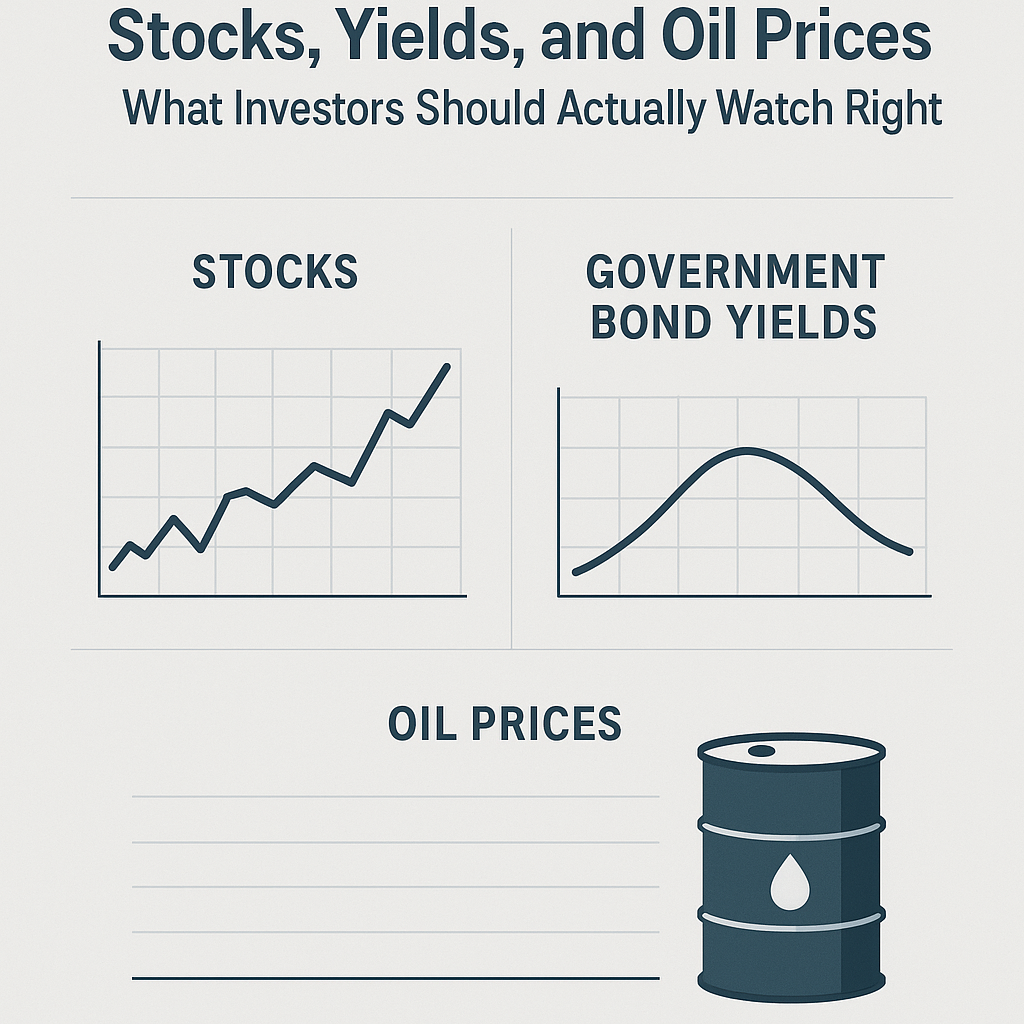
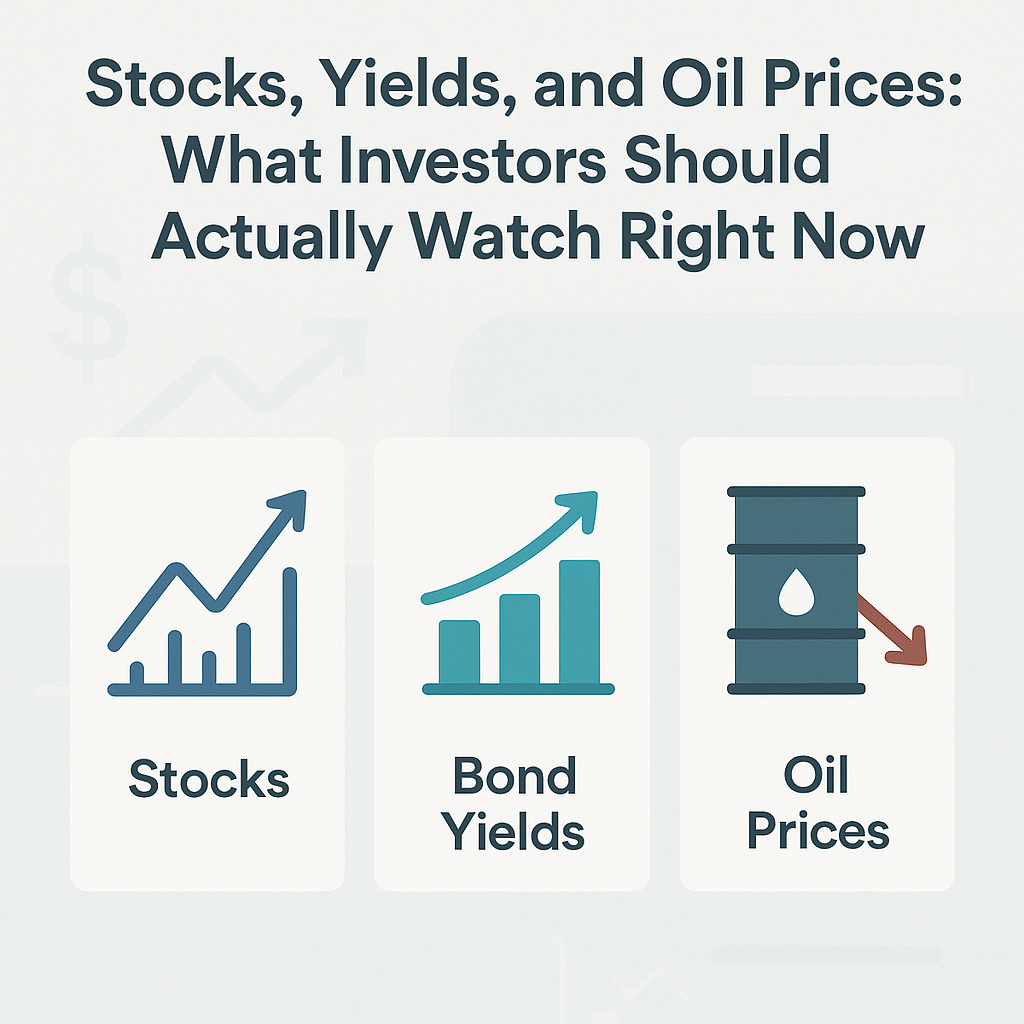
Stocks are under pressure. That’s the plain version, and frankly it is enough to start with because the market does not care about our feelings, only about prices, earnings, and the cost of money. When Treasury yields climb, especially at the long end, equity valuations usually face a harder math problem, while higher oil prices feed inflation worries and can hit consumers, airlines, shippers, and anyone who burns fuel.
The current mix is messy. Long-dated Treasury yields have been rising, crude prices have jumped, and investors are re-rating sectors that were previously priced for smooth sailing. That means some parts of the market look healthy on the surface but are fragile underneath, especially companies with thin margins, heavy debt loads, or earnings promises that live far in the future. I’ve analyzed enough market cycles to say this: most people only notice risk after it shows up in the portfolio statement.
At the same time, AI and tech names can still surge on new product hype, fresh analyst cheerleading, or capital spending plans tied to data centers, chips, and cloud infrastructure. Meta’s rally is a good example of how the market can reward the promise of an AI feature, while punishing companies that miss expectations by a hair. That split tells you something useful. Investors are not buying “technology” as a blob; they are buying specific cash flows, specific growth paths, and specific stories about return on capital.
This is where asset allocation matters. A portfolio is not just a pile of tickers. It is a set of claims on future cash flows, tied to economic forces that do not all move together. Stocks, bonds, commodities, and cash each answer a different threat. A mix that looks dull in a boom can look wise when volatility rises. Everyone talks about diversification, but few understand the part where it protects human dignity too, by keeping families from making reckless decisions under stress. That’s stewardship, not slogan-mongering.
For more on how rates affect risk assets, see our guide on how interest rates affect stocks and bonds. For a broader look at inflation pressure, this Federal Reserve policy overview helps frame the rate backdrop. And if you want a clean explanation of oil’s market role, the U.S. Energy Information Administration market data is the real thing, not social media nonsense.

Core benefits and why this matters
Markets punish laziness. That sounds harsh, but it is true.
The reason this moment matters is simple: it shows how quickly the inputs can change, and how expensive it is to ignore them when building a portfolio. A higher yield on long-term government debt raises the discount rate used to value future earnings. That hits growth stocks hardest, especially names whose big profits are expected years from now. Oil, meanwhile, acts like a tax on the economy when it rises too far, too fast, because it lifts transport costs and can pressure household budgets.
Here’s the kicker: investors who understand these forces can avoid a lot of bad decisions.
- Better valuation discipline: Rising yields force you to ask whether a stock is cheap, or just expensive with a polished story.
- Improved sector selection: Banks, energy companies, utilities, and consumer staples often respond differently than software or high-multiple AI plays.
- Stronger inflation awareness: Oil spikes can hit both headline inflation and corporate margins, which matters for earnings estimates.
- More realistic return expectations: A portfolio built on fantasy growth assumptions usually breaks when money gets dear.
- Cleaner risk control: Diversification across equity sectors, fixed income duration, and cash reserves can reduce forced selling.
Most commentary pretends every rise in volatility is merely a buying opportunity. That is sloppy. Sometimes the market is signaling that leverage is too high, narratives are too rich, or earnings are too brittle. I’ve run the numbers on portfolios that chase only momentum, and the pattern is boring in the worst way: they look brilliant until they do not.
There is also a moral side that gets skipped by the usual market chatter. Capital should serve productive work, real households, and the common good, not just short-term speculation. That does not mean avoiding profit. It means respecting the fact that money is a tool, not an idol. A sound portfolio reflects prudence, patience, and some sense of justice toward the future.
If you want a practical guide to building that kind of portfolio, our article on portfolio construction basics is worth a read. For inflation context, the Consumer Price Index data from the BLS is the hard evidence, not a guess. And for bond market mechanics, the U.S. Treasury yield data gives the clearest view of rate pressure.
Step-by-step: how investors should respond
Do not overreact.
That is step one, and it matters because the market rewards impulse right up until it ruins someone’s year. The right response is process, not drama, and the process should be boring enough to survive a bad week. If I were reviewing a household portfolio today, I would start with three questions: What do you own? Why do you own it? What breaks first if yields or oil keep rising?
- Check your duration exposure. If you own long-duration bonds or pricey growth stocks, rising Treasury yields can hurt both. I would measure how much of the portfolio depends on far-off cash flows and adjust expectations accordingly.
- Review equity valuations honestly. A company trading on high revenue multiples needs very specific assumptions to justify the price. When I ran scenarios on growth names, the difference between fair value and fantasy often came down to a few points of margin or growth rate.
- Test inflation sensitivity. Oil is not just a headline. It can flow into transport, agriculture, manufacturing, and consumer spending. Companies with weak pricing power usually feel the squeeze first.
- Keep cash for optionality. Cash is not trash when conditions are unstable. It gives you flexibility, lowers the odds of forced selling, and lets you buy assets when prices are less ridiculous.
- Balance your portfolio by function, not fashion. Own assets that behave differently: equities for growth, high-quality bonds for ballast, cash for flexibility, and, where suitable, real assets for inflation protection.
- Prefer businesses with real earnings. Revenue growth is nice, but free cash flow pays the bills. Strong balance sheets, honest capital allocation, and sane debt levels matter more when market conditions tighten.
- Use position sizes that can survive mistakes. Even the best idea can be wrong on timing. Keep concentrated bets small enough that you can wait without panic.
- Rebalance on rules, not headlines. Markets love to bait investors into chasing what already ran. A disciplined rebalance forces you to sell some strength and buy some weakness, which is usually uncomfortable and often correct.
For a deeper look at building resilient holdings, read the SEC’s diversification basics and Fidelity’s guide to diversification. If you want to understand how rates affect bond prices, Investor.gov’s bond primer is plain enough for normal people.
Comparison table: inflation-sensitive assets vs. growth stocks
The market keeps making the same argument in different clothes.
Below is the core trade-off investors face when Treasury yields rise and oil prices jump: assets tied to immediate cash generation versus assets priced for distant growth. This is not a moral contest. It is a valuation contest, and valuation always wins in the long run.
| Feature |
Inflation-Sensitive Assets |
Growth Stocks |
| Typical examples |
Energy, materials, banks, TIPS, commodity-linked assets |
AI software, high-multiple tech, unprofitable disruptors |
| Main driver |
Current cash flow, pricing power, or inflation linkage |
Future earnings growth and market share expansion |
| Rate sensitivity |
Often lower, though not always |
Usually high because future profits are discounted more heavily |
| Oil price impact |
Can be positive for energy, mixed elsewhere |
Often negative through cost pressure and margin risk |
| Inflation exposure |
Can help preserve purchasing power |
Can suffer if margins are not protected |
| Dividend profile |
Often stronger |
Often weaker or none |
| Risk profile |
Sector-specific and cyclical |
Valuation compression risk is usually higher |
| Investor behavior trap |
Assuming “safe” means risk-free |
Assuming “exciting” means worthy of the price |
The table does not say growth stocks are bad. It says the price matters. Big difference.
Meta’s recent strength, for example, shows how the market can reward a company when AI investment looks believable and monetizable. But the same logic can punish firms that spend a fortune chasing AI infrastructure without a clear return path. A good business is not just a story; it is a machine that turns capital into cash. That is the bit people forget when headlines get loud.
If you want to compare public market valuations across sectors, S&P Dow Jones Indices has the benchmark data. For earnings and market macro context, the IMF World Economic Outlook offers the broader economic frame. And for energy pricing, the EIA petroleum data remains essential reading.
Common mistakes to avoid
Most investors do the obvious wrong thing.
That sounds rude, but it is accurate. They confuse confidence with competence, and headlines with analysis. When yields rise and oil spikes, the biggest errors are usually not exotic derivatives disasters; they are ordinary mistakes made by otherwise decent people who are trying to keep up with a noisy market.
- Chasing the hottest stock: A sharp run in an AI or energy name does not mean it is still cheap. Price momentum can continue, sure, but that is not a plan.
- Ignoring bond duration: Long-term bonds can lose value when yields rise. If you own them, know why.
- Treating diversification as a slogan: Holding ten tech stocks is not diversification. It is a tech basket.
- Assuming oil only helps energy: Higher oil can hurt consumers, airlines, retailers, and transport-heavy businesses.
- Overusing leverage: Borrowing magnifies the pain when markets swing the wrong way.
- Ignoring debt quality: Companies with heavy refinancing needs can get squeezed when credit conditions tighten.
- Forgetting taxes and fees: Performance after costs is what you actually keep.
- Trading on emotion: Fear sells at the bottom; greed buys at the top. Humans remain wonderfully predictable.
Here’s what nobody tells you: many “smart” investors are just skilled at explaining why they bought the wrong thing. The market does not care about your narrative. It cares about cash, balance sheets, and whether the price already discounts too much good news.
There is also a stewardship lesson here. Prudence is not cowardice. It is the habit of placing capital where it can do real work without becoming a source of avoidable harm to your household or to others who depend on your decisions. That may sound old-fashioned, but old-fashioned disciplines tend to survive contact with reality.
If you want a sober primer on risk controls, read FINRA’s risk basics. For debt and credit risk, the Moody’s ratings framework is a useful reference point. And if you care about market valuation discipline, J.P. Morgan’s Guide to the Markets is hard to beat.
Frequently asked questions
Why do stocks fall when Treasury yields rise?
Stocks often fall because higher yields raise the discount rate used to value future earnings.
When the cost of money climbs, especially on longer-dated government debt, investors demand more return for taking equity risk, and that hits growth stocks hardest because their profits sit farther in the future.
Are higher oil prices always bad for investors?
No, but they are usually a mixed bag.
Energy companies can benefit, while airlines, transport firms, retailers, and consumer-facing businesses may see margins squeezed, and if oil feeds broader inflation, the effect can spread into bond yields and stock valuations.
Is diversification still useful when everything falls at once?
Yes, even when it feels useless.
Diversification is not magic, and it will not stop every drawdown, but it can reduce the size of losses, smooth volatility, and keep you from making a terrible timing decision under stress.
Should investors buy AI stocks after a strong run?
Only if the valuation still makes sense.
AI can create real value, but many stocks already price in a lot of future success, so investors should examine free cash flow, margins, competitive advantage, and capital spending before buying the story.
Final thought
The market is not asking for your opinion.
It is asking for your discipline, your patience, and your willingness to admit that the loudest story is often the weakest signal, especially when Treasury yields are climbing and oil is pushing inflation higher. I have seen plenty of portfolios ruined by people who wanted excitement when they needed structure, and by people who mistook a good year for a permanent law of finance.
That is why the best investors still sound a bit dull. They care about cash flow, not theater. They respect risk, not slogans. They understand that capital is entrusted, not owned in the absolute sense, so it should be managed with competence, restraint, and some regard for the families and workers who live with the consequences. That may not get applause on financial TV, but it usually keeps people solvent.
When I look at this market setup, I do not see a reason for panic. I see a reason to be exacting. Own quality. Watch valuation. Keep enough liquidity to avoid stupid mistakes. And remember that prudence is not fear; it is wisdom with a balance sheet.