How to Pay Off Student Loans Fast Without Hurting Your Finances
A faster payoff takes a plan. You can reduce student loan interest by paying more than the required amount, directing extra money to the right balance, and keeping enough cash for emergencies and essential bills. The best strategy is one you can sustain without giving up valuable federal loan protections or neglecting other high-priority debts.
Paying debt down can free future income for retirement, housing, family needs, and other goals, but a zero balance is not worth creating a cash crisis today. In my analysis, the most reliable plans combine a modest recurring overpayment with occasional larger payments, rather than betting everything on an aggressive budget that collapses after a few months. Student loan rules and employer benefits can change, so check current terms before acting. Think of repayment as stewardship of limited resources: protect your household’s stability while honoring the obligation.
What Is Paying Off Student Loans Fast?
Paying off student loans fast means deliberately shortening the repayment period, usually by paying more than the required amount or reducing the interest rate, while maintaining a workable financial cushion. It is not a special loan product. It is a repayment approach built around the loan’s interest rate, remaining balance, servicer rules, and the borrower’s other obligations.
That distinction matters. Federal loans may come with income-driven repayment options, deferment or forbearance rules, and forgiveness programs that private loans generally do not offer in the same way. A borrower who qualifies for Public Service Loan Forgiveness, for instance, may be better served by making qualifying payments under the applicable program than by sending extra money that could otherwise remain available. Review current federal repayment and forgiveness details at Federal Student Aid’s repayment plan information and its Public Service Loan Forgiveness guidance.
Interest is the price of borrowing. On many student loans, interest accrues over time, so paying principal sooner can reduce the interest that accumulates later; the exact result depends on the loan terms and payment timing. Your statement may show a balance that includes accrued interest, and your servicer generally applies a payment to fees and interest before principal, subject to the loan’s rules. Ask how an extra payment will be handled rather than assuming the online payment button sends every dollar straight to principal.
Frankly, “pay as much as possible” is incomplete advice. Before speeding up repayment, keep required bills current, build some emergency savings, and compare the loan rate with other expensive debt. If you carry credit-card debt at a much higher rate, paying that down first may improve your finances more than racing to eliminate a lower-rate student loan. The goal is not merely a smaller loan balance. It is a stronger overall financial position.
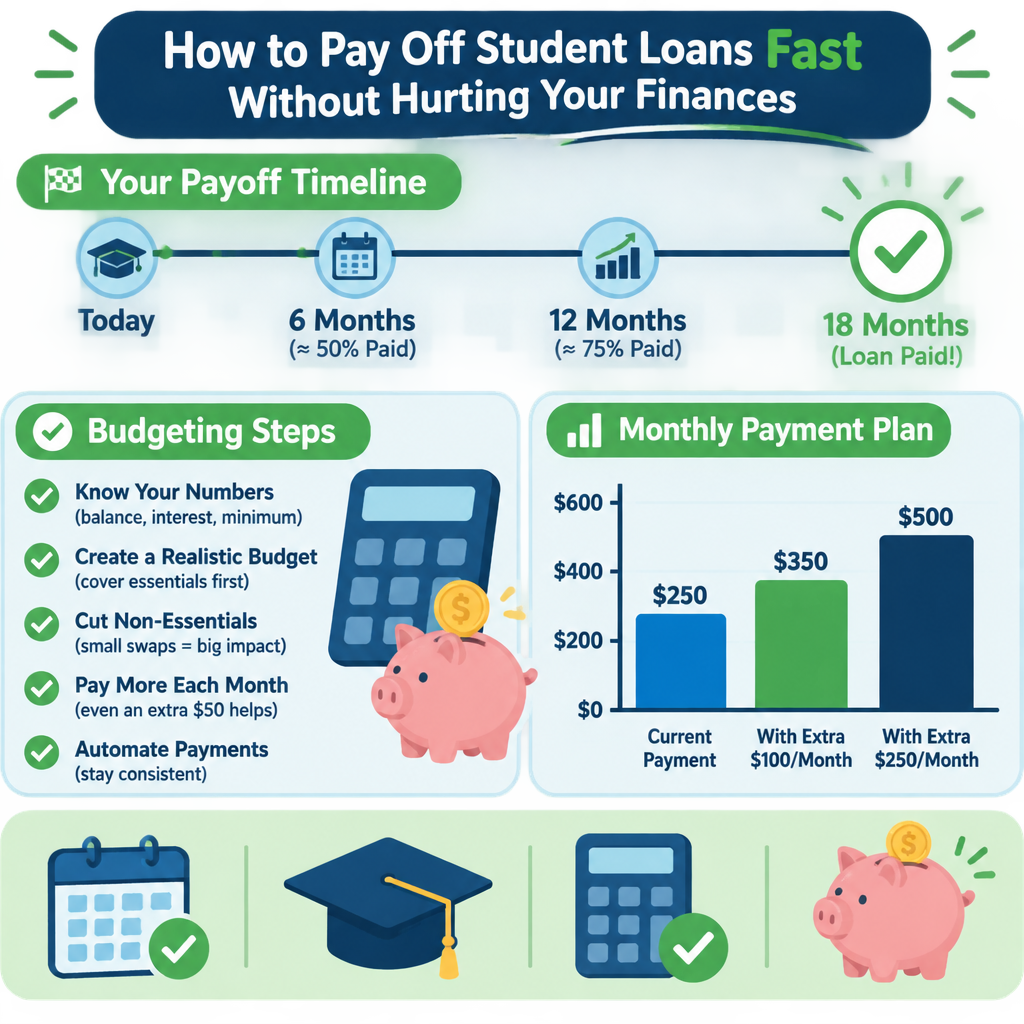
A quick example helps. A $20,000 balance at 6% with a standard 10-year schedule has a payment of about $222 a month. Raising the payment to $300 can finish repayment roughly 39 months early and save about $2,258 in interest under the example assumptions; actual results change with payment dates, loan terms, and servicing. That is useful progress, not a promise for every borrower.
Core Benefits and Why They Matter
The first benefit is lower interest. When extra money reduces principal earlier, less balance remains to accrue interest later, though the savings depend on the rate and how the servicer applies payments. A few extra dollars will not produce a miracle next month. Over years, consistency can make the difference.
A second benefit is cash-flow freedom. Once the loan is gone, the old monthly payment can be redirected to retirement contributions, a home down payment, childcare, or a reserve for irregular expenses. That flexibility has real value, particularly for households whose budgets are tight. The trick is to avoid buying that future freedom by stripping away every present-day safeguard.
Third, a clear payoff target can improve decision-making. A dated balance target—such as eliminating a high-rate private loan first—makes it easier to judge whether a purchase, refinance offer, or extra payment fits the plan. I find this more useful than vague advice to “be disciplined,” because a specific target gives each spare dollar a job. Here’s the kicker: a plan can be aggressive without being reckless.
Fourth, paying down debt reduces exposure to future budget shocks. A smaller balance and shorter repayment period can make a borrower less vulnerable to income disruption, although it does not replace an emergency fund or adequate insurance. For financial stability, those defenses work together: cash handles an immediate repair or job interruption, while a faster repayment schedule reduces long-term interest costs.
There are trade-offs. Extra loan payments are usually difficult to retrieve, while money in a savings account remains accessible. A borrower with little emergency cash, unstable income, or an upcoming major expense may need to build reserves before accelerating payments. Also check forgiveness eligibility before paying ahead. Federal Student Aid provides a Loan Simulator that can help compare repayment paths, but verify any result against your actual account and current program rules.
Finally, a sound plan should reflect more than a spreadsheet. Household needs, the dignity of work, and obligations to dependents matter. Responsible stewardship means paying what you owe while also preserving the resources needed to care for people who rely on you. A payoff date is useful; it is not the only measure of financial health.
Step-by-Step Guide: Eight Ways to Pay Off Student Loans Faster
- Raise your monthly payment when your budget can carry it. Start with a repeatable amount, even if it is only $25 or $50 above the minimum, and increase it after a raise or a paid-off bill. For the $20,000 loan at 6%, the supplied illustration estimates that paying $300 instead of about $222 cuts the term by roughly 39 months and saves around $2,258 in interest. Log in to your servicer account or call to set the amount. Then check the next statement to confirm that the payment was processed as intended.
- Consider biweekly payments, but check the mechanics. Splitting a monthly payment in half and paying every two weeks produces 26 half-payments in a year, equal to 13 full monthly payments rather than 12. In the same $20,000, 6%, 10-year illustration, this approach is estimated to shorten repayment by about a year and save roughly $762 in interest. It can fit well with a biweekly paycheck. Avoid third-party services that charge a fee for a schedule you can arrange yourself, and make sure the servicer accepts the payments as intended rather than holding them in a way that defeats the plan.
- Ask whether your employer offers student loan assistance. Some employers contribute directly to employee loan payments, and an International Foundation of Employee Benefit Plans report cited in the source material put the share offering the benefit at 14% in 2024, up from 4% in 2019. Ask human resources about eligibility, waiting periods, and whether the benefit applies to your type of loan. Tax treatment and program rules can depend on current law and the employer’s plan, so check the details using the IRS employer tax guide or a qualified tax professional.
Even a modest employer contribution can matter. In the example of $20,000 at 6%, an added $100 a month is estimated to cut the payoff term by about 46 months and save roughly $2,638 in interest. Those figures assume the employer contribution is actually applied to the debt and the other assumptions hold. If your workplace does not offer the benefit, you can ask whether it is being considered, but do not count on a future perk until it is in writing.
- Put part of a windfall toward the balance. Tax refunds, bonuses, gifts, or other unexpected income can make a lump-sum payment without raising your monthly commitment. The IRS reported an average refund of $3,052 in its 2025 filing-season statistics for the week ending May 2; that is a dated national average, not a forecast of what any individual will receive. If a borrower with the example loan put about that amount toward the balance each year, alongside regular payments, the supplied illustration estimates the debt could be cleared in just under four years. Keep enough of the windfall for taxes, urgent costs, and savings first.
- Use the avalanche method for extra payments. Pay the required minimum on every loan, then direct additional money to the loan with the highest interest rate. When that balance is cleared, roll the same extra amount onto the next-highest rate. This approach generally minimizes interest when rates and loan terms are otherwise comparable. It can feel slow if the highest-rate balance is large. Still, the arithmetic is usually on its side.
- Enroll in autopay if the discount is worth it. Some federal and private servicers offer a small interest-rate reduction for automatic payments, often around 0.25 percentage points for eligible federal loans, but you must confirm the current offer and conditions with your servicer. Autopay can reduce missed-payment risk and trim interest without requiring a higher monthly budget. Keep enough money in the linked account and review statements regularly. Automation is useful; neglect is not.
- Treat refinancing as a rate decision, not a shortcut. Refinancing a private loan into a lower-rate private loan may reduce interest or monthly costs if you qualify and the new loan’s fees and terms make sense. Refinancing federal loans into a private loan can mean giving up federal benefits, including certain repayment options and forgiveness eligibility. Do not trade protections for a slightly lower rate without pricing the loss. Compare the full terms, and consider keeping federal loans federal if those protections matter to you.
- Assign part of each raise or extra shift to repayment. A small automatic increase after a pay raise can raise your payment without forcing a sudden lifestyle cut. Freelance income, overtime, or seasonal work can also support occasional principal reduction, but budget for taxes and uneven income first. I prefer this method to a punishing budget that leaves no room for ordinary life. Make the extra amount predictable, then revisit it when circumstances change.
Before using any method, write down each loan’s balance, interest rate, minimum payment, federal or private status, and any relevant forgiveness eligibility. Ask your servicer how to direct excess payments to a specific loan and whether it will advance your next due date. If the account is paid ahead, continue making your planned payments rather than assuming the next bill is unnecessary. A short call or secure message can prevent months of confusion.
Comparison: Accelerated Payoff vs. Standard Repayment
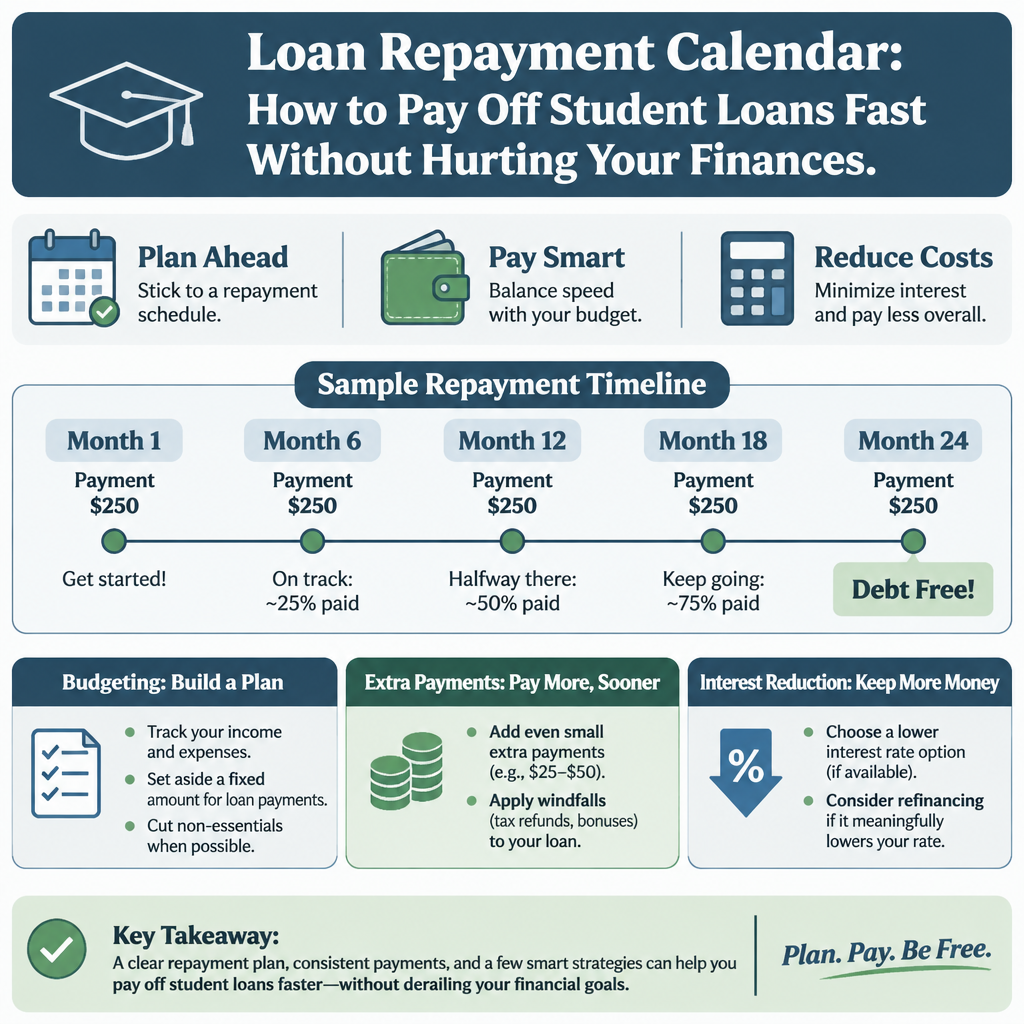
The standard schedule is the sensible starting point for comparison: it meets the required payment but does not add extra money. Accelerated repayment adds money, changes payment timing, or reduces interest costs, so it can finish sooner. The figures below use the $20,000 balance at 6% described above and should be treated as estimates, not a universal quote.
| Approach | Approximate payment pattern | Estimated payoff | Estimated interest effect | Best fit |
|---|
| Standard 10-year schedule | About $222 monthly | 10 years | Baseline; about $6,600 total interest under the illustration | Borrowers who need the lowest scheduled payment in this example |
| Raise payment to $300 | $300 monthly | About 39 months earlier | About $2,258 less interest in the supplied estimate | Borrowers with room in the monthly budget |
| Biweekly payments | Half-payment every two weeks | About 9 years | About $762 less interest in the supplied estimate | People paid every two weeks who can manage the timing |
| Employer adds $100 monthly | About $222 from borrower plus $100 benefit | About 46 months earlier | About $2,638 less interest in the supplied estimate | Employees with a qualifying workplace benefit |
The standard plan offers predictability and more monthly breathing room. The accelerated options buy a quicker finish at the cost of sending more cash to debt sooner. Which side wins depends on your loan rate, emergency reserves, other debt, federal benefits, and tolerance for reduced liquidity. A borrower pursuing forgiveness should not assume faster repayment is automatically better; compare the program path before sending extra money.
The figures do not account for every possible detail, including loan-specific interest accrual, payment dates, fees, rate changes, or the exact way a servicer allocates additional payments. Ask the servicer for a payoff estimate and review current rules. The Federal Student Aid repayment overview is a useful starting point for federal loans, not a substitute for checking your own loan documents.
Common Mistakes to Avoid
Draining savings to make a dramatic payment is a common mistake. A fully paid loan does little good if a car repair or medical bill then lands on a credit card at a far higher rate. Keep a practical emergency reserve before sending every spare dollar to a loan. How much you need depends on income stability, household costs, and access to other support.
Ignoring forgiveness can cost more than interest savings. Borrowers who may qualify for a federal forgiveness program should understand its eligibility rules and payment requirements before paying extra. An unnecessary overpayment can shorten the balance without improving the borrower’s overall outcome. Check your specific employment, loan type, payment history, and current program rules on StudentAid.gov. Do not rely on a social-media summary for a decision this consequential.
Assuming the servicer knows what you mean is another trap. An extra payment may be applied in a way that advances the due date, or it may not target the loan you intended. Give clear instructions, retain confirmation, and inspect the next statement. If the servicer’s treatment is unclear, ask in writing. A payment can be on time and still miss your strategy.
Refinancing federal loans just to chase a lower advertised rate deserves skepticism. The offer may depend on credit, income, and loan terms, and the new rate might be variable. More importantly, private refinancing may remove federal repayment and forgiveness protections. Compare the total cost and the value of protections you would surrender, not just the headline rate. A lower number is not automatically a better deal.
Making an aggressive budget that cannot survive real life usually fails. If the plan leaves no money for food, transportation, dependents, or ordinary repairs, it is not a plan; it is a short-lived stunt. Set a baseline payment you can maintain through a normal month, then use optional extra payments when cash flow allows. Consistency beats a heroic first month followed by missed payments.
Forgetting higher-rate debts can also undermine the math. If you are carrying credit-card balances at a much higher rate, directing every extra dollar to a lower-rate student loan may cost more overall. Keep required minimums current across all accounts, then compare rates and terms before choosing a target. Exceptions exist, including forgiveness paths and other contract features, so the highest rate is a guide—not a commandment.
Finally, do not treat a tax refund or employer contribution as guaranteed income. Refund sizes change, employers can alter benefits, and tax rules can shift. Build your core repayment plan on money you can count on, then use uncertain or one-time funds as accelerators. That keeps the plan sturdy when circumstances turn.
Frequently Asked Questions
What is the fastest way to pay off student loans?
The fastest practical approach is usually to pay every minimum on time and direct all sustainable extra money toward a chosen loan, often the one with the highest interest rate. Before doing that, check whether you may benefit from federal forgiveness or other protections. Keep emergency savings and essential bills funded, and confirm that your servicer applies extra payments as you intend. Fast should still mean financially sound.
Do biweekly student loan payments save money?
They can, if paying half the monthly amount every two weeks results in 26 half-payments—13 full monthly payments—each year and the servicer processes them appropriately. In the $20,000, 6% example, the estimate is roughly one year faster and about $762 less interest. Your result will differ with balance, rate, payment timing, and servicing rules. Check for fees before using a payment service.
Should I pay off student loans early or invest?
There is no universal answer. Compare the loan’s effective interest cost with the potential return and risk of investing, while considering employer retirement matches, emergency savings, taxes, and federal forgiveness eligibility. Loan interest savings are comparatively certain when an extra payment reduces interest; investment returns are not guaranteed. A balanced plan may direct some money to each goal rather than forcing an all-or-nothing choice.
Does refinancing help pay off student loans faster?
It may help if a qualified borrower receives a lower-cost loan and continues paying at least as much as before, allowing more of each payment to reduce principal. But refinancing federal loans into a private loan can forfeit federal protections and potential forgiveness options. Compare fees, fixed versus variable rates, repayment terms, and lost benefits before signing. A lower payment alone may simply stretch the debt over more years.
A fast payoff is a useful target, not a moral test. If your budget cannot support extra payments this month, paying the required amount on time and protecting your household still counts as responsible progress. If you can add a little, automate it, check the statements, and increase the amount only when your finances can bear it. The best plan clears debt without creating a more expensive problem somewhere else.