How to invest through market volatility is mostly about preparation, not prediction. Markets lurch when politics, earnings, rates, and headlines collide, yet...
How to Invest Through Market Volatility: A Practical Guide to Stocks, Risk, and Staying Sane
How to invest through market volatility is mostly about preparation, not prediction. Markets lurch when politics, earnings, rates, and headlines collide, yet the investors who survive are the ones who build durable portfolios, manage risk, and keep cash needs separate from long-term capital. Panic is expensive. So is chasing every rally.
Key Takeaways
- Volatility is normal, not a market malfunction.
- Diversification, asset allocation, and liquidity planning do more work than hot takes.
- AI stocks, chip names, and high-multiple growth shares can swing hard on sentiment.
- A written plan beats reacting to every headline.
- The goal is not to avoid every drawdown; it is to avoid permanent mistakes.
What is market volatility?
Market volatility is the size and speed of price moves in stocks, bonds, and other assets. It is what happens when investors disagree, when earnings disappoint, when rates move, or when geopolitics changes the math. One day a chip stock is flying, the next day it is getting smacked. That is not a bug. That is the market doing its thing.
If you watched the latest batch of headlines, you saw the usual circus: AI safety worries, tensions in the Middle East, stock buyback announcements, and another round of sector rotation. The point is not that every headline matters equally. The point is that markets price expectations, not truth in some abstract sense. I have analyzed enough portfolios to say this plainly: most people do not lose money because volatility exists. They lose money because they mistook a temporary price move for a permanent verdict on their thesis.
Volatility is often confused with risk, but they are not identical. Risk is the chance of a bad outcome relative to your goals. Volatility is motion. A high-quality business can still swing wildly if the crowd is nervous. A weak business can look calm right before it falls apart. Frankly, the market has no obligation to be polite.
That is why portfolio construction matters more than stock-picking bragging rights. If your money is spread across stocks, bonds, cash, sectors, and time horizons, then a nasty week in semiconductors or a selloff in homebuilders does not have to wreck your plan. If you are concentrated in one theme because a newsletter promised the moon, well, here is the kicker: the moon is expensive.
For a sober starting point, the U.S. Securities and Exchange Commission’s guidance on asset allocation is worth reading, and the FINRA explanation of diversification says much the same thing in plainer English. The lesson is old because it works.
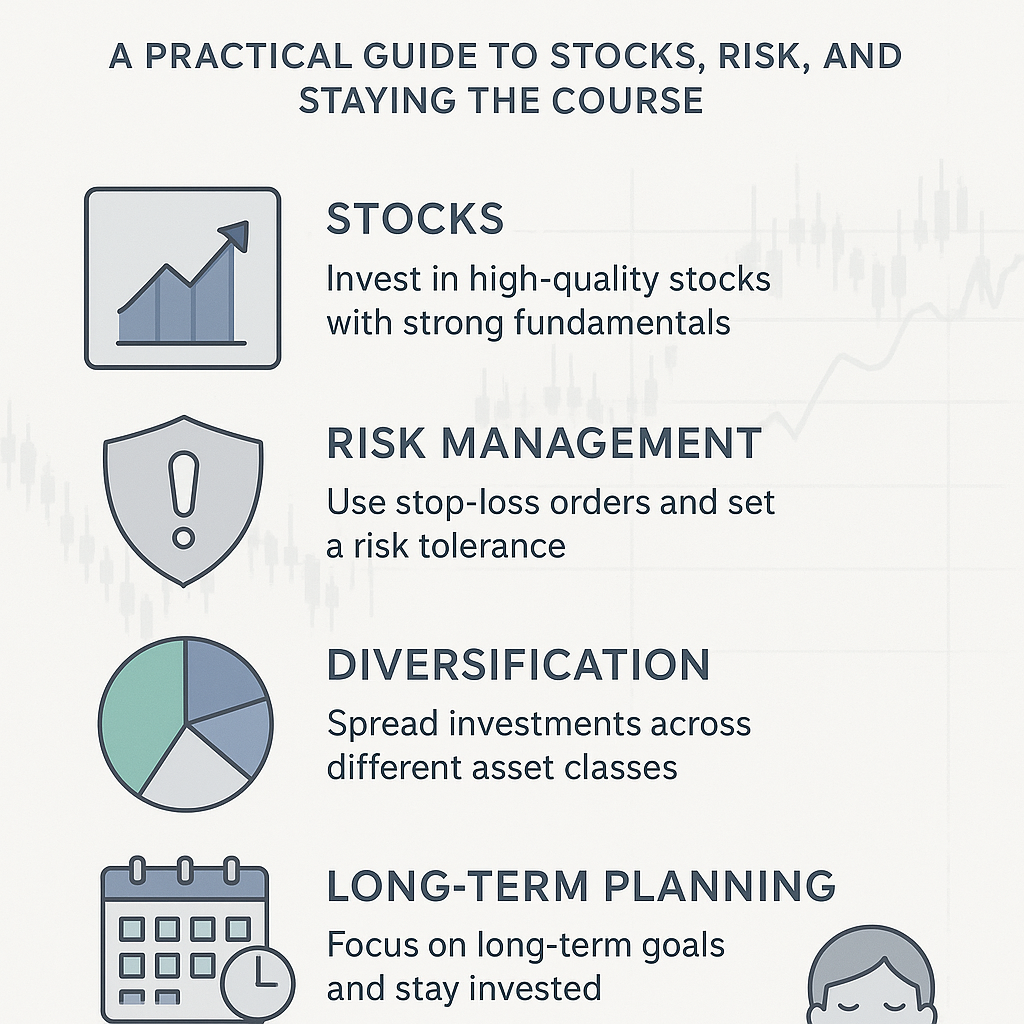
Core benefits of understanding volatility
Understanding volatility helps you stop acting like every red candle is a personal insult. It gives you a framework. It also gives you a way to measure whether a move is noise, a real change in fundamentals, or a sign you own the wrong asset.
- Better timing discipline: Not market timing. Discipline. You know when to rebalance, when to hold cash, and when to add risk.
- Cleaner risk management: You can size positions based on how much pain you can actually tolerate, not how brave you felt on a Sunday.
- Stronger diversification: Volatility shows which assets are truly different and which are just dressed up to look that way.
- Less emotional trading: Once you understand that drawdowns are part of the game, you stop making dumb, reactive moves.
- More realistic expectations: A 20% annual return fantasy usually ends with disappointment. Real portfolios breathe.
Most guides talk as if volatility is some exotic disease. It is not. It is a recurring feature of markets shaped by supply and demand, earnings revisions, policy shifts, and investor mood. The better question is not, “How do I eliminate volatility?” The better question is, “How do I make volatility work for me instead of against me?”
That matters because different assets react differently. Growth stocks with rich valuations can fall harder when rates rise. Dividend stocks may hold up better but can underperform in speculative rallies. Bonds can cushion a stock drawdown, though not always. Cash looks boring until you need it. Commodity exposure may help during inflation shocks, but it is not magic. Each tool has a place. None of them is the answer to everything.
There is also a moral dimension people skip. Stewardship is not just about making money. It is about using resources with prudence, patience, and responsibility. Chasing hype without regard for consequences is a lousy habit, whether you learned it from Wall Street or a group chat. Investing well means respecting reality, protecting household stability, and not treating capital like confetti.
For a broader market framework, see BlackRock’s asset allocation overview and the Federal Reserve’s monetary policy resources. Rates drive a lot more than people admit.

Step-by-step guide to investing through volatility
Start with liquidity. That sounds dull. It is also essential.
- Separate emergency cash from investment capital. If you may need the money in the next 12 to 24 months, it does not belong in a volatile stock position. I have seen too many people sell quality holdings at the worst possible time because rent, tuition, or a repair bill showed up. That is not investing. That is self-inflicted damage.
- Write down your risk budget. Decide how much decline you can stomach without blowing up your plan. If a 25% drop in equities would cause you to panic, then your portfolio is probably too aggressive. Be honest. Bravado evaporates fast when prices actually fall.
- Build a real asset allocation. A portfolio is not just a pile of tickers. It is a mix of stocks, bonds, cash, and maybe a few specialized sleeves. The mix should reflect your time horizon, income stability, tax situation, and need for stability. Someone in accumulation mode can accept more stock exposure than someone living off withdrawals.
- Use diversification the right way. Do not confuse owning ten tech names with diversification. That is just a more expensive way to own one factor. Spread exposure across sectors, geographies, and market caps if your situation justifies it. The point is not to own everything. The point is to reduce single-point failure.
- Rebalance on a schedule. Once or twice a year is enough for many investors. Rebalancing forces you to trim what has run hot and buy what has lagged. That feels backward because it is. Markets reward patience, not theatrical confidence.
- Size speculative positions small. If you want exposure to AI, chipmakers, or unproven growth stories, fine. Keep it sized so one bad quarter does not wreck your sleep. A lot of people treat speculative positions as if they were core holdings. That is how portfolios get kneecapped.
- Check valuation and cash flow. A good company is not always a good stock. I have run the numbers on enough high-flying names to know that revenue growth without a path to profit can turn ugly quickly when sentiment changes. Price matters. So does the business model.
- Ignore the daily noise unless it changes the thesis. This is where most investors fail. They watch every headline, then act as if a single data point is destiny. Usually it is not. The market is a voting machine in the short run and a weighing machine over time. That old line still holds.
- Review your holdings against real goals. Ask whether each position still serves a purpose. If it does not, cut it. If it does, keep it. Simple. Not easy, but simple.
When I review portfolios for volatility management, the biggest improvement usually comes from reducing concentration and matching time horizon to asset type. Not from buying some fancy product pitched as a shield. The truth is, there is no free lunch. There is only a better fit between goals and risk.
For practical reading on index investing and low-cost portfolio construction, see Vanguard’s low-cost indexing research and the SEC investor bulletin on index funds and ETFs. Cheap and diversified usually beats clever and costly.
Comparison table: volatility-tolerant portfolio vs concentrated growth bet
| Feature | Volatility-Tolerant Portfolio | Concentrated Growth Bet |
|---|
| Core idea | Mix of stocks, bonds, cash, and balance | Heavy exposure to one theme or sector |
| Risk profile | Lower single-name and single-sector risk | High drawdown risk if theme cools |
| Behavior in selloffs | Usually better cushioned | Can fall fast and hard |
| Upside potential | Steady, compounding growth | Higher, but less reliable |
| Income support | Often includes dividends or bonds | Usually little to none |
| Decision quality | Easier to stick with | Harder when the crowd turns |
| Best for | Long-term investors, retirees, planners | Speculators who can afford losses |
The biggest competitor to a sensible portfolio is not another fund. It is overconfidence. People see a stock ripping higher, then assume they have discovered genius. Usually they have just discovered momentum. Momentum is useful until it stops.
Common mistakes to avoid
The first mistake is confusing a good story with a good entry point. Companies can have strong products, real market share, and still be overpriced. That matters. A lot. If you buy excellence at any price, the market may punish you for your enthusiasm.
The second mistake is treating volatility as proof that something is broken. Sometimes the market is just repricing expectations. Sometimes earnings are fine and the multiple compresses anyway. That is irritating, but it is not the same as a business failure.
The third mistake is reaching for leverage because patience feels slow. Leverage magnifies both gains and losses. In calm markets, people talk about it like a tool. In rough markets, it behaves like a trapdoor.
The fourth mistake is holding too much cash for too long. Yes, cash is important. No, sitting in cash forever because you are scared is not a strategy. Inflation quietly eats purchasing power. You need enough liquidity, not excessive paralysis.
The fifth mistake is ignoring the tax bill. Gains, losses, dividends, and retirement account rules all matter. A brilliant trade that creates a worse tax result may not be brilliant at all. Taxes are not a side note. They are part of the return calculation.
The sixth mistake is letting headlines drive allocations. Politics, tariffs, rates, and geopolitics matter, but they do not excuse constant portfolio thrashing. You do not need to act on every headline from Yahoo Finance or every nervous note from social media. Most of that chatter is just static.
Here is the kicker: people often say they want long-term investing, then behave like short-term traders. Those are different jobs. If you want the long-term compounding that builds real wealth, then you need patience, humility, and the willingness to look wrong for stretches. That is not glamorous. It is effective.
A few more mistakes deserve mention. Owning too many overlapping funds can create hidden concentration. Ignoring debt while speculating in stocks can turn a portfolio problem into a household problem. And failing to think about the common good—even in investing—can lead people into companies or structures that enrich shareholders while harming workers, customers, or communities. Good investing should not require moral blindness. Stewardship asks better of us.
Frequently asked questions
Is volatility always a bad thing?
No. Volatility creates discomfort, but it also creates opportunity. If you have cash, discipline, and a sound plan, price swings can improve long-term returns. The problem is not volatility itself. The problem is being unprepared for it.
Should I buy the dip every time?
No. That advice is lazy. Sometimes a dip is a bargain. Sometimes it is the first leg of a much bigger decline. I prefer buying when the business is strong, the valuation is reasonable, and my original thesis still holds. Buying every dip is not investing. It is a slogan.
Are AI stocks too risky right now?
Some are. Some are not. AI is a real capital spending theme, but not every company tied to it has a durable edge. Chips, cloud infrastructure, software, and data-center suppliers face different risks and payoff profiles. Use company filings and investor relations pages, not hype, to judge value.
How much of my portfolio should be in stocks?
There is no universal number. It depends on your time horizon, income, obligations, and temperament. Older investors often need more stability, while younger investors can usually tolerate more equity exposure. A proper allocation is personal. Cookie-cutter advice is for people who do not want to think.
Final thought
Investing through volatile markets is not about becoming fearless. It is about becoming orderly. Markets will keep throwing surprises at you—rate shocks, earnings shocks, political shocks, sector rotations, and the occasional absurd headline that makes everyone act dramatic. Fine. That is part of the deal.
What actually works is older and less exciting than most people want. Keep liquid reserves. Own a diversified portfolio. Respect valuation. Size risk with honesty. Rebalance. Ignore the noise unless it changes the facts. And remember that capital is a trust, not a toy. If you treat money as a tool for stewardship rather than as a scoreboard for ego, you are already ahead of most market participants.
I have seen enough cycles to know that the best investors are not the loudest. They are the ones who stay sober when everyone else is swinging between greed and fear. That is the difference between speculation and prudence. One makes headlines. The other builds wealth.