The best mortgage rate is the cheapest loan you can actually close. Not the lowest teaser rate, not the shiny ad, and not the one your cousin swears he got in...
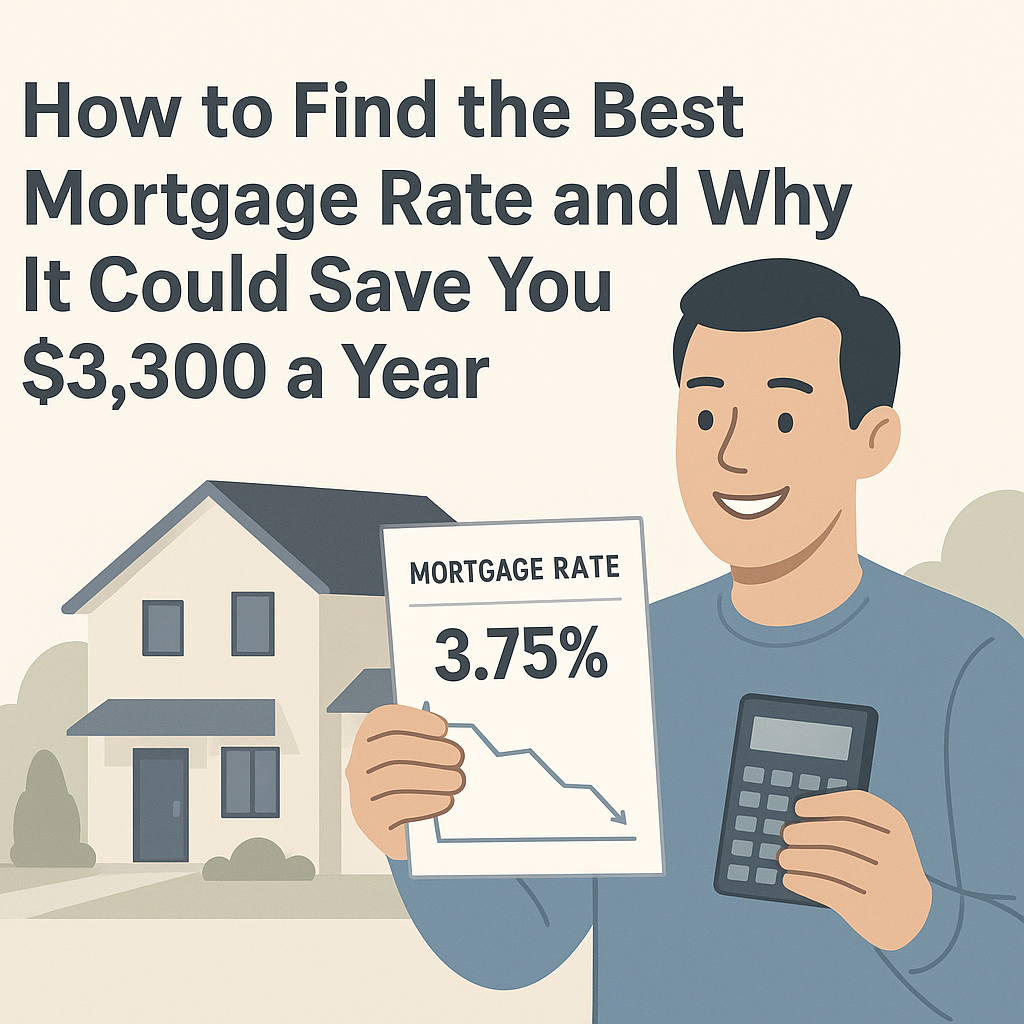
How to Find the Best Mortgage Rate and Why It Could Save You $3,300 a Year
The best mortgage rate is the cheapest loan you can actually close. Not the lowest teaser rate, not the shiny ad, and not the one your cousin swears he got in 2021, because mortgage pricing depends on credit, down payment, loan type, points, debt load, and whether the lender thinks you are a clean, low-risk bet. That matters.
A small rate difference can shave hundreds off a monthly payment, and over a typical loan term the gap can be brutal. I have run the numbers on enough home loans to know this: most people focus on the house price and ignore the financing, which is how they end up paying for a bigger rate than necessary, month after month, year after year. Frankly, that is money leaking out of the household budget when it should be building equity, emergency savings, or a real safety net. Stewardship is not a fancy word here. It is ordinary prudence.
Key Takeaways
- The best mortgage rate is the one that fits your full loan cost, not just the headline APR.
- Your credit score, down payment, debt-to-income ratio, and loan type shape the rate you get.
- Buying points can help, but only if you keep the loan long enough to break even.
- Comparing multiple lenders is the fastest way to expose weak offers and junk fees.
- A rate that looks tiny can still cost thousands over time, so do the math before signing anything.
What is the best mortgage rate?
The best mortgage rate is the lowest effective borrowing cost available for your specific loan, credit profile, and home purchase plan. That sounds obvious, but most people confuse the note rate with the true cost, which includes points, lender fees, mortgage insurance, and closing costs that can quietly raise the real price of the loan. Mortgage lenders do not hand out charity; they price risk, and they do it with all the warmth of a brick wall.
The basic rule is simple. Borrowers with stronger credit, more cash down, stable income, and lower debt ratios usually receive better pricing, because lenders see less chance of default and less work collecting their money if things go sideways. That is just arithmetic dressed up as underwriting.
The Federal Reserve explains how mortgage rates are affected by broad market forces like inflation, bond yields, and monetary policy, while consumer details influence the offer a lender can make to you. You can read their plain-English primer at the Federal Reserve. For rate context, the Freddie Mac Primary Mortgage Market Survey tracks weekly averages.
Here’s the kicker: the “best” rate is not always the lowest nominal number. If a lender offers 6.25% with high fees and another offers 6.40% with lower closing costs, the second loan may be cheaper over your expected holding period. People hate hearing that because it requires actual comparison instead of slogan-chasing, but numbers do not care about feelings.
Mortgage rate shopping is also a test of patience and judgment. You are not just buying a house. You are choosing a long-term debt structure that affects your monthly cash flow, your flexibility during layoffs or illness, and even your ability to give, save, and invest with purpose. A family budget should serve the common good of the household, not suffocate it.
Core benefits and importance of finding a better mortgage rate
A lower mortgage rate matters because debt compounds too. People understand compounding when it helps them in a portfolio, but somehow they forget it when they sign a 30-year note. Funny how that works.
- Lower monthly payment: A better rate can free up cash for groceries, repairs, retirement contributions, or an emergency fund. That is not trivial.
- Less interest over time: Even a small rate cut can save tens of thousands of dollars across the full loan term, especially on larger balances.
- Better cash flow stability: Fixed monthly costs matter when the economy stumbles, layoffs hit, or medical bills show up uninvited.
- More room for investing: The less you pay in interest, the more capital can go to retirement accounts, college savings, or a diversified portfolio.
- Stronger refinancing options: If rates fall later, starting from a solid loan structure gives you more flexibility.
- Reduced financial stress: A mortgage should fit the household, not bully it. That is a moral point as much as a mathematical one.
Most guides pretend that chasing the lowest possible rate is automatically the right move. It is not. If you expect to move in three years, paying points may be foolish. If you plan to stay put for fifteen years, a slightly higher upfront cost may be worth it. Context matters, and people who ignore context usually pay tuition to the market.
I have seen borrowers obsess over shaving one-eighth of a percent while ignoring a messy credit report, unstable income documentation, or overpriced lender fees. That is backward. Fix the big levers first. Then haggle over the smaller ones.
The Consumer Financial Protection Bureau has useful guidance on comparing loan estimates and understanding mortgage costs at the CFPB Loan Estimate page. Use it. Seriously. It is not glamorous, but neither is overpaying by the price of a decent used car.
For broader homebuying context, see CFPB on fixed-rate mortgages and CFPB on adjustable-rate mortgages. The distinction matters more than most brokers admit.
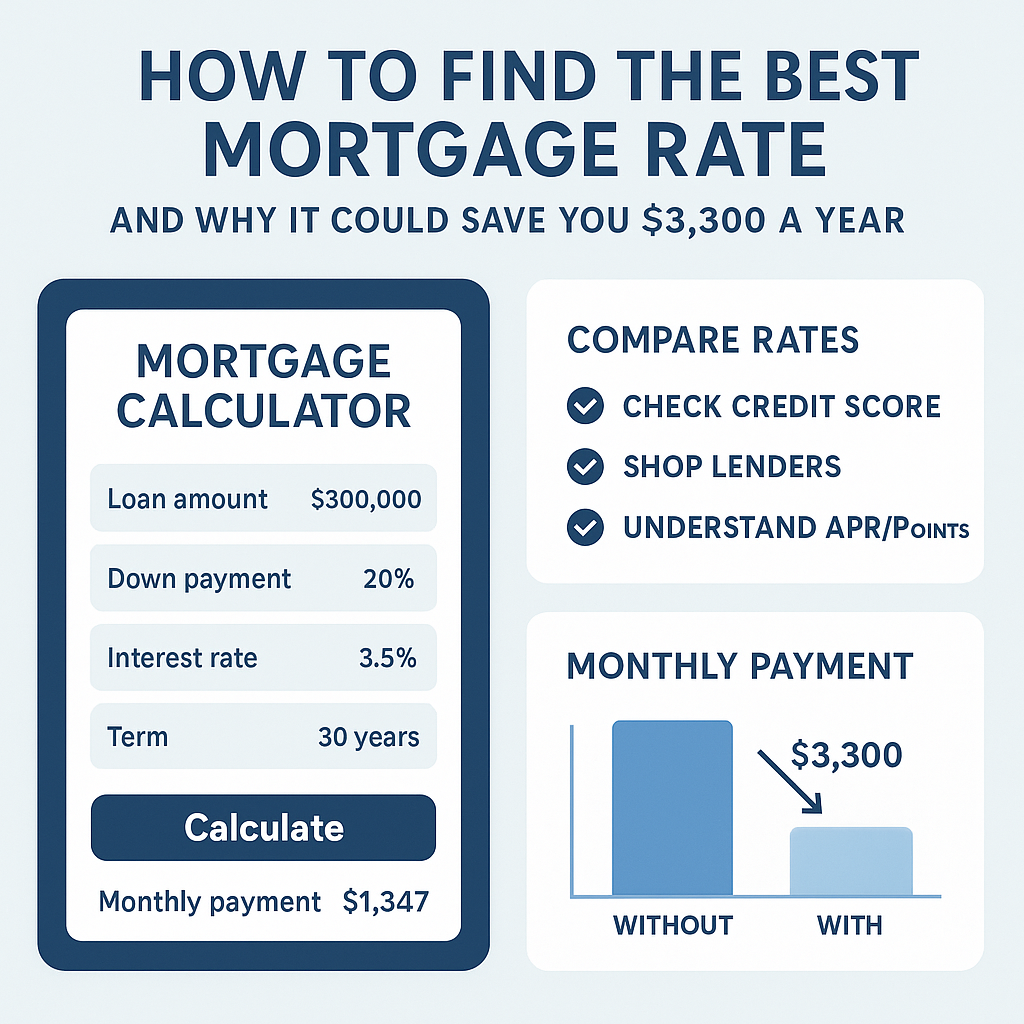
How to get the best mortgage rate step by step
The process is not mysterious. It is paperwork, discipline, and a little stubbornness, which is why so many people get it wrong.
- Check your credit before shopping. Pull all three reports, fix errors, and pay down revolving balances. Small score gains can change pricing bands. I have seen borrowers get better offers after cleaning up one ugly card balance and one mistaken late payment.
- Stabilize your finances. Lenders like clean bank statements, consistent income, and low debt-to-income ratios. If your finances look like a shoebox after a windstorm, expect pricing friction.
- Save a stronger down payment if possible. More equity at closing often means lower risk in the lender’s eyes. That can improve pricing and reduce mortgage insurance costs.
- Shop at least three to five lenders. Banks, credit unions, online lenders, and mortgage brokers may all price the same borrower differently. Do not worship the first quote. That is how lenders make extra money.
- Compare Loan Estimates line by line. Focus on rate, points, lender fees, third-party costs, and projected cash to close. The headline number alone is not enough. The CFPB’s loan estimate guide is built for exactly this: how to compare offers.
- Decide whether points make sense. Discount points are prepaid interest. They can lower your rate, but only if you hold the mortgage long enough to recoup the upfront cost. Break-even math is not optional.
- Choose the right loan type. Conventional, FHA, VA, and jumbo loans do not price the same way. The “best” rate depends on the loan structure, not just your wish list.
- Lock the rate when the math works. Rate locks protect you from market swings during underwriting. Waiting for perfection is usually a bad hobby.
- Avoid adding debt before closing. Do not finance furniture, buy a car, or open a new credit card right before the loan funds. Lenders notice. They really do.
- Keep the long view. A home is shelter first, investment second. People lose sight of that and start treating housing like a casino chip. Bad idea.
What actually works, in my experience, is boring. Clean credit. Solid income. Honest comparison shopping. A sane down payment. And a willingness to say no to slick sales talk. That is the recipe, not some secret trick.
If you want a deeper look at debt and household balance sheets, the broad principles in Investopedia’s debt-to-income ratio guide are practical, though I would still check the CFPB before signing anything.
Best mortgage rate vs. biggest competitor: the cheapest headline rate
The biggest competitor to the “best mortgage rate” is the lowest advertised rate. That sounds close, but it is not the same thing. One is real-world pricing. The other is marketing.
| Feature | Best Mortgage Rate | Lowest Advertised Rate |
|---|
| True total cost | Often lower over time | Can hide fees or points |
| Fits borrower profile | Yes | Not always |
| Includes closing cost analysis | Yes | Sometimes ignored |
| Best for long-term planning | Usually | Not necessarily |
| Risk of bait-and-switch | Lower when comparing LE forms | Higher if ads are not read carefully |
| Useful for refinancing | Yes | Only if break-even is clear |
| Decision quality | High | Weak if used alone |
The truth is, a headline rate can be cheap-looking but expensive in practice. A lender may quote a flashy number and then bury the real cost in points, origination fees, or tricky assumptions. That is not fraud every time, but it is often close enough to be annoying. The point is to compare total economics, not clickbait.
I like using a simple decision rule. If you will keep the loan for a long time, lower rates with modest points may win. If you expect a move or refinance in a few years, lower closing costs may matter more. That tradeoff is plain, and it is usually ignored by people who want one magic answer. There isn’t one.
This is also where broader market conditions matter. Mortgage rates tend to track Treasury yields, inflation expectations, and Federal Reserve policy. For current data and rate context, Freddie Mac’s weekly survey is one of the better public references: Freddie Mac PMMS. For policy background, the Fed’s economic updates are worth reading, even if they are more sedative than thrilling.
Common mistakes to avoid
Most bad mortgage decisions come from laziness. That sounds harsh, but it is usually true.
- Chasing only the rate: The lowest rate on paper can carry ugly costs elsewhere. Compare the full loan estimate.
- Ignoring points: People buy points because they sound sophisticated, then discover the break-even period is longer than they plan to keep the house.
- Failing to shop multiple lenders: One quote proves nothing. Lenders price differently, and some will absolutely lowball to win your attention.
- Overstretching the budget: A giant house with a fragile payment plan is not wealth. It is a liability with nicer countertops.
- Letting credit drift: Small score drops can change your rate. One late payment or a high utilization month can sting.
- Changing jobs mid-process without thinking: Income stability matters. Underwriting likes predictability.
- Forgetting taxes and insurance: Your mortgage payment is not just principal and interest. Escrows can raise the true monthly bill.
- Skipping the long-term plan: A 30-year mortgage is not a fashion accessory. Decide whether you intend to stay, refinance, or sell.
Everyone says “shop around,” but few people actually do the work. The data suggests shopping can save meaningful money, and that is before you count the value of better terms or fewer junk charges. When I compare loan offers, I care less about the sales pitch and more about the spread between quotes. The spread is where the truth hides.
Another mistake is treating mortgage debt as morally neutral. It is not. A fair loan supports a family’s stability and the dignity of work; a predatory one strips security from people who can least afford it. The common good starts at the household level. That does not mean refusing debt altogether. It means using it honestly, carefully, and without pretending the lender is your friend.
For a practical consumer view on mortgage costs and disclosures, the CFPB is still the cleanest source: Closing Disclosure basics.
Frequently asked questions
How much can a better mortgage rate save me?
It depends on loan size, term, and how long you keep the mortgage. On a large balance, even a small rate cut can save thousands per year in interest and much more over the life of the loan.
Is it better to pay points or take a higher rate?
It depends on your break-even period. If you will own the home long enough to recover the upfront cost of points, they may make sense. If not, skip them.
What credit score do I need for a good mortgage rate?
Higher scores generally get better pricing, but the exact cutoff varies by lender and loan type. In practice, borrowers with strong credit profiles and low debt tend to get the best offers.
Should I use a mortgage broker or go directly to a bank?
Compare both. Brokers may access multiple lenders, while banks and credit unions can sometimes beat them on price or fees. There is no universal winner.
Final thought
The best mortgage rate is not a trophy. It is a tool for keeping your household steady, your budget honest, and your long-term plans intact, because money should serve life rather than dominate it. That is the part people miss when they chase a shiny quote and call it wisdom.
A mortgage is one of the biggest financial commitments most families ever make, so the right way to think about it is soberly: compare the full cost, protect your margin, and leave room for saving, giving, and investing with purpose. A well-priced loan gives you breathing room. Breathing room matters.
Here’s the kicker: the market will keep moving, rates will rise and fall, and every broker will claim to be the best. Fine. Let them talk. Your job is simpler. Build a clean profile, demand transparent numbers, and choose the loan that fits your life instead of flattering your ego.
That is not glamorous. It is better.