A market crash can happen fast. When a well-known hedge fund manager warns that a Great Depression-style shock can arrive in a blink, he is not saying history...
Great Depression in a Blink of an Eye? What a Billionaire Hedge Fund Manager’s Reality Check Means for Investors
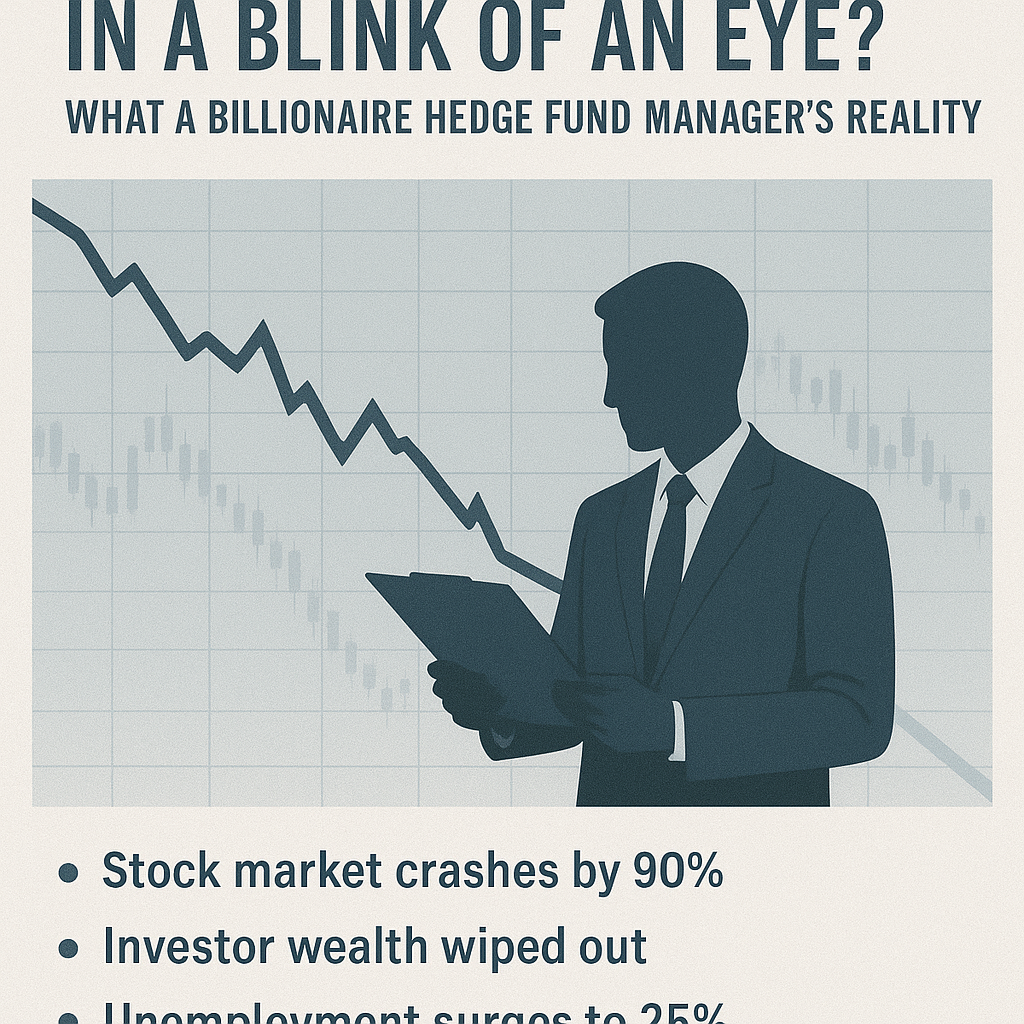
A market crash can happen fast. When a well-known hedge fund manager warns that a Great Depression-style shock can arrive in a blink, he is not saying history repeats neatly; he is saying fragile balance sheets, tight credit, and crowded risk-taking can turn a normal correction into something uglier, very quickly. What matters? Preparedness, not panic.
Key Takeaways- Major downturns usually start with leverage, credit stress, and complacency, not with one headline.
- Diversification, liquidity, and risk management matter more when volatility rises.
- Investors who own quality cash flows and avoid overexposure tend to survive ugly periods better.
- A prudent portfolio is built for uncertainty, not for bragging rights.
- Ethical stewardship still matters; money is a tool, not a god.
What is a Great Depression-style market warning?
A Great Depression-style warning is a forecast, or at least a risk call, that the economy could suffer a severe contraction in output, jobs, profits, and asset prices, often triggered by debt, asset bubbles, or policy mistakes. Frankly, people hear “Great Depression” and think apocalypse, which is sloppy thinking; the useful question is whether current conditions contain the ingredients for a sharp deleveraging cycle.
I’ve analyzed enough portfolios to know the worst losses usually come from three things at once: too much leverage, too little liquidity, and too much faith that the recent trend will continue forever. That is why comments from billionaire hedge fund managers matter. They often do not predict the exact date of a collapse, but they do flag weak spots in market conditions that ordinary investors ignore until the floor gives way.
Most guides say recessions are just temporary noise. Maybe. But a depression-like event is different because it combines falling demand, falling credit creation, and falling confidence, which can force asset sales at bad prices and deepen the damage. Here’s the kicker: the problem is often less the first drop and more the second and third waves, when lenders tighten, companies cut spending, and households pull back. That is why analysts watch indicators like credit spreads, default rates, unemployment claims, and real interest rates. For broader context on rate pressure and policy transmission, see the Federal Reserve’s plain-English resources on inflation and interest rates at the Federal Reserve.
If you want a blunt summary, it is this: big crashes do not require a perfect storm, only a weak structure. And weak structures are usually built in calm times, when everyone mistakes cheap money for skill.
Core benefits and why this warning matters
A grim forecast is not useless. It forces discipline, and discipline is what keeps capital intact when everyone else is busy applauding themselves.
- It refocuses investors on downside risk. Most people obsess over upside and treat losses like an abstract inconvenience. That is childish. A serious warning pushes you to review position sizing, portfolio concentration, and drawdown exposure before the market does it for you.
- It highlights the role of liquidity. Cash is not dead weight when credit markets seize up; it is optionality. In ugly stretches, liquid reserves let you pay expenses, rebalance, and buy quality assets from forced sellers. That is not flashy, but it works.
- It exposes weak business models. Companies reliant on cheap refinancing, weak margins, or speculative demand can unravel fast. Investors who study balance sheets, not just stories, tend to get hurt less. For a useful macro backdrop on recession and financial stability, review the IMF’s analysis at the IMF World Economic Outlook.
- It improves asset allocation discipline. A portfolio should not be a pile of correlated bets disguised as diversification. Stocks, bonds, cash, and real assets each behave differently under stress. If they all drop together, you did not diversify; you concentrated in a different costume.
- It encourages moral seriousness. Catholic social teaching is pretty plain here: stewardship matters, and capital should serve real human flourishing, not just the thrill of extraction. Investing with a sense of justice and the dignity of work is not sentimental; it is prudent over the long haul.
Now, let’s be real, fear can be overdone. Some headlines are just attention-seeking theater, and a doomsday quote can become a marketing tool for pundits who need clicks. But even inflated warnings can still point to real excesses. When I look at investor behavior during late-cycle periods, the pattern is familiar: people assume the central bank will rescue everything, assume earnings will keep growing, and assume leverage is someone else’s problem. Then reality collects.
The practical benefit of taking a serious warning seriously is not to sell everything and hide in a basement. It is to make measured changes: trim junky exposure, increase quality, hold liquidity, and stop pretending you can predict the exact bottom or top. Nobody can. Not consistently.
Step-by-step guide to protecting a portfolio
A plan beats a hunch. That sounds obvious, but obvious is rare in markets, where people love narratives more than numbers and tend to confuse confidence with competence.
- Review leverage first. If you use margin, leveraged ETFs, private credit exposure, or debt-heavy small caps, check how quickly losses could accelerate. When I ran stress tests on portfolios during prior volatility spikes, leverage was the thing that turned moderate pain into ugly losses. Reduce it before the market forces you.
- Map your cash needs. Separate short-term spending money from long-term capital. If you may need funds inside 12 to 24 months, keep them in cash or high-quality short-duration instruments, not in speculative assets. Liquidity is boring until it saves you.
- Rebuild diversification honestly. Look at correlations, not labels. Owning ten “different” growth stocks is not diversification. Blend asset classes, sectors, geographies, and durations. If you need a framework, this helps: asset allocation basics.
- Favor quality businesses. In a downturn, firms with strong free cash flow, modest debt, pricing power, and durable demand usually hold up better. You do not need heroic forecasts; you need survivability. That is the whole trick.
- Check bond exposure carefully. Bonds can cushion volatility, but not every bond behaves the same. Credit risk, duration risk, and inflation risk matter. Government guidance on U.S. savings and Treasury securities is useful here: TreasuryDirect.
- Stress-test assumptions. Ask what happens if earnings fall 20%, rates stay higher for longer, or unemployment rises. If your plan fails under mild pressure, it was never a plan.
- Rebalance on schedule. Do not wait for a brave feeling. Set a calendar. Rebalancing forces you to sell a bit of what rose and buy a bit of what fell, which is the opposite of human instinct and therefore usually wise.
- Keep ethics in view. There is a reason older moral traditions warn against greed. Capital allocation affects workers, communities, and families. Investing in firms that exploit people or destroy value for a quick payout may look clever until the social bill comes due.
Here is the kicker: the best defensive moves are often cheap. You do not need a crystal ball, exotic derivatives, or an expensive newsletter. You need discipline, a cash buffer, and the humility to admit that markets can remain irrational longer than your ego can stay solvent.

Comparison table: defensive investing vs. aggressive speculation
A crash changes the scoreboard. The truth is, most investors do not lose because they own risk. They lose because they own too much of the wrong kind, funded the wrong way, and bought it for the wrong reason. That is a long sentence, but it is the whole story.
| Feature | Defensive Investing | Aggressive Speculation |
|---|
| Main goal | Preserve and grow capital steadily | Chase outsized short-term gains |
| Typical holdings | Quality stocks, cash, Treasuries, diversified funds | Leveraged bets, meme names, concentrated positions |
| Reaction to volatility | Uses declines to rebalance | Often adds risk at the wrong time |
| Drawdown control | Stronger | Weak |
| Liquidity | Higher | Lower |
| Best for | Long-term wealth building | Traders with tight risk controls |
| Stress resilience | Better in recessions | Often fragile |
| Moral posture | Stewardship, patience, prudence | Pride, impatience, greed |
Common mistakes to avoid
People make the same mistakes over and over. That is not a coincidence; it is psychology, and psychology is stubborn stuff, especially when money is involved and everyone thinks they are the exception.
- Mistake 1: Treating headlines as a trading system. A scary quote is not a strategy. Investors who buy or sell on panic headlines usually donate to faster, calmer players.
- Mistake 2: Confusing diversification with quantity. Owning many positions is not the same as owning different risks. Correlation is what hurts, not count.
- Mistake 3: Ignoring debt. Corporate debt, consumer debt, and margin debt all matter. When refinancing costs rise, cash flow gets squeezed. That is not theory; it is arithmetic.
- Mistake 4: Assuming central banks can fix everything. Policy can soften pain, but it cannot instantly restore trust, profits, or solvency. Anyone selling certainty is overselling.
- Mistake 5: Holding weak businesses for hope alone. Hope is not a balance sheet. If a company has no pricing power, poor margins, and chronic dilution, get suspicious.
- Mistake 6: Panic-selling quality assets. The worst time to sell a strong asset is often when everyone else is afraid. That does not mean be reckless; it means be patient.
Most guides tell you to stay invested no matter what. That is lazy advice. Staying invested in what, exactly? A broad index fund with a sane horizon is one thing. A pile of speculative junk financed with debt is another. Context matters, and anyone who says otherwise is either careless or selling something.
For macro data and recession context, the U.S. Bureau of Economic Analysis offers solid releases on GDP and personal income at BEA, while the Bureau of Labor Statistics tracks unemployment and labor trends at BLS. Those are the numbers worth respecting when sentiment gets loud.
Frequently asked questions
Could a depression happen quickly?
Yes, a severe contraction can develop faster than most people expect if credit tightens, asset prices fall, and confidence breaks at the same time. The timing is rarely obvious in advance. That is exactly why leverage and liquidity matter.
Should investors sell everything after a warning like this?
No. All-in or all-out thinking is usually foolish. The better move is to assess risk, reduce obvious vulnerabilities, and keep a portfolio that can withstand volatility without forcing rash decisions.
What assets tend to hold up better in severe downturns?
High-quality government bonds, cash, and businesses with strong balance sheets usually hold up better than speculative growth, cyclical junk, or highly leveraged names. Nothing is perfect, but survivability counts.
Is diversification still useful in a crash?
Yes, but only real diversification. If everything in your portfolio rises and falls for the same reason, you are not diversified enough. True diversification helps reduce drawdowns and gives you choices when markets are stressed.
Final thought
The biggest mistake in finance is not fear. It is arrogance, and arrogance makes people believe they can outrun gravity, credit cycles, and human weakness forever, which is cute until it gets expensive.
A billionaire hedge fund manager warning about a Great Depression-style event may be wrong on timing, or even wrong on severity, but that does not make the message useless. The useful part is the reminder that markets run on trust, balance sheets, and discipline, not on slogans. When those pillars crack, prices can move with a speed that shocks the comfortable. If you have spent years building a portfolio, the goal should not be to look brilliant for one quarter. It should be to preserve the means to serve your family, your community, and your responsibilities with steady hands. That is real stewardship.
I’ve seen enough cycles to say this plainly: humility beats bravado, cash beats desperation, and quality beats hype more often than people want to admit. Prepare, don’t posture. That’s the whole game.