Deere’s $99 million repair-cost settlement matters. It is not just a legal footnote, because repair bills, downtime, and parts access hit farm economics...
Deere’s Repair-Cost Settlement: What Farmers and Investors Should Learn About Hidden Costs, Bargaining Power, and Risk
Deere’s $99 million repair-cost settlement matters. It is not just a legal footnote, because repair bills, downtime, and parts access hit farm economics, dealer pricing, and shareholder returns in plain sight—often after the damage is done. What looks like a narrow dispute is really a lesson in pricing power, operating leverage, and stewardship.
Key Takeaways:
- Repair costs are not trivial. They can alter farm cash flow, equipment uptime, and resale value.
- Market power cuts both ways. Strong brands can support quality and service networks, but they can also raise barriers and costs.
- Investors should watch after-sales economics. Parts, service, and recurring revenue can matter as much as unit sales.
- Farmers need a cost map. Total cost of ownership beats sticker price every time.
- Risk management is practical, not theoretical. Diversifying equipment exposure and service options can reduce surprises.
The opening fact is simple: repairs cost money. The harder fact is that the invoice is only part of the bill, because downtime, labor, parts delays, and software restrictions can turn a routine fix into a season-long headache. That is why this settlement is worth paying attention to, even if you do not own a single acre, because it exposes how hidden costs creep into asset-heavy businesses and how quickly those costs can distort both family budgets and corporate margins.
What does that mean in practice? It means the sale is not the end of the transaction. It is the start. A tractor, combine, or any other expensive machine is a working relationship, and relationships have terms. Those terms can be clear, fair, and predictable—or they can be opaque and costly. The market does not always reward the second one forever, but it often tolerates it long enough to hurt people.
I’ve analyzed enough capital-heavy businesses to know this pattern well. The purchase is only step one; the machine then becomes a stream of obligations, and those obligations can be predictable or punishing depending on market structure, dealer coverage, and the owner’s bargaining power. That is true for tractors, combines, and plenty of industrial assets, and it is also true for investors who think only in terms of revenue growth while ignoring recurring friction.
The Deere matter sits at the intersection of repair rights, after-market economics, and operating risk. For farmers, the core concern is straightforward: if a machine is down during planting or harvest, the lost output can dwarf the repair invoice. For investors, the question is different but related: does a company make money because it builds excellent products, or because customers have too few alternatives once they are locked in? That’s a real distinction.
A few sources help frame the issue. The Federal Trade Commission has been pushing repair access and consumer choice in many industries, while Deere’s own filings describe the importance of parts, service, and dealer networks to the broader business model. You can see the policy backdrop in the FTC’s repair-market review, and you can see how companies discuss recurring revenues in annual reports such as Deere’s SEC filings. The numbers do not exist in a vacuum.
This is also a stewardship issue, if you care about the old-fashioned idea that assets should serve people rather than squeeze them. Good equipment should support the dignity of work, not trap owners in avoidable waste. That sounds lofty, but it’s really just common sense with a moral spine.
What’s the practical definition here? It is the difference between purchase price and total cost of ownership. The latter includes maintenance, parts, diagnostics, labor, resale, fuel, and the cost of missed work. That is the whole ballgame.
What is the Deere repair-cost issue?
It is a pricing and access fight. Deere settled for $99 million over claims tied to repair costs, and that tells you something uncomfortable: the real expense of owning complex machinery often shows up long after the purchase, in labor rates, software restrictions, parts markups, and downtime. Frankly, the sticker price is the easy part.
I’ve analyzed enough capital-heavy businesses to know this pattern well. The purchase is only step one; the machine then becomes a stream of obligations, and those obligations can be predictable or punishing depending on market structure, dealer coverage, and the owner’s bargaining power. That is true for tractors, combines, and plenty of industrial assets, and it is also true for investors who think only in terms of revenue growth while ignoring recurring friction.
The Deere matter sits at the intersection of repair rights, after-market economics, and operating risk. For farmers, the core concern is straightforward: if a machine is down during planting or harvest, the lost output can dwarf the repair invoice. For investors, the question is different but related: does a company make money because it builds excellent products, or because customers have too few alternatives once they are locked in? That’s a real distinction.
A few sources help frame the issue. The Federal Trade Commission has been pushing repair access and consumer choice in many industries, while Deere’s own filings describe the importance of parts, service, and dealer networks to the broader business model. You can see the policy backdrop in the FTC’s repair-market review, and you can see how companies discuss recurring revenues in annual reports such as Deere’s SEC filings. The numbers do not exist in a vacuum.
This is also a stewardship issue, if you care about the old-fashioned idea that assets should serve people rather than squeeze them. Good equipment should support the dignity of work, not trap owners in avoidable waste. That sounds lofty, but it’s really just common sense with a moral spine.
What’s the practical definition here? It is the difference between purchase price and total cost of ownership. The latter includes maintenance, parts, diagnostics, labor, resale, fuel, and the cost of missed work. That is the whole ballgame.
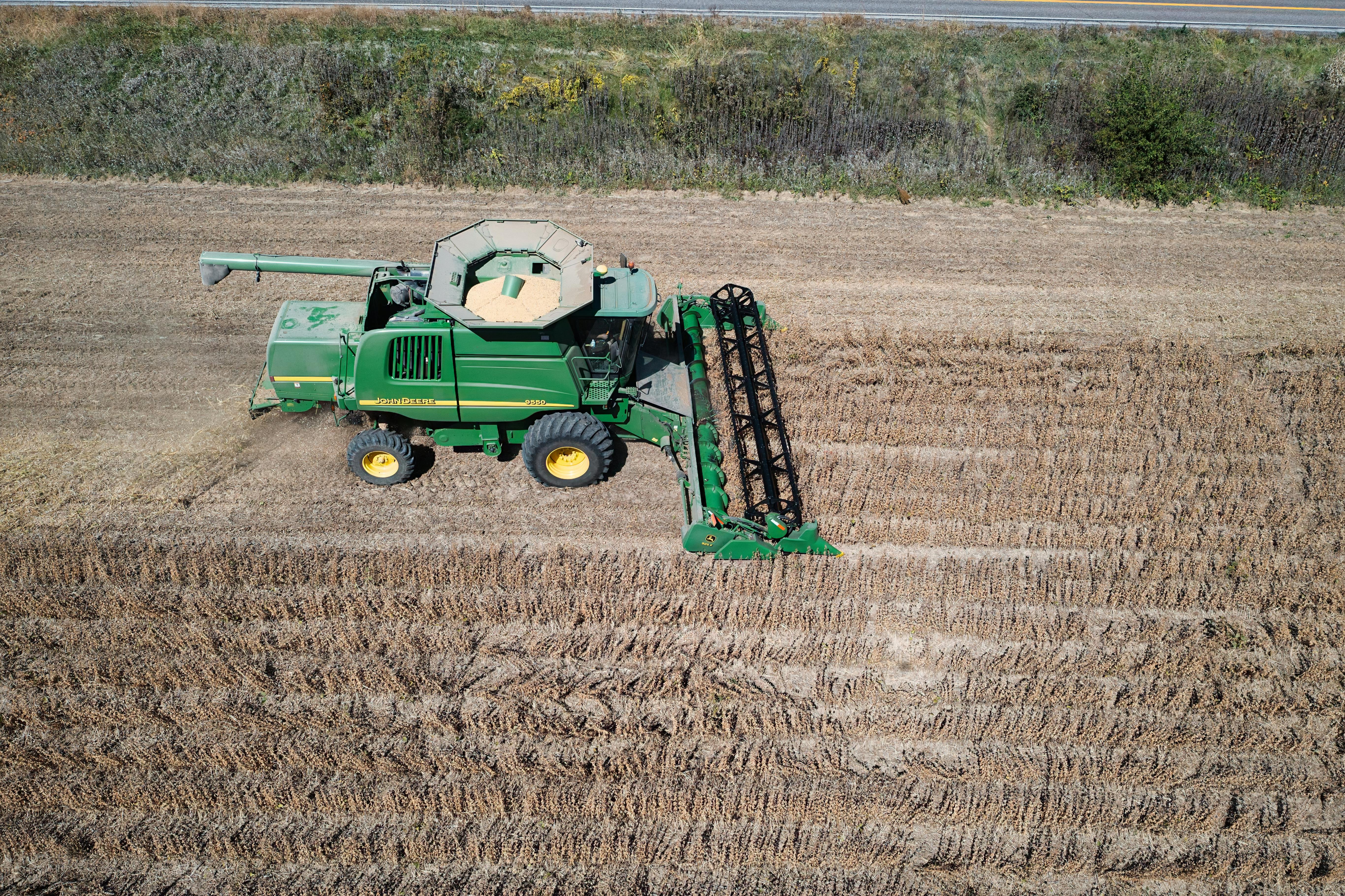
Core benefits and why this matters
The Deere settlement is useful because it exposes hidden costs. Most people focus on the obvious price tag, but the bigger story is the stream of expenses that arrives later, often when the owner has little leverage and a lot of urgency. Let’s be real: urgency is expensive.
- Better cost visibility: Farmers who measure total cost of ownership can compare brands and models more intelligently. A cheaper machine that spends more time in the shop may be the costly choice.
- More disciplined capital allocation: Equipment is capital, not confetti. When buyers model downtime and service expense, they avoid overpaying for the wrong machine.
- Stronger negotiation position: Dealers and manufacturers react differently when buyers ask direct questions about parts pricing, service intervals, software access, and repair turnaround.
- Clearer investment insight: Investors can learn whether a company’s margins come from product quality or from customer lock-in. That matters a lot when demand softens.
- Improved risk management: Spare parts planning, service contracts, and backup equipment reduce operational shocks.
- A better market signal: When repair costs are visible, competition improves. Hidden friction is bad for efficient markets, and worse for smaller operators.
Most guides say buyers should just “focus on quality,” but that is thin advice. Quality matters, sure, yet quality does not cancel monopoly-like behavior in parts or software. The useful question is whether the company earns loyalty through service or extracts it through dependency. There is a difference, and it is not a small one.
I’ve looked at equipment-heavy businesses where after-sales revenue quietly propped up earnings. That can be perfectly legitimate. In fact, recurring service income often supports product development and dealer networks. But there is a line between durable economics and abusive pricing. The market does not always police that line well enough.
There is also a broader economic angle. When repair access is restricted, small operators bear a heavier burden than large fleets. Larger farms can spread service costs over more acres and more machines; smaller farms cannot. That creates a subtle but real fairness issue. Catholic social teaching would call that a matter of justice and the common good, though you don’t need theology to see the imbalance.
For investors, this matters because regulation and litigation can reshape margins. A firm with a strong brand and sticky customer base is valuable, but if customer frustration rises, the brand premium can shrink. That’s why I’d rather evaluate service economics than listen to marketing speeches. Marketing is cheap; field downtime is not.
If you want a deeper framework on ownership discipline, see asset allocation basics and risk management for investors. Different topic, same principle: know where the hidden costs live.
Step-by-step guide to evaluating equipment costs and risk
Start with the machine, then count everything else. The purchase number is the first lie, because it invites you to stop thinking. Don’t.

- Build a total cost of ownership sheet.
Include the purchase price, financing, fuel, maintenance, tires, parts, labor, downtime, insurance, and expected resale value. I’ve found that buyers underestimate service and downtime more than any other line item. That is where the bodies are buried, metaphorically speaking.
- Estimate downtime in dollars.
If a combine is down for a day in harvest, what is that worth in lost output, overtime, and schedule disruption? Use conservative assumptions. Optimism is for birthdays, not balance sheets.
- Ask for parts and repair pricing before you sign.
Get quotes on common service items, not just routine oil changes. Ask about diagnostics, software access, proprietary tools, and dealer labor rates. If the answer is vague, that is your answer.
- Compare service coverage across brands.
Dealer density matters. So do wait times, mobile repair units, and the availability of loaner equipment. A machine with weak service coverage may become a stranded asset during peak season.
- Model resale value honestly.
Strong brands can hold value, but only if used buyers trust the repair ecosystem. If secondhand owners fear high service costs, resale can soften.
- Use financing as part of the analysis, not a separate decision.
Interest expense changes the economics of ownership. So does depreciation. A cheap loan on an expensive maintenance trap is still a trap.
- Build redundancy where it matters.
For critical operations, consider backup equipment, service contracts, or shared machinery arrangements. The goal is not perfection. The goal is resilience.
- Track actuals against assumptions.
After the purchase, compare projected and actual maintenance, downtime, and fuel costs. Then refine your next purchase decision. The best investors do this; farmers should too.
For investors evaluating farm-equipment firms, the process is similar but flipped. You look at parts margins, service revenue, dealer dependence, warranty expense, and customer retention. Read the company’s 10-K, not the glossy presentation. The truth usually lives in the footnotes.
If you want a portfolio angle on cyclical businesses, see diversification and concentration risk. Equipment businesses can look sturdy until the cycle turns.
Comparison table: total cost of ownership vs. sticker price
The sticker price is a decoy. Total cost is the real score.
| Factor |
Sticker Price Focus |
Total Cost of Ownership Focus |
| Upfront cost |
Visible and simple |
Only one part of the equation |
| Repair expense |
Often ignored |
Modeled in advance |
| Downtime risk |
Not considered |
Measured in lost revenue |
| Resale value |
Assumed, not tested |
Estimated conservatively |
| Service access |
Treated as secondary |
Central to planning |
| Financing impact |
Separate from analysis |
Included in full cost |
| Decision quality |
Easy but shallow |
Slower, better, and safer |
For a company like Deere, the comparison is almost eerie. A strong product can justify a premium, yet if the premium widens into resentment because repair access is too expensive or too restrictive, the value proposition weakens. That is not theory. That is what happens when market power meets frustration.
The competitor in this table is not another brand alone. It is the old habit of buying on price and praying on everything else. That habit has cost people a fortune.
Want a broader investing lens? Read how to evaluate moats and pricing power. The idea is the same: durable advantage is fine, abusive dependence is not.
Common mistakes to avoid
Most buyers and investors make the same errors. That is why the errors stay profitable for someone else.
- Ignoring downtime: People obsess over payment size and forget the income lost when a machine cannot work. That is backwards.
- Treating service as a side issue: Maintenance access, diagnostics, and parts availability are not extras. They are core economics.
- Assuming brand strength guarantees fairness: A respected brand may still charge aggressively for after-sales support. Reputation is not a moral shield.
- Using average repair costs instead of peak-season costs: Average is a sleepy statistic. Peak-season failure is the one that hurts.
- Overlooking software and electronic barriers: Modern equipment is not just steel and hydraulics. It is also code, sensors, and locked systems.
- Buying only for today’s crop mix or use case: The next few years may bring different acreage, labor constraints, or weather volatility.
- Skipping contract review: Warranty exclusions, dealer terms, and service clauses can change the picture fast.
Here’s the kicker: people often say “the dealer will take care of it.” Sometimes yes. Sometimes no. The right response is not cynicism; it is verification. Trust, but inspect the invoice.
I’ve seen too many owners rationalize thin margins by accepting hidden service costs. That may work for a season. It rarely works forever. The same logic applies to investors who justify thin underwriting by assuming price appreciation. Hope is not a control system.
There is a moral dimension here as well. Honest pricing and transparent repair access are not merely “nice to have.” They respect human labor. Farmers sweat the asset into the ground; they deserve clarity about what ownership truly costs. That principle reaches beyond agriculture into any market where complexity can be used to confuse people.
If you are evaluating recurring revenue businesses, see subscription economics and customer retention. Recurring revenue is healthy when it serves customers well. It becomes corrosive when it becomes a toll booth.
Frequently asked questions
Does the Deere settlement mean repair costs are going away?
No. A settlement is not a cure. It resolves one dispute and may influence behavior, but repair costs, dealer pricing, and software access issues can still remain. The real question is whether competition and policy pressure improve transparency over time.
Why should investors care about repair costs?
Because repair economics affect margins, customer retention, resale value, and litigation risk. When I look at industrial firms, I do not stop at sales growth. I ask how much profit comes from durable service value versus customer dependence.
What is the best way for farmers to control equipment costs?
Use total cost of ownership, not sticker price. Compare service network strength, warranty terms, downtime risk, parts pricing, and resale value. Also, keep good maintenance records. Boring? Yes. Useful? Absolutely.
Are expensive parts always a bad sign?
Not always. Some high-end systems cost more because they are more advanced or durable. The problem starts when pricing is opaque, repair access is narrow, or downtime risk is ignored. Then the costs stop looking like quality and start looking like friction.
Final thought
The Deere settlement is bigger than a courtroom headline. It is a reminder that ownership is never just ownership; it is a chain of obligations, choices, and trade-offs that either serve the owner or quietly drain him. That is true for farmers, and it is true for investors who buy businesses without studying the plumbing underneath.
The smartest buyers do not worship the lowest price, and the smartest investors do not worship the highest margin. They ask where the margin comes from, who pays for it, and whether the arrangement is durable in a fair sense, not merely a legal one. That last part matters more than most people admit.
When I run the numbers on equipment-heavy businesses, I keep coming back to the same principle: useful assets should produce real value, not hidden grief. That fits with a plain reading of stewardship, work, and responsibility. Resources are meant to be used well, not wasted through confusion or coercion.
So the next time a machine looks cheap, ask what the repairs will cost, how long the wait will be, and who holds the wrench. That is where the truth lives.
Sources