<strong>Chevron’s Venezuela investment is a high-stakes upstream play.</strong> The company plans to spend $7 billion over five years to double crude...
Chevron’s $7 Billion Venezuela Bet: Why CVX’s Oil Investment Could Pay Off
Chevron’s Venezuela investment is a high-stakes upstream play. The company plans to spend $7 billion over five years to double crude production, and that only makes sense if the added barrels come cheaply enough to beat the political mess, sanctions risk, and operational headaches. Is it risky? Of course. Is it foolish? Not necessarily.
Key Takeaways
- Chevron plans to invest $7 billion in Venezuela over five years.
- The goal is to double crude oil production in the country.
- The bet hinges on reserves, operating access, and disciplined capital spending.
- Political risk, sanctions, and infrastructure problems remain the big threats.
- Investors should compare Chevron’s concentration risk with Exxon Mobil’s broader diversification.
Chevron’s move is not some mystical Wall Street puzzle. It is a plain corporate finance decision: spend now, pull more barrels later, and hope the future cash flow beats the capital outlay. That is the whole game, stripped of the usual spin. The catch is that oil projects live or die on execution, and Venezuela is a country where execution has tripped over politics for years.
The appeal is obvious. Venezuela still holds enormous oil reserves, and Chevron already knows the operating terrain. That familiarity lowers friction, which matters in upstream energy work. But let’s be real, familiarity does not cancel risk. A project can have a rich reservoir and still be a bad investment if the rules keep changing or the infrastructure keeps coughing dust.
This matters for investors because Chevron’s decision is not just about barrels. It is about portfolio construction, asset allocation, and risk management at the company level. The company is choosing where to place capital, and that choice will affect future cash flow, dividend support, and reserve life. If you want a deeper look at capital discipline in energy, see capital expenditures explained and Morningstar research on energy investing.
There is also a moral angle, though most financial commentary pretends it does not exist. Real capital spending affects workers, suppliers, and consumers, so stewardship is not a vague sermon here; it is part of the ledger. Good investment should respect the dignity of labor and aim for the common good as well as shareholder return. That is not soft thinking. That is disciplined thinking.
What is Chevron’s Venezuela investment?
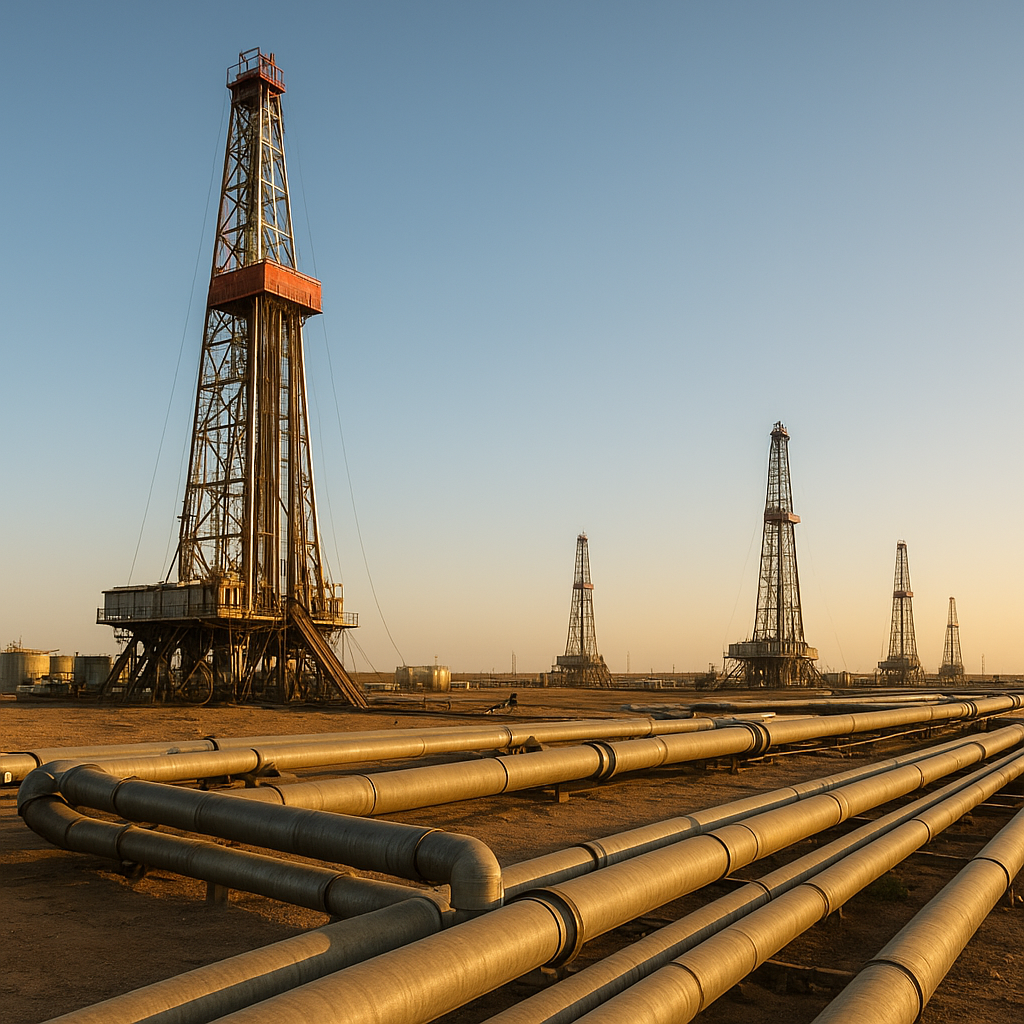
Chevron’s Venezuela investment is a long-term upstream program designed to expand crude output from assets it already operates or influences through joint ventures. In plain English, the company is putting money into fields, pipelines, maintenance, and production systems so it can pull more oil out of the ground over the next five years.
That sounds tidy. It isn’t.
Oil production is not a savings account with a decent interest rate. It depends on reservoir quality, field integrity, export access, local service capacity, and the legal climate. I’ve analyzed enough energy capital plans to know the headline number is the easy part. The hard part is getting barrels from rock to market without losing too much margin to taxes, transport bottlenecks, sanctions, or plain old failure.
Venezuela’s oil reserves are huge, and Chevron’s existing operational footprint gives it a head start. That matters because prior knowledge reduces execution friction. But the truth is, knowledge is not immunity. A country can sit on vast reserves and still produce weak returns if the rules are unstable or the infrastructure is crumbling.
Most commentary frames this as a political story. It is that, sure. But it is also a capital efficiency story. Chevron is trying to improve the productivity of its upstream portfolio and increase reserve replacement. Investors should ask whether the project produces acceptable risk-adjusted returns, not whether the press release sounds bold.
For context on the broader oil market, Reuters has tracked shifts in production and policy for years, including energy supply decisions that affect price and investment outcomes. See Reuters commodities coverage and U.S. Energy Information Administration oil reports.
The important point is simple. Chevron is not buying a fantasy. It is buying an operating option in a place with deep resources and high friction. That is why the answer is not yes or no. It is: what is the expected value after you price in the mess?
Core benefits and importance
Chevron’s plan matters because it could improve production, cash flow, and reserve life. It also carries obvious drawbacks. That is how capital works. Nothing good comes without a bill attached.
- Production growth: If investment lifts output, Chevron can spread fixed costs over more barrels. That can improve margins when operations behave.
- Reserve access: Large reserves support future production, and reserve life is a basic metric for any major energy producer.
- Portfolio balance: Adding barrels from another region can reduce dependence on a single basin, even if it adds country risk.
- Cash flow potential: Higher output can feed operating cash flow, which supports dividends, buybacks, and reinvestment.
- Strategic optionality: More barrels give management more choices during periods of price spikes or supply shortages.
Here’s the kicker: more barrels are not automatically better. If capital intensity is too high, or if sanctions and compliance eat the margin, then the project becomes an expensive exercise in sunk-cost denial. A lot of analysts cheer for production growth because it sounds useful. The better question is whether the incremental barrel is cheap enough to matter.
I’ve seen this mistake too many times. Investors fixate on reserve size and ignore extraction cost. That is sloppy. The best upstream projects combine good geology, disciplined spending, and a legal setup that does not change every other season. Chevron is trying to thread that needle. It may succeed. It may also spend years chasing barrels that never become fully monetized.
There is also the issue of market volatility. Oil prices whip around based on supply cuts, recession fears, war risk, and OPEC decisions. A project that looks brilliant at $90 oil can look merely decent at $65. So the importance of this Venezuelan plan depends on the price deck, the production ramp, and the company’s ability to keep costs in check. For a deeper read on energy pricing, see CME Group education on commodities.
From a stewardship perspective, capital should be used carefully, not theatrically. The best investments serve shareholders while respecting workers and local communities. That is not sentimental fluff. It is basic moral sanity, and frankly, markets benefit when companies remember it.
Step-by-step guide to evaluating the investment
If you want to judge Chevron’s Venezuela bet, do not start with a hot take. Start with the numbers.
- Check the production target. Chevron wants to double output over five years. That is a benchmark, not proof. Ask what annual growth rate is required to get there.
- Estimate capital intensity. Divide planned spending by incremental barrels. I always start here, because capital per barrel tells you whether management is buying growth at a sane price or paying luxury rates for ordinary output.
- Assess sanctions and policy risk. This is non-negotiable. Any Venezuelan project lives or dies on the legal framework around exports, payments, and operating approvals.
- Review infrastructure reliability. Pipelines, refineries, terminals, power, and maintenance all matter. A barrel in the ground is worthless if it cannot reach a buyer.
- Model oil price sensitivity. Run scenarios at different Brent and WTI prices. Most people pick one price and call it analysis. That is nonsense.
- Compare with alternatives. Could the same money do better in the Permian, the Gulf, or another international basin? Capital is scarce even for giants.
- Watch balance sheet impact. Chevron still has to support dividends and buybacks. If Venezuela crowds out better uses of capital, investors should care.
- Track execution milestones. Production is not a promise on a slide deck. Look for actual barrels, not hopeful language.
When I run a capital plan like this, I look first at return on invested capital, then cash flow durability, then downside containment. If those three line up, the project has a shot. If they don’t, the story is just expensive optimism.
This is where risk management comes in. Chevron is not trying to eliminate risk, which would be impossible. It is trying to keep the downside in a range its upstream cash machine can absorb. That is the real art of corporate finance, not the glossy version people like to sell.
There is an ethical layer too. Investment should not treat people as disposable. A sound project ought to support fair dealing, local employment, and the dignity of the workers and communities affected by the capital. That principle is old, practical, and still ignored far too often.
Comparison table
Here is the blunt comparison between Chevron’s Venezuela bet and Exxon Mobil’s broader scale. No fluff. Just the trade-offs investors should actually care about.
| Factor | Chevron in Venezuela | Exxon Mobil global scale |
|---|
| Primary strength | Large reserve potential, existing exposure | Diversified asset base, broad operating footprint |
| Main risk | Sanctions, political instability, operational disruption | More markets, less single-country concentration |
| Capital profile | $7 billion over five years | Larger, more diversified capital deployment |
| Production upside | Potential to double Venezuelan crude output | Steady growth across multiple regions |
| Portfolio impact | Concentrates upside in a high-risk region | Spreads risk across more jurisdictions |
| Investor appeal | Higher reward potential, higher uncertainty | More stable execution profile |
| Best for | Investors tolerating political volatility | Investors preferring scale and diversification |
The table makes one thing obvious. Chevron’s bet is sharper, not necessarily smarter. Exxon Mobil may look less dramatic, but boring often wins because boring survives bad weather. Still, a focused upstream play can outperform if the asset base is rich enough and the execution is tight.
Investors comparing energy majors should also look at balance sheet quality, dividend safety, and free cash flow generation. Reuters often covers these dynamics in major oil earnings seasons; see Reuters energy coverage. If you want a broader valuation framework, Morningstar’s analyst commentary is useful: Chevron stock analysis and Exxon Mobil stock analysis.
Frankly, the comparison comes down to temperament as much as economics. Chevron is placing a concentrated bet on a difficult but potentially rich asset base. Exxon is spreading its chips more widely. One path is more exciting. The other is more forgiving.
Common mistakes to avoid
Most investors get this wrong.
The first mistake is treating Chevron’s Venezuela plan as a simple yes-or-no call. That is lazy thinking. The real issue is expected value. A risky project can still be worthwhile if the upside is big enough and the probability-adjusted return is acceptable.
The second mistake is confusing reserves with profits. Reserves are not cash. They are potential output, and potential is slippery. I’ve seen plenty of reserve-rich projects destroy value because extraction cost, compliance burden, or export bottlenecks were too high.
The third mistake is ignoring policy risk. People love to say oil is oil, but politics changes the ledger faster than geology does. Venezuela is a textbook case. If the legal environment shifts, the economics shift with it.
The fourth mistake is overreacting to headline spending. A $7 billion commitment sounds enormous, and it is, but for a supermajor the real question is whether the spending fits the balance sheet and strategic plan. Size alone tells you very little.
The fifth mistake is assuming oil prices will save everything. Maybe they will. Maybe they won’t. Commodity investors who rely on hope usually end up with expensive lessons.
The sixth mistake is ignoring Chevron’s broader asset allocation. The company must balance dividends, buybacks, maintenance spending, and new investment. If Venezuela crowds out higher-return opportunities elsewhere, then management is choosing drama over discipline.
Most guides praise bold spending because bold sounds impressive. The data usually rewards restraint, control, and repeatable execution. That is not exciting, but markets rarely pay extra for excitement. For a grounded view on financial discipline, see SEC investor education and the Fidelity energy stocks guide.
Frequently asked questions
Why would Chevron invest in Venezuela now?
Because the country still holds major oil reserves and Chevron already has operating familiarity there. If the legal and operational setup holds, the company can add barrels at a scale that improves long-term cash flow.
Is Chevron’s Venezuelan investment too risky?
It is risky, yes. Whether it is too risky depends on the expected return, the sanctions framework, and Chevron’s ability to control costs and keep production moving. Risk alone is not enough to dismiss the project.
How does this compare with Exxon Mobil?
Chevron’s Venezuela plan is more concentrated and politically exposed. Exxon Mobil’s approach is broader and more diversified. One is sharper, the other steadier.
What should investors watch next?
Track production growth, capital spending, sanctions updates, export access, and Chevron’s free cash flow. Those numbers will tell you whether the plan is working or just producing press releases.
Does the investment have any ethical angle?
Yes. Energy capital affects workers, local communities, and consumers. A responsible investor should care about stewardship, fair dealing, and whether the project serves the common good as well as shareholders.
Final thought
Chevron’s Venezuela bet is not a feel-good story, and it is not a disaster by default. It is a capital allocation decision made under imperfect conditions, which is exactly where serious investing lives. The company is trying to buy future production at a price that makes sense, while accepting political and operational risk that most people would rather not touch.
That is the tension. Oil investing is never just about barrels. It is about who controls them, who benefits from them, and whether the return justifies the mess. When I look at this deal, I see a familiar truth: good stewardship means spending only where the upside is real, the risk is understood, and the outcome serves more than a quarterly headline. That is hard. So is making money for the long haul.
What matters now is execution. If Chevron turns this into durable output, investors will call it vision. If it stumbles, they will call it folly. Markets are like that. They do not care about intentions; they care about results.